


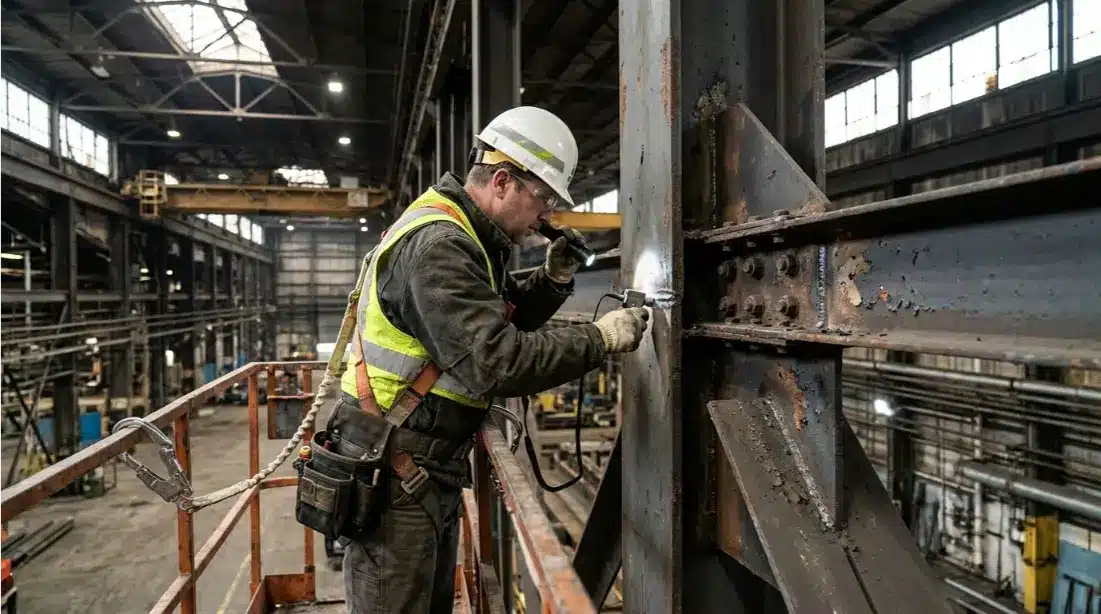
Structural steel damage in a commercial building may appear as corrosion, section loss, bending, buckling, cracking, damaged connections, impact damage, or unusual movement. Some problems are easy to see, while others may only become noticeable through changes in the building, such as unexpected roof deflection or new alignment issues.
At Systems West, understanding these warning signs can help identify when a commercial building may need closer structural evaluation. Not every crack, sticking door, or rust spot means the structural steel is damaged. These signs can have other causes, but they may indicate that the building needs further inspection of its steel members, connections, and surrounding building elements.
What Are the Main Signs of Structural Steel Damage?
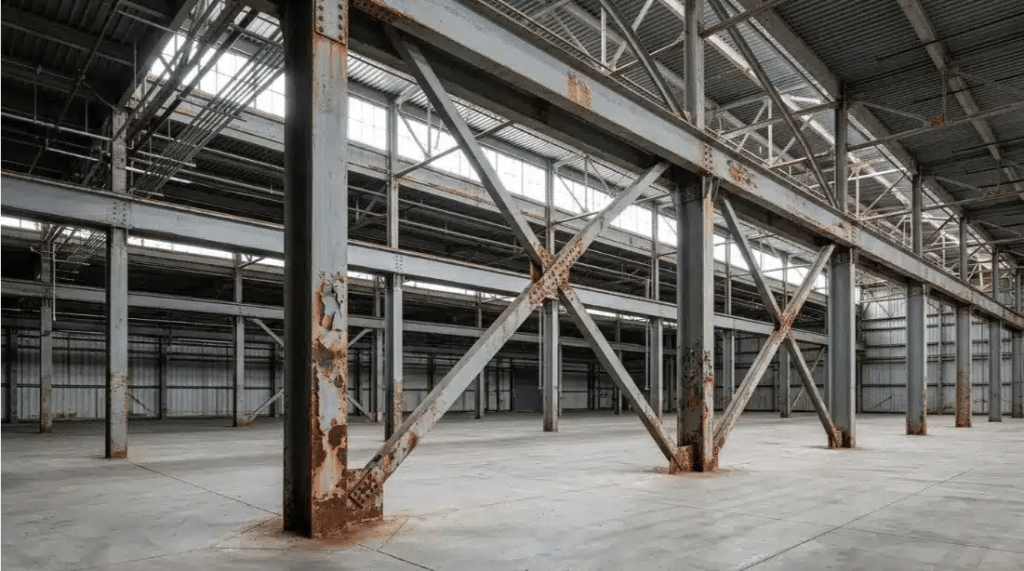
The main signs of structural steel damage include visible corrosion, section loss, bending, buckling, cracks, damaged connections, and unexpected changes in the building’s shape or movement. Some damage is visible on the steel itself, while other signs may appear elsewhere in the building.
Common warning signs include:
- Rust, corrosion, or visible loss of steel thickness
- Bent, twisted, or buckled steel members
- Unexpected sagging or deflection
- Cracks in steel members or welds
- Loose, missing, or damaged bolts
- Damaged beam-to-column connections
- Dents or deformation from vehicle or equipment impacts
- Peeling, damaged, or missing protective coatings
- Water intrusion around structural steel
- Changes after a fire, flood, major impact, or building alteration
At Systems West, these signs can help identify areas that may need closer evaluation. A single sign does not necessarily confirm structural damage, so the location, severity, and possible cause should be considered together.
How Does Corrosion Damage Structural Steel?
Corrosion can damage structural steel by gradually removing material from the surface and reducing the thickness of a steel member. The severity depends on how far the corrosion has progressed, where it occurs, and how much steel has been lost. Areas exposed to moisture for long periods deserve particular attention because corrosion can continue beneath coatings or around connections.
Surface Rust vs. Structural Corrosion
Light surface rust does not always mean that a steel member has lost significant strength. However, heavier corrosion can cause scaling, flaking, pitting, and visible loss of steel thickness. Pitting creates localized areas of deeper corrosion, while section loss occurs when enough material has deteriorated to change the member’s cross-section.
Changes such as deep pitting, widespread scaling, exposed steel beneath damaged coatings, or noticeable section loss should not be treated as a cosmetic issue. These conditions can indicate that the steel needs closer evaluation to determine the extent of deterioration.
Where Is Steel Most Vulnerable to Corrosion?
Structural steel is more vulnerable to corrosion where moisture can collect or remain trapped. Common areas include:
- Column bases near floors or foundations
- Beam-to-column and other steel connections
- Areas exposed to leaks or water intrusion
- Poorly drained areas where water can collect
- Exterior steel exposed to weather
- Areas with damaged or missing protective coatings
- Industrial or humid environments where moisture or corrosive substances are present
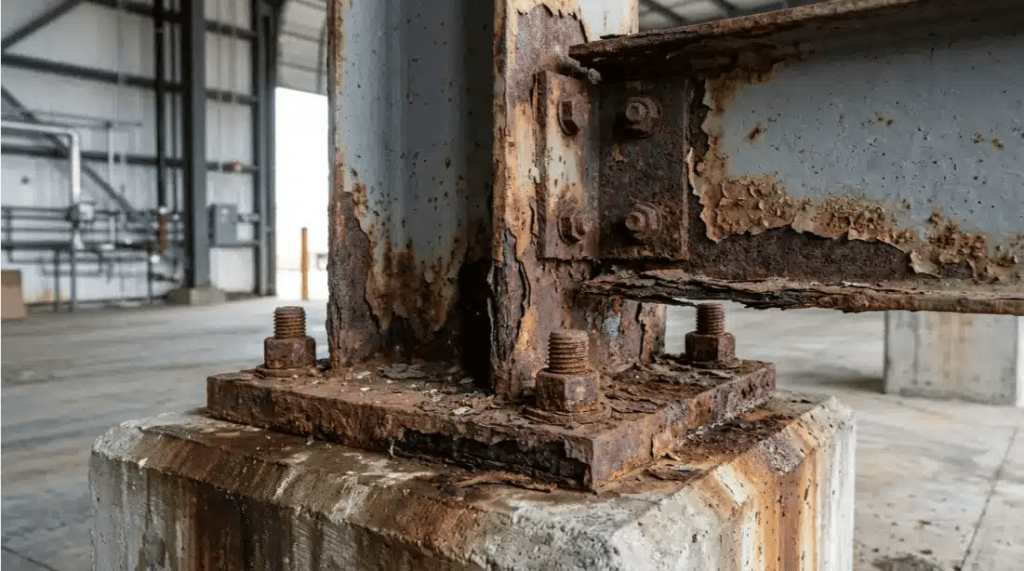
Connections and column bases can be especially important because their location can make it easier for moisture and debris to remain in contact with the steel. If corrosion is concentrated around these areas, the condition of the steel and the amount of material loss should be evaluated rather than judged by appearance alone.
What Does Bent, Buckled, or Twisted Steel Mean?
Bent, buckled, twisted, or distorted structural steel can indicate that a member has been affected by excessive loads, impact, movement, corrosion, or another structural problem. Bending changes the shape of a member under load, while local buckling affects part of a steel member, such as a flange or web. Overall buckling involves a larger portion of the member becoming unstable, while twisting causes the member to rotate along its length. Excessive deflection can also appear as unexpected sagging in beams, rafters, or other structural members.
A visibly deformed steel member should not simply be straightened, covered, or modified before the cause is understood. The deformation may be related to overloading, impact, damaged connections, corrosion, or building movement. Determining the cause and extent of the damage helps establish whether the member needs further evaluation, repair, reinforcement, or replacement.
What Are Signs of Damage Around Steel Connections?
Damage around steel connections can include loose or missing bolts, corroded bolts, damaged connection plates, cracked welds, cracks around connection points, damaged anchor bolts, or visible deformation where structural members meet. Corrosion that is concentrated around a connection can also be a warning sign, especially when it has caused pitting, section loss, or damage to the surrounding steel.
A damaged connection can be more significant than an isolated cosmetic defect because connections transfer forces between structural members. Problems with bolts, welds, plates, or anchor points can affect how those members work together. For this reason, visible damage around a beam-to-column connection or column base should be evaluated based on its location, extent, and likely cause rather than treated as a minor surface issue.
Can Cracks in Structural Steel Indicate Damage?
Yes. Cracks in structural steel can indicate damage, especially when they appear in a steel member, weld, or around a structural connection. Cracking may result from repeated loading, fatigue, impact, excessive stress, or other conditions affecting the steel. Cracks near connections or in areas that carry significant loads deserve particular attention because they can affect how structural components transfer forces.
A visible crack should not be judged by appearance alone. Its location, size, direction, cause, and effect on the structural member need to be evaluated. Cracks that develop after an impact or appear to be growing over time should not simply be covered or repaired without determining the underlying cause.
How Can Impact Damage Affect Structural Steel?
Impact from forklifts, vehicles, heavy equipment, or other machinery can dent or deform structural steel in commercial and industrial buildings. Columns are especially exposed to impact near loading areas, warehouse aisles, parking areas, and equipment routes. Even when the damage appears limited to a dent or small area of local deformation, the impact may have affected the steel member, its connection, or the surrounding structure.
Damage can also occur near column bases, bracing members, bolts, welds, and other connections. A damaged steel member should not be assumed to be safe based only on how large the dent looks. The impact force, location, type of deformation, and condition of nearby connections should be considered when determining whether further structural evaluation is needed.
What Does a Damaged Protective Coating Tell You?
Damaged paint or protective coating does not automatically mean the structural steel is damaged, but it can expose the steel to moisture and increase the risk of corrosion. Peeling, bubbling, flaking, exposed bare steel, or rust beneath the coating can indicate that the protective layer has deteriorated. Fire-protection coatings can also become damaged and may need to be assessed to determine whether they still provide the intended protection.
Areas where water remains trapped can be especially concerning because continued moisture exposure can cause corrosion beneath or around the damaged coating. Over time, corrosion may lead to pitting, thickness loss, and section loss. The progression can be as simple as coating damage → moisture exposure → corrosion → possible section loss, but the actual condition of the steel needs to be evaluated before determining its severity.
What Building Problems Can Point to Structural Steel Damage?
Structural steel problems do not always appear directly on the steel members. Changes in the surrounding building can also indicate possible structural movement or damage. These signs do not confirm that the steel frame is damaged, but they can help identify when further investigation may be needed.
Sagging Roof Areas
Unexpected sagging or changes in the roof’s shape may indicate excessive deflection, overloading, damaged structural members, or connection problems. If a roof area begins to sag when it previously appeared level, the supporting beams, rafters, trusses, and connections may need closer evaluation.
Doors or Windows Suddenly Sticking
Doors or windows that suddenly become difficult to open or close can indicate movement or misalignment in the building. Changes in the frame, surrounding walls, or foundation may affect how openings operate. However, sticking doors and windows do not automatically mean structural steel damage, as they can also result from hardware problems, moisture, or normal building movement.
New Cracks or Separations
New cracks around doors, windows, walls, ceilings, or connections between building elements can indicate movement in the surrounding structure. Gaps developing where walls meet ceilings or where different structural components connect may also deserve attention, particularly when they appear alongside other signs of movement.
Uneven or Changing Building Geometry
New gaps, leaning elements, misaligned structural components, or changes in floor level may point to movement within the building. When these changes occur alongside roof sagging, damaged connections, or visible steel deformation, they may indicate a wider structural problem that needs professional evaluation.
What Can Cause Structural Steel Damage in a Commercial Building?
Structural steel damage can develop over time or result from a sudden event. Long-term corrosion, water intrusion, poor drainage, and exposure to moisture can gradually weaken steel members and connections. Industrial environments may also expose steel to chemicals, high humidity, or other corrosive substances that speed up deterioration.
Physical damage is another common cause in commercial and industrial buildings. Forklifts, vehicles, and heavy equipment can strike columns, beams, or bracing members. Fire exposure can also affect steel and its protective coatings. Overloading, building movement, and added equipment or attachments can place forces on structural members that were not part of the original design.
Unauthorized modifications can create additional risks. Cutting, drilling, removing, or altering structural members without proper evaluation may affect how loads move through the building. Previous damage and improper repairs can also leave underlying problems unresolved. Identifying the cause is an important step in determining the extent of the damage and what type of professional evaluation or repair may be needed.
How Is Structural Steel Damage Evaluated?
Evaluating structural steel damage involves more than looking for visible rust, cracks, or deformation. The process usually begins with reviewing available structural drawings, previous inspection records, and the building’s history to understand the original design and identify any known changes or damage. The affected members, such as columns, beams, rafters, bracing, and connections, are then examined for corrosion, cracks, damaged bolts or welds, and changes in alignment or shape.
When necessary, further checks may include measuring steel thickness to assess possible section loss and using non-destructive testing (NDT) to examine specific defects without damaging the material. The findings may also require engineering analysis to assess the condition and load-carrying capacity of the affected members. Visual signs can indicate a potential problem, but they cannot establish the remaining structural capacity of a steel member on their own. A qualified structural engineer can determine whether further testing, repair, reinforcement, or replacement is needed.
When Does Structural Steel Damage Require Professional Evaluation?
Professional evaluation is appropriate when structural steel shows significant section loss, severe corrosion or pitting, buckling, visible deformation, or cracks in members or welds. Damaged bolts, connection plates, anchor bolts, or other critical connections also warrant closer assessment, particularly when the damage affects how structural members connect or transfer loads.
An evaluation is also recommended after severe impact to columns or beams, fire exposure, flooding, or another major event that could affect the building structure. Unexpected structural movement, new or worsening deformation, or damage that continues to deteriorate should not be ignored. These conditions can have different causes and levels of severity, so a qualified professional can determine the extent of the problem and whether further testing, repair, reinforcement, or replacement is needed.
What Should You Do If You Find Damaged Structural Steel?
If you find damaged structural steel, document the condition and arrange an appropriate professional evaluation rather than attempting to repair or modify it yourself. Start by recording the location and visible condition of the affected steel, then take clear photographs from different angles.
Record when the damage was first noticed and note any obvious source, such as a water leak, vehicle impact, fire, or building alteration. Avoid altering, covering, or disturbing the affected steel until it has been evaluated. If the condition appears to create an immediate safety hazard, restrict access to the affected area. A qualified professional can then determine the extent of the damage and whether further testing, repair, reinforcement, or replacement is needed.
Need Help Evaluating a Commercial Building?
If you have noticed corrosion, deformation, damaged connections, or other signs that may affect the structural steel in your commercial building, Systems West can help you determine the appropriate next step.
Contact Systems West to discuss your building condition and structural construction needs.
Conclusion
Structural steel damage can appear as corrosion, section loss, cracks, deformation, damaged connections, impact marks, or changes in the surrounding building. Some signs are easy to see, while others may be hidden behind walls, ceilings, coatings, or other building materials.
Finding one of these signs does not automatically mean a commercial building has a serious structural problem. However, worsening corrosion, damaged connections, significant deformation, cracks, fire or impact damage, and unexpected building movement should not be ignored. Documenting the condition and arranging a professional evaluation can help determine the extent of the damage and whether further testing, repair, reinforcement, or replacement is needed.
Frequently Asked Questions
Is surface rust on structural steel always a serious problem?
No. Light surface rust does not always mean that structural steel has lost significant strength. However, deep pitting, scaling, flaking, or visible section loss can indicate more advanced corrosion and should be evaluated.
Can a damaged steel column be repaired instead of replaced?
Yes, depending on the type, location, and extent of the damage. A qualified structural professional can determine whether repair or reinforcement is appropriate or whether replacement is necessary. The decision should be based on the condition of the column and its role in the building’s structure.
Can structural steel damage be hidden behind walls or ceilings?
Yes. Steel members may be concealed behind walls, ceilings, insulation, fireproofing, or other building materials. Water intrusion, corrosion, previous modifications, or other damage may therefore not be visible during a basic visual inspection. Signs such as unexplained staining, movement, or changes in the building can indicate that further investigation may be needed.
Does an old commercial building automatically have structural steel damage?
No. The age of a commercial building does not automatically mean its structural steel is damaged. Condition depends on factors such as moisture exposure, maintenance, loading, modifications, environmental conditions, and previous damage. Older buildings may warrant closer review when visible problems or changes in condition are present.
Can adding equipment or attachments damage structural steel?
Yes. New equipment, platforms, piping, mechanical systems, or other attachments can add loads or change how forces are transferred through the structure. Cutting, drilling, welding, or modifying structural members without proper evaluation can also create problems. New attachments should be assessed to confirm that the existing structure can safely support them.
Does fire damage make structural steel unsafe?
Not necessarily, but fire can affect the condition and performance of structural steel and its protective systems. The severity depends on factors such as the duration and intensity of the fire, the affected members, connections, and protective coatings. Fire-damaged steel should be professionally evaluated before its condition is considered acceptable.
Can water leaks cause structural steel corrosion?
Yes. Repeated or prolonged exposure to water can cause structural steel to corrode, especially where moisture collects or remains trapped. Leaks around roofs, walls, connections, and column bases can create conditions that lead to rust, pitting, and section loss over time. Finding and addressing the source of water intrusion is an important part of evaluating the condition of the affected steel.