

Structural steel plays a major role in commercial and industrial construction. Before beams, columns, plates, and connections can form a building frame, they must be cut and prepared to match the structural drawings.
The quality of this work affects how well the steel fits together and how smoothly it can be installed. This guide explains what structural steel fabrication is, how the process works, what it produces, and what affects the final cost.
What Is Structural Steel Fabrication?
Structural steel fabrication is the process of turning standard steel sections and plates into finished components for a building or structure. Fabricators work from structural plans and shop drawings. They cut, drill, shape, fit, and join the steel according to the approved project details. The completed members are then inspected, marked, and prepared for delivery.
Structural drawings show the overall framing system and the engineer’s design. Shop drawings provide the exact details needed for production. They show member dimensions, bolt holes, connection plates, weld locations, and other fabrication requirements.
The purpose of fabrication is to prepare each steel member for its place in the structure. Accurate work helps beams connect with columns, base plates align with foundations, and bracing fit between the correct framing points.
What Components Are Made Through Structural Steel Fabrication?
Structural steel fabrication produces the main framing members and connection parts used in a building.
Beams and girders carry loads from floors, roofs, walls, and equipment. Columns transfer those loads to the foundation. Trusses support wider spans, while bracing helps the structure resist movement.
Fabricators also produce the plates and connection parts that join these members together. These include base plates, end plates, brackets, stiffeners, and connection plates.
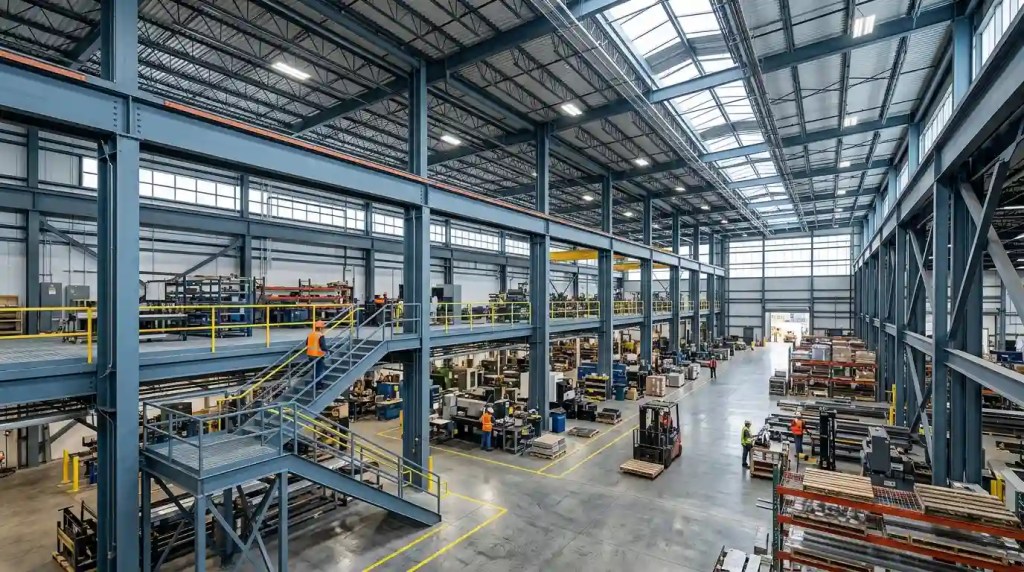
Other fabricated components include stairs and landings, mezzanine framing, work platforms, equipment supports, structural additions, and custom connection assemblies.
The exact components depend on the building type, structural design, and intended use of the space.
How Does the Structural Steel Fabrication Process Work?
The structural steel fabrication process follows a planned series of stages. Each stage prepares the steel for the next step and helps confirm that the finished member matches the project drawings.
1. Planning, Drawings, and Material Selection
The process begins with a review of the structural plans, shop drawings, specifications, and connection details. The fabricator checks member sizes, steel grades, dimensions, bolt patterns, weld requirements, and surface finishes. Any missing or unclear details must be resolved before production begins.
The correct steel sections and plates are then selected for the project. The material is checked to confirm that it matches the required size and grade. This stage establishes the information needed for accurate production. It also helps prevent drawing errors or material issues from carrying into later stages.
2. Measuring, Cutting, Drilling, and Shaping
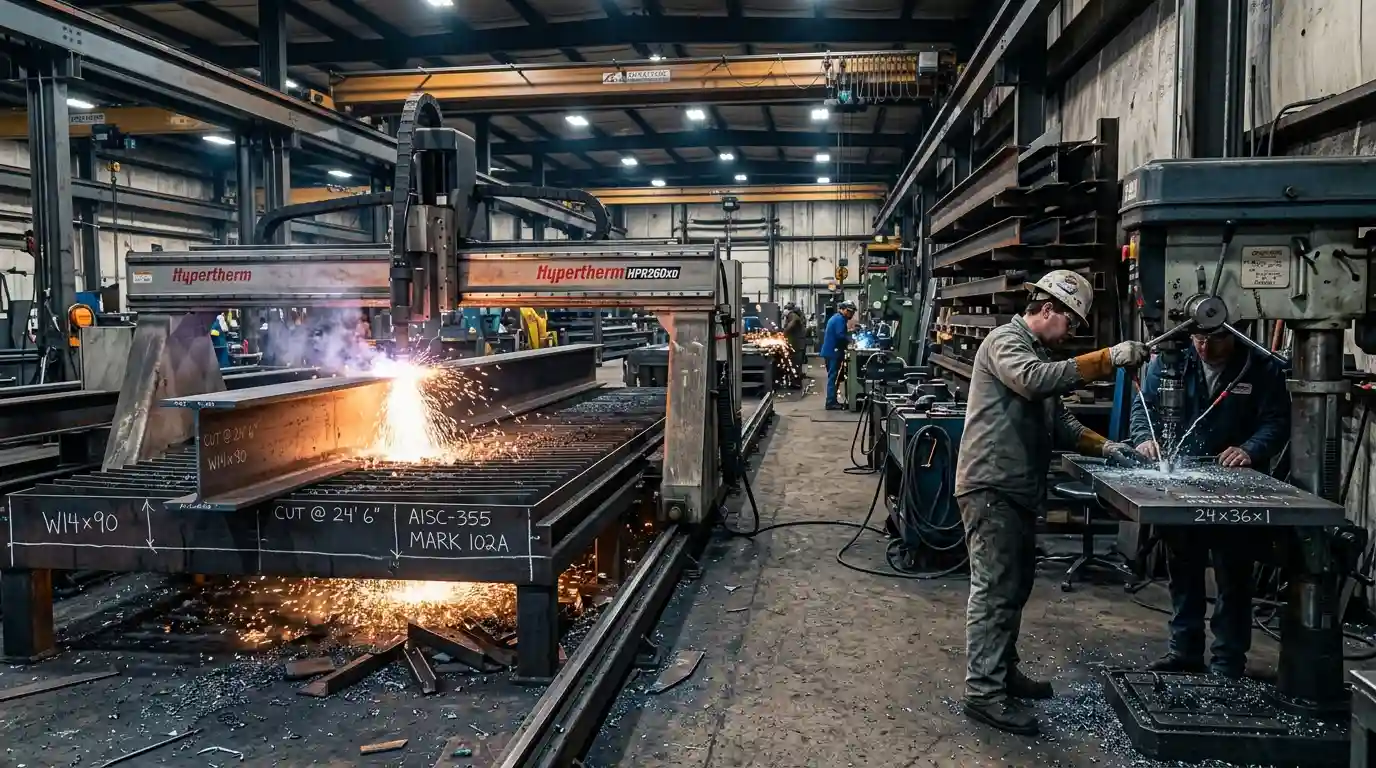
The steel is measured and marked according to the approved shop drawings. It is then cut to the required length and shape. Fabricators use equipment suited to the size and thickness of the material.
Holes are drilled or punched for bolts and other connections. Some members also need notches, shaped ends, or trimmed sections so they can fit around other parts of the frame. Bending and rolling are used when the project requires curved or angled components. Each cut, hole, and bend must match the dimensions shown on the drawings.
3. Fitting, Welding, and Assembly
After the individual pieces are prepared, they are fitted together. Plates, brackets, stiffeners, and other connection parts are placed in the correct position. The fabricator checks their spacing and alignment before they are joined.
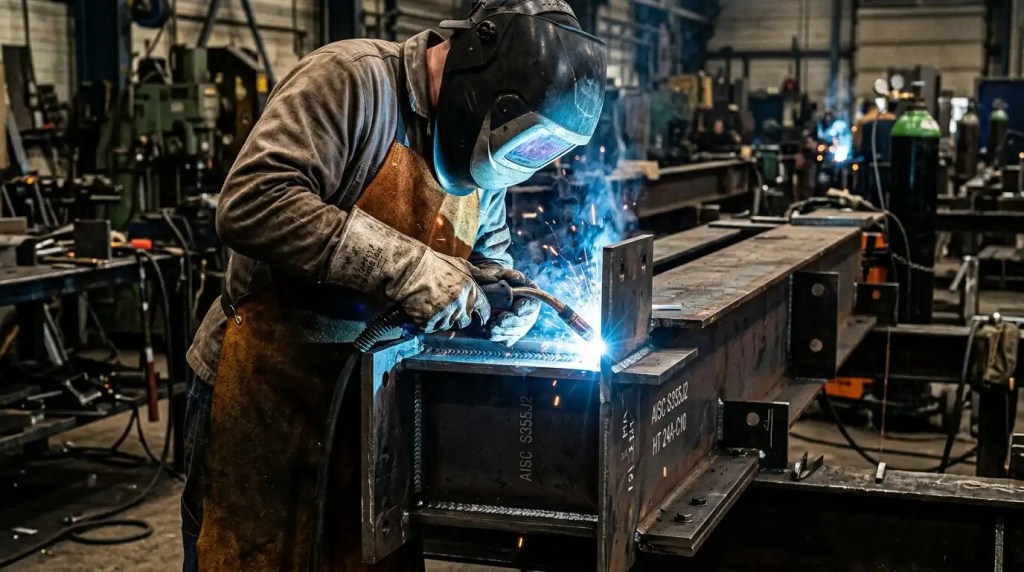
Some connections are welded in the shop. Others are prepared for bolting during steel erection. Many structural members use a combination of welded shop connections and bolted field connections. The completed assembly must match the approved drawings. Larger or more complex components are checked before they move to the finishing stage.
4. Inspection and Surface Protection
Inspection takes place throughout fabrication. The fabricator checks member dimensions, bolt-hole locations, plate positions, welds, and overall alignment. These checks confirm that the steel matches the approved shop drawings.
The steel then receives the finish specified for the project. This can include cleaning, priming, painting, or galvanizing. The required finish depends on where the steel will be installed. Interior framing and exposed exterior steel often require different levels of protection.
5. Marking, Loading, and Delivery
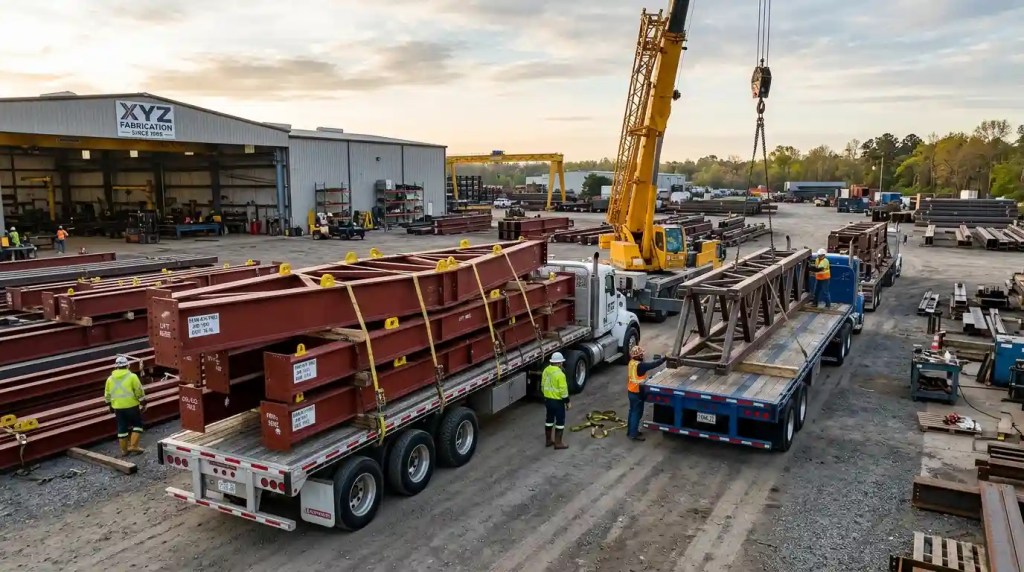
Each finished component receives an identification mark that matches the shop and erection drawings. These marks help the erection crew identify each member and place it in the correct location.
The steel is then loaded and delivered according to the project schedule. The delivery sequence follows the planned order of installation, with primary framing arriving before members needed later in the build. Clear coordination between fabrication, delivery, and erection helps the steel move from the shop to the structure without unnecessary handling.
Structural Steel Fabrication vs. Steel Erection
Structural steel fabrication and steel erection are separate stages of the same construction process. Fabrication takes place mainly in a shop. It prepares the steel through cutting, drilling, shaping, fitting, welding, finishing, and inspection.
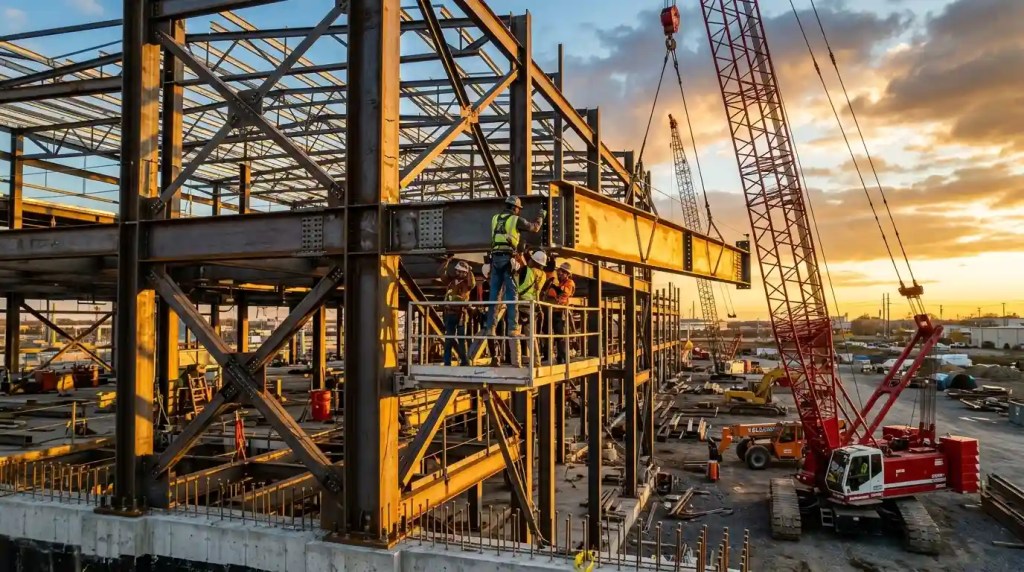
Steel erection takes place at the construction site. Cranes lift the fabricated members into position, and erection crews align, bolt, weld, and secure them.
Structural Steel Fabrication | Steel Erection |
Completed mainly in a fabrication shop | Completed at the construction site |
Produces finished steel components | Installs the finished components |
Includes cutting, drilling, fitting, and welding | Includes lifting, aligning, bolting, and securing |
Follows approved shop drawings | Follows erection drawings and field plans |
Prepares members for installation | Builds the structural frame |
The two stages must work together. Accurate fabrication allows the erection crew to identify, position, and connect each member as planned.
Where Is Fabricated Structural Steel Used?
Fabricated structural steel is used in many types of commercial and industrial construction. Commercial buildings use steel for columns, beams, roof framing, stairs, and building additions. Warehouses and distribution centers use steel framing to create wide, open interior spaces.
Manufacturing and industrial facilities often need steel for equipment supports, work platforms, mezzanines, and production areas. Agricultural buildings also use fabricated steel for storage, processing, and equipment structures.
Fabricated steel is used in both new construction and existing buildings. It can form a new structure, strengthen an existing frame, or support added equipment and floor space.
What Affects Structural Steel Fabrication Cost?
Structural steel fabrication cost depends on the amount of steel, the complexity of the components, and the requirements of the project. Material cost is based on the steel grade, section size, thickness, and total weight. Larger and heavier members require more material and handling.
Connection details also affect cost. A simple beam with standard bolt holes requires less shop work than a member with several plates, stiffeners, and welded connections. Complex shapes, tight tolerances, and extensive welding requirements all add labor time. Changes made after production begins can increase cost significantly. Steel that has already been cut, drilled, or welded may need to be modified or replaced. Clear drawings and early coordination help control these costs by reducing rework and giving the fabricator accurate information from the start.
Work With Systems West on Your Structural Steel Project
Accurate fabrication begins with clear drawings, careful planning, and experience with the type of structure being built. It also requires coordination between the shop, delivery team, and erection crew.
Systems West handles structural steel fabrication and erection for commercial and industrial projects across central Minnesota.
Contact Systems West to discuss the requirements of your next project, or visit the Structural Fabrication and Upgrades page to learn more.
Frequently Asked Questions
What are the main steps in structural steel fabrication?
The main steps are drawing review, material selection, cutting and drilling, fitting and welding, inspection, finishing, marking, and delivery.
What is the difference between steel fabrication and steel erection?
Fabrication produces the steel components in a shop. Erection lifts, positions, and connects those components at the construction site.
Is structural steel fabricated on-site or off-site?
Most structural steel is fabricated off-site in a shop. Field crews install the finished members and complete the connections shown in the erection plans.
How long does structural steel fabrication take?
Standard commercial projects typically require 4 to 8 weeks of shop fabrication after drawings are approved. Larger projects with custom members, complex connections, or special finishes can take 12 to 20 weeks.
How is fabricated steel inspected?
Fabricated steel is checked for correct dimensions, hole locations, plate positions, welds, alignment, and surface finish. The completed members are also compared with the approved shop drawings before delivery.