


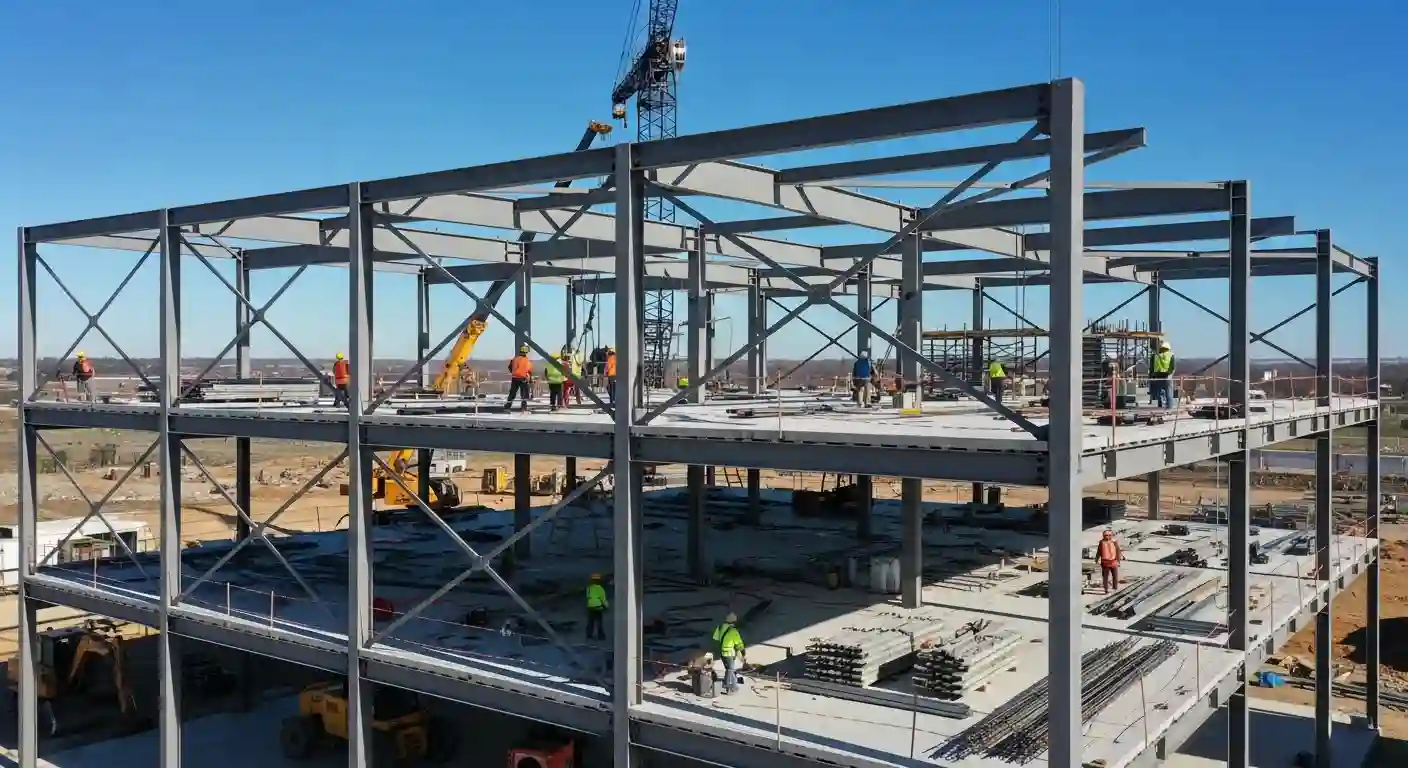
Steel-framed buildings are commonly used when a project requires open interior space, substantial load capacity, flexible layouts, or the ability to expand later. Before selecting this approach, building owners must consider the project schedule, foundation requirements, building envelope, site conditions, and overall construction budget.
This guide helps commercial building owners and project teams compare steel building systems, understand the construction process, and identify the design and cost factors that should be reviewed before work begins.
What Is Steel Frame Construction?
Steel frame construction is a building method in which columns, beams, braces, and other steel members form the primary load-bearing framework. Columns transfer vertical loads into the foundation, while beams support floors, roofs, equipment, and other building components. Braced frames, moment connections, or shear walls help the structure resist wind, seismic movement, and other lateral forces.
Roofing, wall panels, insulation, flooring, doors, windows, and interior finishes are installed around the frame to complete the building.
This method is commonly used for projects that require:
- Large open floor areas
- Long clear spans
- High ceilings
- Heavy equipment support
- Flexible layouts
The final framing system must reflect the building’s size, use, loads, layout, site conditions, and code requirements.
Types of Steel Frame Construction
Steel buildings can use several framing approaches, depending on the project’s size, loads, layout, schedule, and level of customization.
Conventional structural steel framing
Conventional framing uses beams, columns, braces, and connections engineered for a specific project. It is commonly used for complex commercial buildings, manufacturing facilities, multi-story structures, and projects with heavy loads or specialized layouts.
Pre-engineered metal buildings
Pre-engineered metal buildings use coordinated primary frames, secondary members, roofing, and wall systems developed as a complete package. They are often used for warehouses, shops, agricultural facilities, storage buildings, and other structures with repeatable dimensions.
Cold-formed steel framing
Cold-formed steel may be used as the main framing system for smaller buildings or as secondary framing within a structural steel project.
Composite steel and concrete systems
Composite construction combines steel beams with concrete floors or other concrete elements. A common example is a concrete slab installed over metal decking and connected to steel beams so both materials work together. This approach is often used for elevated floors that require strength, stiffness, and efficient use of both materials.
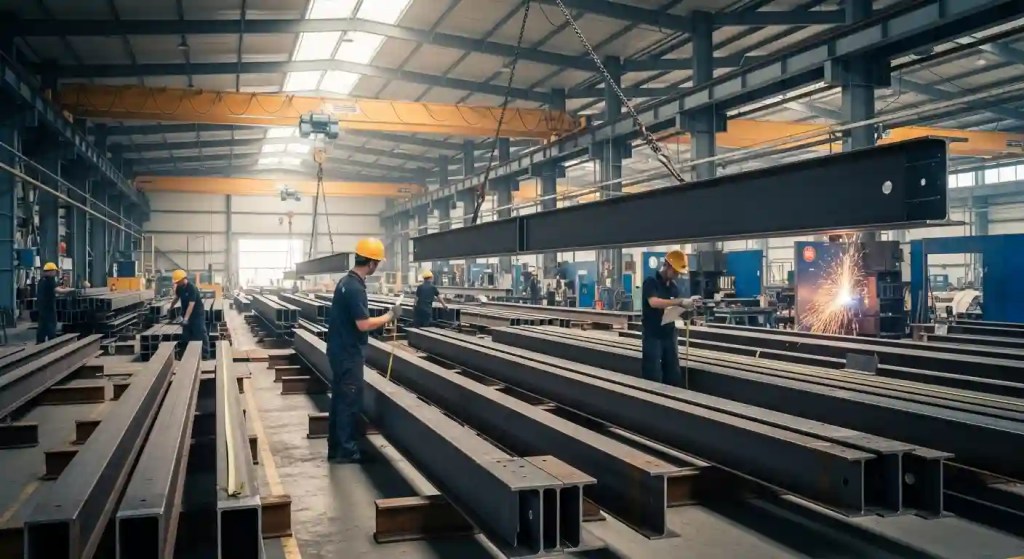
What Are the Main Components of a Steel Frame?
A steel frame is made up of several structural members that work together to carry building loads and keep the structure stable. The exact arrangement depends on the building’s size, use, span, loading requirements, and design.
Columns
Steel columns are vertical members that transfer loads from the beams, floors, roof, and other structural elements down to the foundation. Their size and shape depend on the loads they must carry and the building’s structural design.
Beams and Girders
Beams and girders support floors, roofs, walls, and other loads between columns. Larger girders may collect loads from several smaller members before transferring them to the columns.
Bracing
Bracing helps the frame resist horizontal forces caused by wind, seismic movement, and other lateral loads. Depending on the design, a building may use diagonal bracing, moment frames, shear walls, or a combination of systems.
Steel Joists
Steel joists are lightweight structural members commonly used to support roof and floor systems. They can provide efficient spans while reducing the amount of structural material needed in certain applications.
Metal Decking
Metal decking is installed over steel framing to support roof assemblies or concrete floor slabs. In composite floor systems, the decking can also work with the concrete slab and steel beams as part of the structural system.
Purlins and Girts
Purlins are horizontal members that support roof panels, while girts support wall panels. They connect the primary structural frame to the building envelope and help transfer loads back to the main frame.
Connections and Fasteners
Connections join steel members and transfer forces between them. Bolted connections are common because they allow efficient field assembly, while welded connections may be used when required by the structural design or fabrication method.
All of these components must be designed and connected as a complete structural system. The final configuration depends on factors such as building loads, span requirements, wind and snow loads, seismic conditions, building use, and applicable codes.
What Are the Benefits of Steel Frame Construction?
Steel frame construction offers several benefits for commercial and industrial buildings. Its combination of strength, long-span capability, fabrication accuracy, construction efficiency, and design flexibility makes it suitable for projects with large interior spaces, heavy loads, demanding layouts, or plans for future expansion. The actual benefits depend on the structural design, building use, site conditions, and construction requirements.
Strength and Long-Span Capability
Structural steel has a high strength-to-weight ratio, allowing steel members to carry substantial loads without requiring excessively large structural sections. Steel frames can also accommodate long spans between columns, which can create large open areas for warehouses, manufacturing facilities, equipment storage, and other commercial uses. The required span and member sizes still depend on loads, building dimensions, wind and snow conditions, and engineering calculations.
Off-Site Fabrication and On-Site Assembly
Many steel frame components are fabricated before they arrive at the construction site. Columns, beams, connection plates, and bolt holes can be prepared according to detailed shop drawings, while site preparation and foundation work are completed. This can reduce the amount of cutting and fabrication required in the field and allow steel erection to proceed efficiently once the foundation and other required work are ready.
Construction Efficiency
Steel framing can support an efficient construction sequence because fabrication, procurement, foundation work, and other project activities can be coordinated in advance. Once the steel is delivered, erection crews can assemble the frame according to the approved structural drawings. The overall schedule still depends on engineering, permits, material availability, fabrication, site conditions, inspections, and coordination between trades.
Design and Layout Flexibility
Steel frames can be designed for different building sizes, bay spacing, roof profiles, floor layouts, and architectural requirements. Steel can also be combined with concrete, masonry, metal panels, glass, and other materials to meet the needs of the finished building. When future expansion is considered during the original design, the structural system may also be planned to accommodate later additions without replacing the entire frame.
Precision and Quality Control
Steel components are produced using detailed engineering and fabrication drawings, allowing members and connection points to be prepared to specific dimensions before delivery. Controlled fabrication can improve consistency and reduce some field adjustments. The quality of the finished structure still depends on proper engineering, fabrication, transportation, erection, inspection, and installation practices.
Disadvantages and Key Considerations
Fire protection
Steel does not burn, but it loses strength and stiffness at elevated temperatures. Depending on the building type and code requirements, structural members may need spray-applied fire-resistive material, intumescent coatings, fire-rated assemblies, or concrete encasement.
Thermal bridging and condensation
Where steel members intersect or pass through the building envelope, they can create paths for heat transfer. Continuous insulation, thermal breaks, air sealing, vapor control, and proper roof and wall detailing are needed to manage energy loss and condensation.
Corrosion and maintenance
Moisture, chemicals, salt, and damaged coatings can contribute to corrosion. Protective paint, galvanization, drainage, inspections, and timely coating repairs help protect the structure. Maintenance needs vary by environment and building use.
Specialized labor and equipment
Erection usually requires trained crews, cranes, lifts, rigging equipment, temporary bracing, and coordinated safety procedures. Restricted access, poor ground conditions, or limited staging space can increase cost and complexity.
Lead times and field changes
Engineering, approvals, procurement, and fabrication can require significant lead time even when site assembly is efficient. Changes made after fabrication may require new detailing, engineering review, additional shop work, or controlled field modifications. Structural components should not be cut, drilled, removed, or altered without proper review.

Steel Versus Concrete and Wood
No structural material is best for every project.
Factor | Structural Steel | Reinforced Concrete | Wood Framing |
Clear spans | Well suited to long spans | Suitable but often heavier | Typically more limited, although engineered wood can extend capability |
Structural weight | Moderate relative to load capacity | Generally heavy | Relatively light |
Construction speed | Efficient after fabrication and delivery | Requires formwork and curing | Often fast for smaller projects |
Fire performance | Noncombustible but may need protection | Generally performs well, depending on member dimensions, reinforcement cover, and assembly design | Combustible and requires rated assemblies |
Moisture concerns | Corrosion if unprotected | Cracking and reinforcement corrosion | Rot, mold, swelling, or warping |
Future expansion | Often adaptable when planned properly | Structural changes may be difficult | Possible on smaller structures |
Field modification | Requires engineering review and controlled alterations | Often difficult after placement | Often easier on smaller projects |
These are general characteristics. Actual performance depends on the design, materials, code requirements, environment, and site conditions.
The Steel Frame Construction Process
Steel frame construction follows a defined sequence: site evaluation and planning, engineering and approvals, foundation work and fabrication running in parallel, delivery and erection, then final inspections and enclosure. Understanding each phase helps you plan timelines and avoid delays.
For a full breakdown of the planning, permitting, foundation, and erection process, see the steel building construction guide.
What Affects Steel Building Costs?
Steel frame construction costs vary by project scope, building size, span requirements, site conditions, steel market pricing, and what is included in the estimate. Light gauge steel framing typically runs $10 to $25 per square foot for the frame alone; structural steel runs $20 to $40 per square foot, before foundation, enclosure, or interior work.
For a detailed breakdown of cost factors including site, foundation, fabrication, erection, and building completion scope, see the steel building construction guide.
Common Applications
Steel-framed systems are commonly used for:
- Warehouses and distribution centers
- Manufacturing and processing facilities
- Agricultural buildings
- Offices and retail facilities
- Aircraft hangars
- Equipment and maintenance shops
- Transportation facilities
Each application has different requirements. A warehouse may prioritize clear spans and storage height, while a manufacturing facility may need crane support, heavy equipment capacity, ventilation, and specialized utilities.
When Steel Frame Construction Makes Sense
Steel is the stronger choice when spans exceed what wood can reasonably handle, typically beyond 30 to 40 feet, or when the building needs to support overhead cranes, heavy rooftop equipment, or mezzanine loads. It also wins on schedule when fabrication can run parallel to site work.
Concrete tends to make more sense for heavily loaded multi-story structures where compressive strength is the priority and fire resistance without additional coatings is required. Wood remains cost-effective for smaller, lightly loaded buildings where spans are short and speed of framing matters more than long-term durability.
Early coordination between the owner, contractor, engineers, fabricator, and erection crew helps identify which system fits before commitments are made. Changing structural systems after design is complete is expensive.
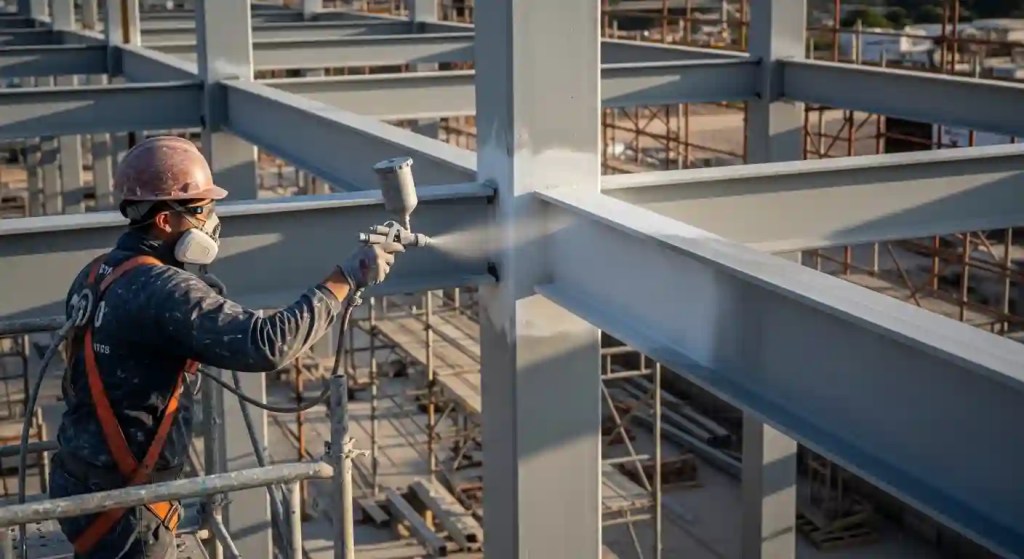
Plan Your Building With Systems West
Systems West supports commercial and industrial projects from early planning through construction. Our services include construction coordination, structural fabrication, steel erection, crane services, repairs, and structural maintenance.
Our team first reviews the building’s intended use and space requirements. We also consider structural demands, site conditions, budget, and schedule. This helps the project team choose an appropriate construction approach.
Frequently Asked Questions
What is the difference between structural steel and a pre-engineered metal building?
Structural steel is a broad construction method. A pre-engineered metal building is a coordinated system that typically includes primary framing, secondary members, roofing, and wall components.
How long does steel erection take?
The timeline varies by building size, complexity, site access, weather, delivery sequence, crane requirements, and foundation readiness. A project-specific erection schedule should be prepared after the plans and site conditions are reviewed.
Is a steel-framed building fireproof?
No. Steel does not burn, but it loses strength at high temperatures. Code-required protection may include coatings, encasement, or fire-rated assemblies.
Does a steel building need insulation?
Yes. Insulation, air sealing, vapor control, and thermal breaks help control heat transfer, moisture, and condensation.
What are the main components of a steel frame?
Core components include vertical columns, horizontal beams, floor joists, bracing systems, and connectors for stability and load transfer.
Can an existing steel building be expanded?
Many can be expanded, especially when future additions were considered during the original design. An engineer should review the existing structure before work begins.
Is steel more expensive than concrete or wood?
Not always. The comparison depends on building size, spans, structural loads, foundations, material prices, labor, fire protection, finishes, site conditions, and schedule. Costs should be compared using the same project scope.