

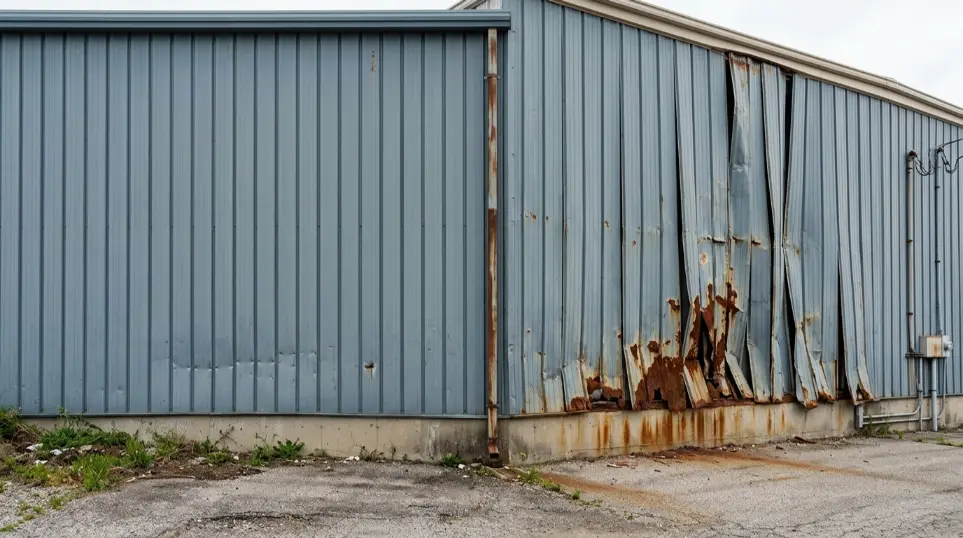
Damaged metal building wall panels do not always need to be replaced. Minor dents, scratches, loose fasteners, and limited surface damage may be repairable, while severe corrosion, large impact damage, panel distortion, or damage that affects the wall system may require replacement. The right decision depends on the type and extent of the damage, the condition of the panel, and whether moisture has reached the materials behind it.
Systems West provides commercial metal building repair services to help businesses address damaged building components and maintain the condition of their facilities. If metal wall panels show signs of damage, corrosion, or moisture problems, a professional assessment can help determine whether repair is practical or replacement is the better option.
What Causes Damage to Metal Building Wall Panels?
Metal building wall panels can become damaged through everyday impacts, exposure to moisture, loose fasteners, and severe weather. Identifying the cause helps building owners understand how serious the problem may be and whether the panels need repair or replacement.
Impact Damage From Vehicles, Equipment, or Debris
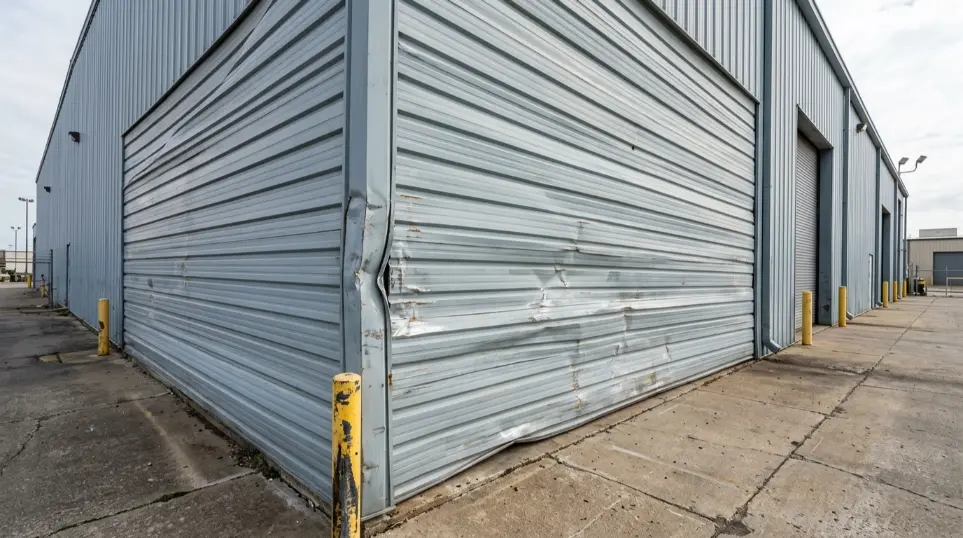
Vehicles, forklifts, machinery, and flying debris can dent, bend, or puncture metal wall panels. Minor dents may affect the appearance without compromising the panel’s function. However, deep dents, torn metal, or large openings can weaken the panel and allow water to enter the building. The extent of the damage and the condition of the surrounding panels should be assessed before deciding on a repair.
Rust, Corrosion, and Protective Coating Failure
Metal wall panels rely on protective coatings to help prevent rust and corrosion. Scratches, worn finishes, standing moisture, and prolonged exposure to harsh conditions can damage this protection. Small areas of surface rust may be treatable if the underlying metal remains in good condition. Widespread corrosion, deep rust, or metal that has become weak or perforated may require panel replacement.
Research published in the Journal of Building Engineering identifies moisture penetration, deteriorated joints, and hidden corrosion as factors that can contribute to deterioration in steel façade systems. This supports the need to assess both visible rust and potential damage behind metal wall panels. If corrosion has spread or moisture has reached concealed components, a professional inspection can help determine the extent of the damage and whether repair or replacement is appropriate.
Loose Fasteners, Open Seams, and Failed Seals
Fasteners, panel seams, and seals help keep metal wall systems secure and limit water entry. Over time, fasteners may loosen, seals may deteriorate, and panel joints may develop gaps. These problems can allow moisture to reach the wall assembly and damage insulation or other materials behind the panels. Depending on the cause and extent of the problem, tightening or replacing fasteners, renewing failed seals, or repairing panel connections may resolve the issue.
Wind, Hail, and Other Weather-Related Damage
Strong winds, hail, heavy rain, and temperature changes can affect metal building wall panels. Wind may loosen panels or fasteners, while hail and windblown debris can leave dents or damage protective coatings. Heavy rain can expose weaknesses around seams, joints, and openings. After severe weather, inspect the walls for loose panels, visible deformation, damaged finishes, and signs of water intrusion. Significant damage should be assessed by a qualified professional to determine whether repairs are sufficient or replacement is necessary.
Signs Your Metal Building Wall Panels Need Attention
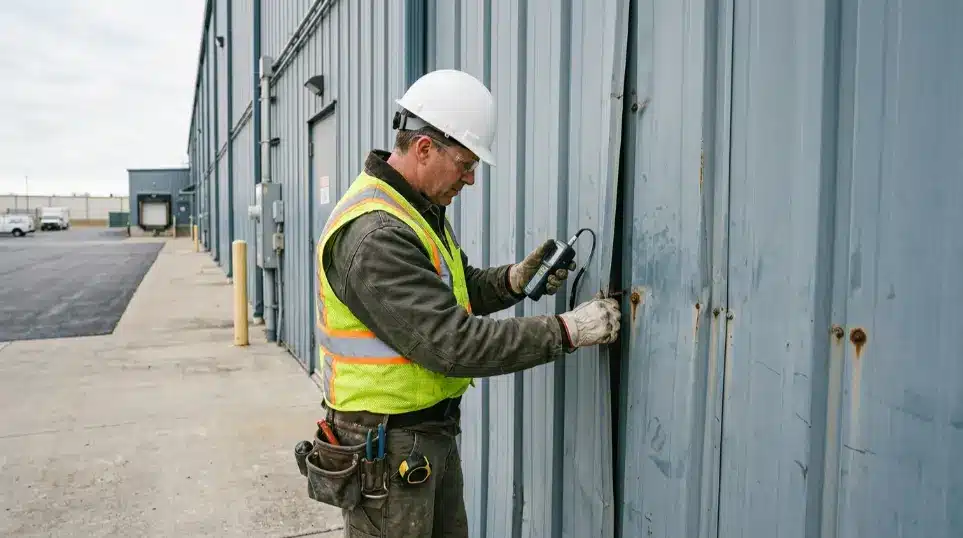
Visible changes to metal building wall panels can indicate damage that needs attention. Some issues may affect only the panel’s appearance, while others can weaken the wall system or allow moisture into the building. Recognizing these warning signs can help building owners determine when a closer inspection is needed.
Dents, Creases, and Bent Panels
Dents and creases can develop when vehicles, equipment, or debris strike a metal wall. Small dents may be mainly cosmetic, but deep creases, bent edges, and distorted panels can affect how the panels fit together. Severe bending may also place stress on fasteners and nearby connections. The size, location, and extent of the damage help determine whether the panel remains serviceable.
Rust Spots, Peeling Coatings, and Corrosion
Rust spots, peeling paint, and damaged protective coatings can signal that moisture is affecting the metal surface. Early corrosion may be limited to a small area, but it can spread if the underlying cause is not addressed. More serious warning signs include flaking metal, deep rust, and holes caused by corrosion. These conditions may indicate that the panel has lost some of its strength and needs closer evaluation.
Loose Panels, Gaps, or Separated Seams
Metal wall panels should remain securely attached and fit properly with adjacent panels. Loose sections, visible gaps, separated seams, or protruding fasteners may indicate movement, damaged connections, or deteriorated seals. These issues can reduce the wall’s ability to keep out wind and rain. If gaps appear to be growing or multiple panels have shifted, the surrounding wall system may also need inspection.
Water Stains or Moisture Behind the Wall Panels
Water stains, damp insulation, musty odors, or moisture on interior walls may indicate water entering through damaged panels or seams. Since water can travel behind the wall before becoming visible, the damage may extend beyond the affected area. A professional assessment can help identify hidden problems and determine whether repair or replacement is needed.
Metal Wall Panel Repair vs. Replacement: What Should You Consider?
Choosing between repairing and replacing metal building wall panels depends on the extent of the damage, the condition of the metal, and whether the problem affects other parts of the wall system. Comparing these factors can help building owners understand which option may be more appropriate.
| Factor | Repair may be suitable when | Replacement may be suitable when |
|---|---|---|
| Damage extent | Damage is limited to a small, localized area | Damage is extensive or affects multiple panels |
| Panel condition | The panel and its connections remain in good condition | The panel is torn, severely bent, or no longer functions properly |
| Corrosion | Corrosion is limited and the affected area can be treated | Corrosion has significantly weakened or damaged the metal |
| Moisture | The source can be corrected without extensive material removal | Moisture has damaged concealed materials or affected multiple areas |
| Repeat problems | The issue can be corrected with a reliable, lasting repair | The same problem keeps returning after previous repairs |
These factors should be considered together rather than individually. A damaged panel may be repairable even when nearby panels need attention, while hidden moisture or weakened connections may require more extensive work. A professional assessment can help identify the cause of the damage and determine the most suitable approach for the affected wall section.
What to Check Before Choosing a Repair or Replacement
Before deciding how to address damaged metal wall panels, building owners should consider the condition of the surrounding structure, the availability of compatible materials, and the full extent of the damage. Discussing these factors with a qualified contractor can help establish the scope of work and avoid overlooking problems that may affect the repair.
The Condition of the Framing and Surrounding Panels
The framing and adjacent panels should be checked to determine whether the damage is limited to one area or affects a larger section of the wall. Bent framing, loose connections, or deteriorated neighboring panels may require additional work before a damaged panel can be repaired or replaced. Assessing these components helps establish what work is needed to restore the wall system.
Matching the Existing Panel Profile, Finish, and Fasteners
Replacement panels should be compatible with the existing wall system. Panel profile, dimensions, metal type, finish, and fastener requirements can affect how well a new panel fits and performs. A contractor can help identify suitable materials and determine whether a close match is available, particularly for older buildings or discontinued panel styles.
Checking for Concealed Moisture or Insulation Damage
Water entering through damaged panels, seams, or fasteners may affect insulation and other materials behind the wall. Before completing the work, the contractor should assess whether concealed moisture, corrosion, or deterioration is present. Addressing these issues helps prevent the visible panel damage from being treated while the underlying problem remains.
Comparing Repair Scope, Replacement Costs, and Disruption
The decision should account for the full scope of work, including materials, labor, access requirements, and any repairs to surrounding components. A localized repair may be appropriate for limited damage, while extensive deterioration may call for panel replacement or work across a larger wall section. Building owners should compare the proposed options, expected costs, and potential disruption to facility operations before making a decision.
Why Professional Assessment Matters for Metal Wall Panel Damage
A professional assessment helps determine whether damaged metal wall panels can be repaired or need replacement. A qualified contractor can evaluate the extent of the damage, inspect surrounding panels and connections, and identify potential problems such as hidden corrosion or moisture behind the wall. This helps ensure the recommended work addresses the underlying issue rather than only the visible damage.
An assessment can also help identify compatible replacement materials and determine whether the work should be limited to individual panels or extend to a larger section of the wall. Systems West provides commercial metal building repair services to help businesses address building damage and determine the work needed to maintain their facilities. Working with a qualified contractor helps building owners make informed decisions based on the condition of their building.
Get Expert Help With Metal Building Wall Panel Damage
Damaged metal wall panels can lead to bigger problems if corrosion, loose connections, or moisture intrusion are left unaddressed. Systems West provides commercial metal building repair services to help businesses assess wall damage and determine whether repairs or panel replacement are needed.
Contact our team to discuss your building’s condition and plan the next steps for your facility.
Conclusion
Deciding whether to repair or replace damaged metal building wall panels depends on the extent of the damage, the condition of the metal, and whether moisture or corrosion has affected the surrounding structure. Minor, localized issues may be repairable, while severe dents, deep corrosion, recurring leaks, or compromised connections may require panel replacement.
A professional assessment can help identify underlying problems and determine the right approach for your building. Systems West provides commercial metal building repair services to help businesses address damaged building components and maintain their facilities. Evaluating panel damage early can help building owners plan the necessary work and reduce the risk of further deterioration.
Frequently Asked Questions
Can a dented metal building wall panel be repaired?
Yes, a dented metal wall panel may be repairable if the damage is minor and the panel remains structurally sound. Deep creases, torn metal, or severe bending may require replacement. The decision depends on the extent of the damage and whether the panel can still perform its intended function.
Can rusted metal wall panels be repaired, or should they be replaced?
Panels with limited surface rust may be repairable if the corrosion can be treated and the metal remains in good condition. Deep rust, holes, or widespread corrosion may weaken the panel enough to require replacement. The source of the corrosion should also be addressed to help prevent further damage.
Do damaged wall panels always cause water leaks?
No, not all damaged wall panels cause water leaks. Minor dents or surface scratches may not affect the wall’s ability to keep out moisture. However, punctures, open seams, loose fasteners, and damaged seals can allow water to enter, so these issues should be assessed.
Can you replace one metal wall panel without replacing the entire wall?
Yes, an individual metal wall panel can often be replaced if the damage is localized and the surrounding panels, framing, and connections remain in good condition. The replacement must be compatible with the existing wall system. More extensive damage may require work on multiple panels or supporting components.
How do you know if damage extends behind a metal wall panel?
Water stains, damp insulation, musty odors, corrosion around seams, and recurring leaks may indicate damage behind a panel. However, hidden problems are not always visible from the outside. A qualified contractor can assess the affected area and determine whether concealed materials or supporting components need attention.