

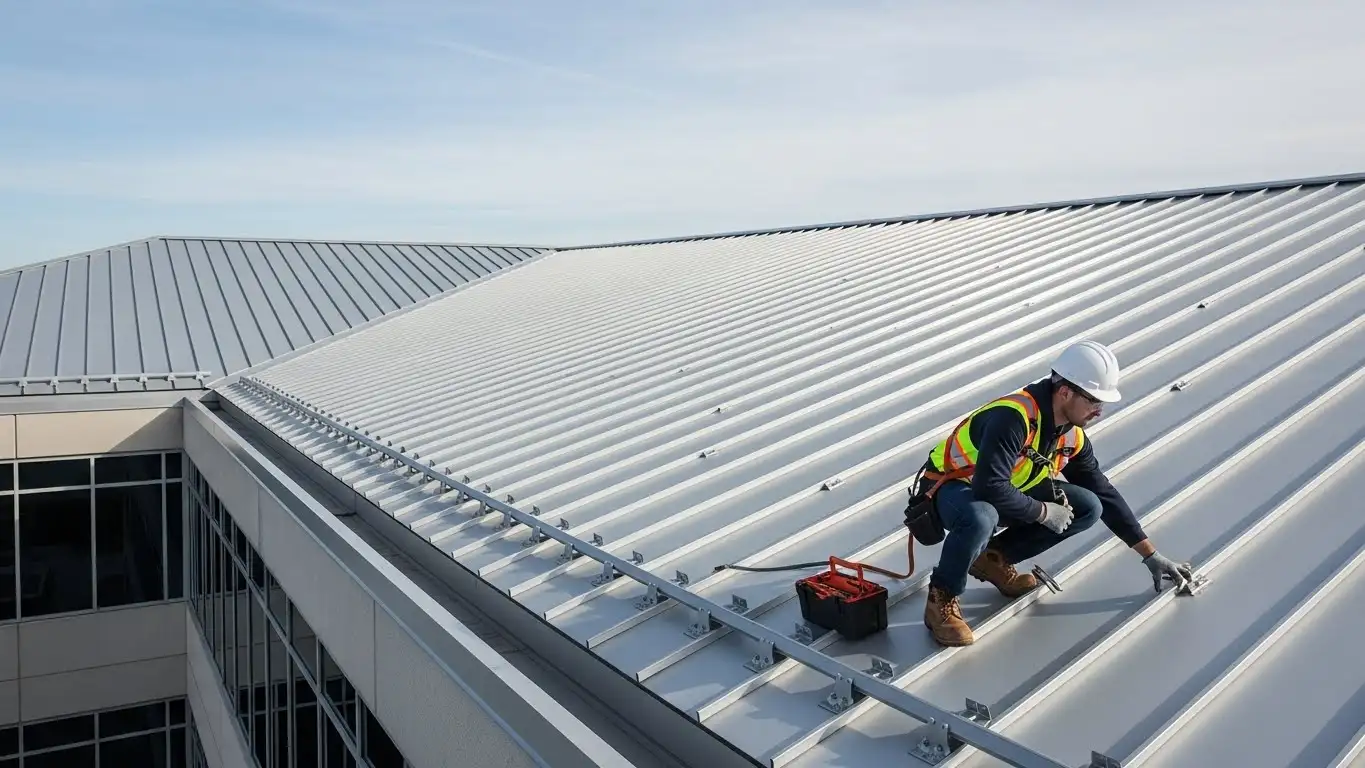
Yes, metal roofs require regular maintenance, but they generally need less upkeep than many traditional roofing systems. Routine inspections, debris removal, drainage checks, corrosion control, and inspections of seams, fasteners, flashing, and roof penetrations can help prevent leaks, protect the roof, and extend its service life.
For commercial and industrial buildings, regular maintenance is especially important because roof damage can affect equipment, inventory, and daily operations. Systems West provides commercial and industrial building services to help identify roof issues early and keep metal roofing systems performing properly.
Why Is Metal Roof Maintenance Important?
Regular metal roof maintenance helps prevent small problems from turning into expensive repairs. Even durable metal roofing can develop corrosion, loose fasteners, damaged seams, blocked drainage, or leaks over time. Routine inspections and timely maintenance help keep these issues under control and protect the building from water and weather damage.
Proper maintenance can also help:
- Prevent leaks and water intrusion: Checking seams, flashing, fasteners, and roof penetrations can help identify areas where water may enter.
- Control rust and corrosion: Removing debris and addressing early signs of corrosion can help protect exposed metal surfaces.
- Protect roof coatings: Keeping the roof clean and repairing damaged areas helps maintain protective finishes that shield the metal from moisture and weather.
- Keep fasteners and panels secure: Loose or damaged fasteners can allow movement, water entry, and other roof problems.
- Reduce unexpected repair costs: Finding minor damage during routine inspections is usually easier to address than waiting until it causes a larger roofing problem.
- Maintain roof performance: A clean, properly maintained roof can continue to provide reliable protection for the building and its contents.
How Often Should a Metal Roof Be Inspected?

A metal roof should generally be inspected at least twice a year, with additional inspections after major storms or severe weather. Spring and fall are common times to check the roof, but the right schedule depends on the roof’s age, condition, environment, and building use. Commercial and industrial buildings may need more frequent inspections because rooftop equipment, service work, and foot traffic can create additional wear.
Regular inspections help identify problems before they lead to leaks or more extensive damage. If a roof has a history of leaks, corrosion, damaged coatings, or other issues, it may require more frequent inspections.
What Should a Metal Roof Inspection Include?
A metal roof inspection should cover the entire roofing system, including the panels, seams, fasteners, flashing, roof penetrations, drainage areas, edges, and protective coatings. Check the panels for dents, punctures, scratches, rust, or corrosion, while seams and fasteners should be examined for signs of loosening, damage, or deterioration. Flashing and sealants around vents, skylights, HVAC equipment, pipes, and other roof penetrations should also be checked for cracks, gaps, or wear.
Gutters, downspouts, drains, and other drainage paths should be clear of debris and checked for standing water. After severe weather, inspect the roof for displaced panels, damaged flashing, loose fasteners, dents, and other storm-related damage. On commercial and industrial buildings, pay close attention to areas around rooftop equipment and locations that receive regular foot traffic. Keeping records of inspections and repairs can also help track the roof’s condition and plan future maintenance.
Metal Roof Maintenance Schedule
A regular maintenance schedule helps keep a metal roof in good condition and makes it easier to catch problems early. The exact frequency can vary based on the roof’s age, weather exposure, building use, and condition, so the schedule should be adjusted when needed.
A typical maintenance routine includes regular inspections at least twice a year, cleaning and clearing debris as needed, checking gutters and drainage, and inspecting seams, fasteners, flashing, and roof penetrations. After a major storm, the roof should also be checked for damage before normal maintenance continues.
For commercial and industrial buildings, maintenance should be planned around other building work and rooftop activity. Keeping a record of inspections, cleaning, repairs, and coating work can help building owners track the roof’s condition and address recurring issues before they become more serious.
How to Clean and Maintain a Metal Roof
Regular cleaning helps remove dirt, leaves, branches, and other debris that can trap moisture against a metal roof. Start by clearing loose debris and then use water with a mild, non-abrasive cleaner and a soft-bristle brush when needed. Pay particular attention to areas around seams, fasteners, roof penetrations, gutters, and drainage points where debris can collect.
After cleaning, inspect the roof for signs of rust, damaged coatings, loose fasteners, or other issues that may need attention. Commercial and industrial roofs may require professional cleaning when they are difficult to access or have heavy buildup. Cleaning should also be coordinated with routine inspections so potential problems are identified rather than simply covered up.
What Should You Avoid When Cleaning a Metal Roof?
Avoid harsh chemicals, abrasive cleaning tools, and high-pressure washing that can damage the roof’s protective finish or coating. Do not scrape the surface aggressively or use cleaning methods that could scratch the metal. It is also important to avoid allowing debris to remain around drains, gutters, seams, and roof penetrations, where trapped moisture can contribute to corrosion and other problems.
Commercial Metal Roof Maintenance Considerations
Commercial metal roofs often have more equipment, penetrations, and service activity than residential roofs. HVAC systems, vents, pipes, skylights, and other equipment can create additional areas where water may enter or where the roofing system can experience wear. Regular maintenance should account for these areas along with the main roof surface.
Rooftop Equipment and Penetrations
Pay close attention to the areas around HVAC equipment, vents, pipes, skylights, and other roof penetrations. Check the surrounding flashing, seams, fasteners, and sealants for damage, gaps, corrosion, or signs of water intrusion. Service work and regular foot traffic around rooftop equipment can also damage panels or protective coatings, so these areas should be inspected after maintenance or repair work.
Maintenance Records and Planned Inspections
Keeping records of roof inspections, cleaning, repairs, coating work, and recurring problems makes it easier to track the condition of a commercial roof. Planned inspections can then be scheduled based on the roof’s condition, building use, weather exposure, and previous maintenance history. This approach helps identify developing issues early and allows repairs to be planned before they cause larger disruptions to the building.
What Research Says About Hidden Corrosion in Metal Roofing
Corrosion is not always visible from the surface of a metal roof. Research on metal roofing has found that corrosion can develop beneath the roofing material, particularly when moisture becomes trapped, and hidden corrosion can be difficult to detect through a basic visual inspection. This makes regular roof inspections important for identifying potential corrosion before it affects the condition and strength of the roofing material.
Research: Wicker, M., Alduse, B. P., & Jung, S. (2018). Detection of hidden corrosion in metal roofing shingles utilizing infrared thermography. Journal of Building Engineering.
Steel Roof Maintenance
Steel roofing is durable and designed to withstand demanding weather conditions, but it still needs regular maintenance to protect the metal from moisture, corrosion, and surface damage. Routine inspections can help identify early signs of rust, worn coatings, loose fasteners, and other issues before they affect larger areas of the roof.
Prevent Rust and Corrosion
Check steel roof panels, seams, fasteners, edges, and areas where water tends to collect for early signs of rust or corrosion. Dirt, debris, standing water, and damaged protective finishes can leave the metal more exposed to moisture. Addressing these conditions early can help prevent corrosion from spreading and causing more extensive damage.
Maintain Protective Coatings
Protective coatings help shield steel roofing from moisture and weather exposure. During routine inspections, look for scratches, peeling, worn areas, or other coating damage. Damaged areas should be addressed according to the roofing system and coating manufacturer’s recommendations to maintain protection.
Pay Attention to Environmental Exposure
Weather and the surrounding environment can affect how often a steel roof needs maintenance. Heavy rain, snow, strong winds, humidity, debris, and nearby trees can increase wear or leave moisture on the roof. Commercial and industrial buildings may also have equipment or activities that expose roofing surfaces to additional debris or moisture, making regular inspections especially useful.
Common Metal Roof Problems to Watch For
Regular inspections can help identify metal roof problems before they lead to leaks or more extensive damage. Some issues develop gradually, while others can appear after severe weather, maintenance work, or prolonged exposure to moisture.
Rust and Corrosion
Rust can develop when the metal or its protective coating is exposed to moisture. Watch for discolored areas, surface rust, or corrosion around seams, fasteners, edges, and areas where water collects. Early attention can help prevent corrosion from spreading.
Loose or Missing Fasteners
Fasteners can loosen, corrode, or go missing over time because of weather exposure and normal movement of the roofing system. Damaged or missing fasteners can leave openings where water may enter and should be addressed promptly.
Failed Seams or Sealants
Separated seams, cracked sealants, and deteriorated joint areas can create paths for water to enter the building. These areas should be checked regularly, especially where different sections of the roof meet.
Damaged Panels
Dents, punctures, scratches, and bent panels can result from severe weather, falling debris, or rooftop activity. Damaged panels can also expose underlying areas to moisture and should be evaluated when damage is found.
Leaks and Water Intrusion
Water stains, damp areas, or recurring leaks inside a building can indicate a problem with the roof. Because water can travel from the original entry point, the visible leak may not be directly below the damaged roofing area.
Damaged Flashing
Flashing helps direct water away from roof transitions and penetrations. Cracks, gaps, corrosion, or loose flashing around vents, skylights, HVAC equipment, and other openings can increase the risk of water intrusion.
Blocked Drainage
Blocked gutters, drains, and downspouts can prevent water from leaving the roof properly. Standing water and trapped debris can increase moisture exposure and contribute to corrosion or other roofing problems.
When Does a Metal Roof Need Professional Maintenance?
A metal roof may need professional maintenance when damage is beyond routine cleaning or inspection. Signs such as persistent leaks, widespread rust or corrosion, damaged panels, loose seams, recurring fastener problems, or deteriorated flashing should be evaluated by a qualified roofing professional. Professional attention is also useful when problems are difficult to access or may involve areas beneath the visible roof surface.
Commercial and industrial buildings may also benefit from professional maintenance when the roof has extensive equipment, multiple penetrations, or areas that receive regular foot traffic. After major storms, a professional inspection can help identify damage that may not be obvious from the ground. Addressing roofing problems early can help prevent more extensive repairs and reduce the risk of disruption to building operations.
How Does Maintenance Affect Metal Roof Lifespan?
Regular maintenance can help a metal roof reach its expected service life by addressing problems before they cause more extensive damage. Cleaning away debris, controlling corrosion, checking fasteners and seams, maintaining flashing, and keeping drainage paths clear can all help protect the roofing system from moisture and weather-related wear.
How long a metal roof lasts also depends on the type and quality of the roofing materials, installation, climate, weather exposure, and the condition of its protective coating. Maintenance cannot prevent every roofing problem, but finding and addressing damage early can help preserve the roof’s performance and reduce premature deterioration.
Keep Your Metal Roof in Good Condition
Regular maintenance helps catch corrosion, leaks, damaged fasteners, and other roofing problems before they become more costly. A planned maintenance approach can also help protect your commercial or industrial building and keep its metal roof performing properly.
If your metal roof needs inspection, repair, or ongoing maintenance, Systems West can help. Contact our team to discuss your roofing needs and find the right maintenance or repair solution for your building.
Conclusion
Regular metal roof maintenance helps protect a building from leaks, corrosion, storm damage, and premature wear. Routine inspections, proper cleaning, clear drainage, and timely attention to fasteners, seams, flashing, and roof penetrations can help keep the roofing system in good condition.
For commercial and industrial buildings, planned maintenance can also make it easier to identify problems before they lead to costly repairs or disrupt building operations. If your metal roof needs inspection, repair, or ongoing maintenance, Systems West can help keep your roofing system performing as intended.
Frequently Asked Questions
What maintenance does a metal roof need?
Metal roof maintenance typically includes regular inspections, cleaning, debris removal, drainage checks, and inspection of seams, fasteners, flashing, and roof penetrations. It is also important to look for rust, corrosion, damaged coatings, loose components, and signs of water intrusion.
How often should a metal roof be inspected?
A metal roof should generally be inspected at least twice a year and after major storms or severe weather. Commercial and industrial roofs may require more frequent inspections depending on their condition, weather exposure, rooftop equipment, and building use.
How often should a metal roof be cleaned?
A metal roof should be cleaned as needed to remove leaves, branches, dirt, and other debris that can trap moisture. Many roofs benefit from cleaning during regular maintenance inspections, with additional cleaning when debris builds up or drainage areas become blocked.
How do you prevent rust on a steel roof?
Regular inspections, keeping the roof free of debris and standing water, and maintaining its protective coating can help prevent rust on a steel roof. Rust or coating damage should be addressed early before corrosion spreads to surrounding areas.
Can you maintain a metal roof yourself?
Some basic maintenance, such as clearing accessible debris and checking visible drainage areas, may be handled as part of routine building upkeep. However, walking on a metal roof or attempting repairs can create safety and damage risks. Leaks, corrosion, damaged panels, flashing problems, and other significant issues should be evaluated by a qualified professional.