


An overhead crane system lifts, lowers, and moves heavy materials across a defined work area inside a commercial or industrial facility. It typically uses a bridge, runway, trolley, and hoist to move loads, making it useful for handling equipment, raw materials, and large components without relying solely on floor-level equipment.
Systems West helps businesses plan and complete commercial building projects, including overhead crane installation and structural fabrication and upgrades. When adding a crane to a facility, the crane configuration, lifting requirements, and existing building structure all need to be considered to support safe, practical operation.
What Is an Overhead Crane System?
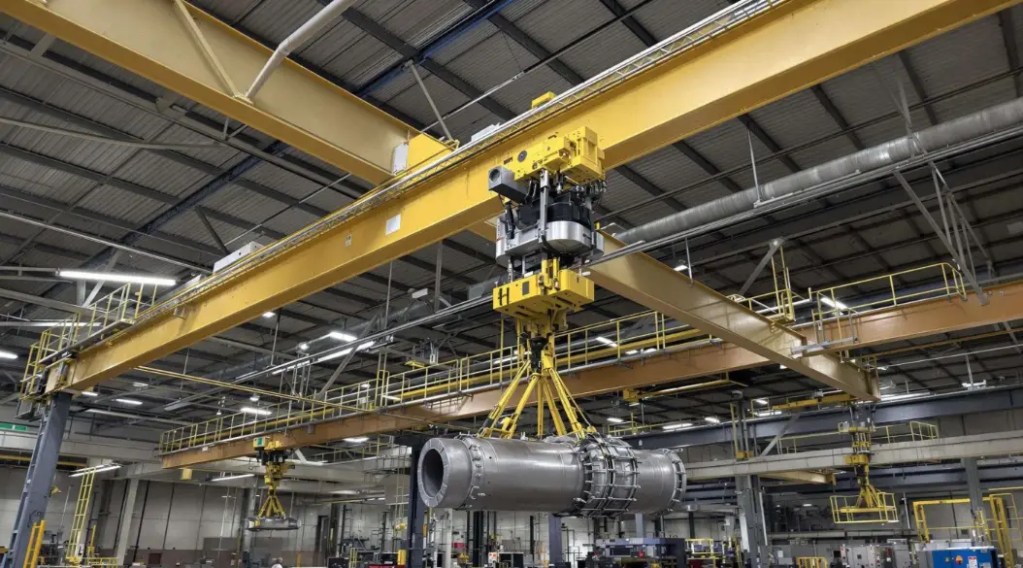
An overhead crane system moves materials through a work area using an elevated track and a moving bridge. Unlike forklifts, which carry loads along the floor, an overhead crane moves loads above the working space. This arrangement can help facilities handle heavy materials while keeping floor space available for workers, vehicles, and other operations.
Overhead cranes are commonly used in manufacturing plants, warehouses, steel fabrication shops, and other industrial facilities where materials need to move between workstations or across a defined area. The crane’s coverage depends on its runway layout, bridge span, and available clearance within the building.
How Does an Overhead Crane Work?
An overhead crane uses three main movements to position a load:
- Hoisting: Raises or lowers the load to the required height.
- Cross travel: Moves the trolley and suspended load across the bridge.
- Long travel: Moves the bridge along the runway to carry the load to another position.
Together, these movements allow the crane to move loads vertically and horizontally within its designated working area. The available movement depends on the crane’s design and the layout of the facility.
Main Components of an Overhead Crane System
An overhead crane system consists of several connected components that support lifting and load handling. Each part has a specific role, from providing the crane’s travel path to holding and controlling the load. The main components include the runway, bridge, end trucks, trolley, hoist, hook, and control systems.
Runway and Runway Rails
The runway provides the travel path for the crane bridge. It typically consists of rails or a similar running surface supported by runway beams. These beams connect to the building’s supporting structure, so the runway arrangement must suit the facility’s design and the crane system being used.
Bridge and Girders
The bridge spans the crane’s working area and provides the main structure that carries the trolley and lifting equipment. It includes one or two main girders, depending on the crane design. Single-girder cranes use one main girder, while double-girder cranes use two. The appropriate configuration depends on the project’s lifting requirements and facility conditions.
End Trucks
End trucks connect to the ends of the bridge and contain wheels that run along the runway. They support the bridge and help keep it aligned as it travels along the crane’s designated path.
Trolley
The trolley is mounted on the bridge and carries the hoist. It is designed to move along the bridge structure, positioning the lifting equipment within the crane’s working area.
Hoist and Hook
The hoist is the lifting mechanism that raises and lowers a load. It may use a chain or wire rope, depending on the equipment design. The hook or another suitable lifting attachment connects the hoist to the load, allowing materials to be lifted and held during handling.
Controls, Electrical Systems and Safety Devices
The control and electrical systems provide the power and operating functions needed to run the crane. Operators may use pendant controls or a radio remote, depending on the system configuration. Other components can include brakes, limit devices, and overload protection where applicable. These features help control crane operation and support safe load handling when properly selected, installed, and maintained.
Types of Overhead Crane Systems

Overhead cranes come in different configurations to suit a facility’s lifting needs, building layout, and available space. Key differences include the number of main girders, how the crane is supported, and where it travels in relation to the runway. Understanding these designs helps businesses identify options to consider for their facility.
Single-Girder vs. Double-Girder Cranes
The main difference is the number of main girders supporting the crane bridge. A single-girder crane uses one main girder, while a double-girder crane uses two. This affects the crane’s structural arrangement and the way its lifting equipment is positioned.
The choice depends on factors such as the loads being handled, required lifting height, available headroom, and the facility’s layout. Neither design is suitable for every application, so the crane’s specifications should match the intended work.
Top-Running vs. Under-Running Cranes
Top-running and under-running cranes differ in how they travel along their supporting runway. A top-running crane travels on rails mounted on top of runway beams. An under-running crane is suspended from the runway arrangement, with its wheels running along the lower flange of the supporting track or beam.
The building layout and support arrangement can influence which design is practical. Available headroom, existing structural features, and the intended coverage area should all be considered when evaluating these options.
Bridge Cranes vs. Gantry Cranes
Bridge cranes typically travel along an elevated runway supported by a building’s structure or a dedicated support framework. Gantry cranes, by contrast, use legs that support the bridge and run on floor-level rails or another suitable travel surface.
Bridge cranes may be considered when a facility can accommodate an elevated runway system. Gantry cranes can be useful where a leg-supported arrangement suits the work area or where building-supported runways are not practical. The right option depends on the facility layout, lifting requirements, and available support structure.
Where Are Overhead Crane Systems Used?
Overhead crane systems are used in facilities where heavy materials, machinery, or large components need to be lifted and moved between work areas. In manufacturing and production facilities, they help move raw materials between production stages, position machine parts during assembly, and handle finished components. In warehouses and industrial buildings, overhead cranes can move bulky goods, machinery, and materials within designated storage and handling areas.
Steel fabrication shops use overhead cranes to move beams, plates, and fabricated steel assemblies between cutting, welding, and assembly stations. In agricultural and equipment-handling facilities, cranes may be used to lift heavy machinery parts and bulky components for handling or servicing. Assembly and maintenance areas also use overhead cranes to position large equipment during assembly, installation, repair, or replacement of heavy parts. The crane’s configuration and working area depend on the facility layout, the loads being handled, and the tasks it needs to perform.
What Should You Consider When Selecting an Overhead Crane?
Selecting an overhead crane starts with understanding the materials it needs to handle, the work area it must cover, and the conditions in which it will operate. The right configuration depends on how the facility uses the crane and the tasks it needs to perform.
Load Weight and Lifting Frequency
Consider the heaviest load the crane will need to lift, how often lifting takes place, and the type of materials being handled. The lifting equipment and any attachments must suit the load and the task. Understanding these requirements helps establish the specifications needed for the intended operation.
Span, Travel Distance and Hook Height
The crane must cover the required working area and provide enough vertical clearance to lift and position loads. Consider the width of the area, the distance the bridge and trolley need to travel, and the hook height required for handling materials. These measurements help determine the crane configuration and its working range.
Facility Layout and Working Conditions
The facility layout can affect how the crane operates within the available space. Account for machinery, storage areas, walkways, overhead obstructions, and access needed for moving materials. Operating conditions such as dust, heat, and moisture should also be considered because they may affect the equipment and the features required for the environment.
Power and Control Requirements
The crane’s power supply and control system should match the facility’s operating requirements. Depending on the setup, operators may use pendant controls or a radio remote. Control placement, operator visibility, and access to the work area should also be considered so the system can be operated appropriately for the tasks involved.
Can an Existing Building Support an Overhead Crane?
An existing building may be able to accommodate an overhead crane, but its suitability depends on the proposed crane loads, runway arrangement, and the building’s structural capacity. A qualified structural assessment can determine whether the current structure can support the system or needs modifications.
The Occupational Safety and Health Administration (OSHA) states in its overhead and gantry crane standard that crane modifications and changes to rated load require the supporting structure to be thoroughly checked by a qualified engineer or the equipment manufacturer. This reinforces the need to assess the building structure alongside the proposed crane system before making changes. The assessment should consider the runway supports, beams, columns, and connections relevant to the proposed installation.
Crane loads transfer through the runway rails and beams to the supporting structure. Existing columns, beams, structural connections, and building framing must be evaluated to determine whether they can handle these loads. Depending on the building’s design and condition, additional runway beams, steel supports, or reinforced connections may be required.
Assessing the crane system and building structure together before installation helps identify potential limitations and determine the work needed. Systems West provides structural fabrication and upgrade services for commercial facilities that require structural modifications to accommodate overhead crane systems.
Overhead Crane vs. Other Material Handling Equipment
Commercial and industrial facilities use different types of material handling equipment depending on how materials need to be lifted, transported, and positioned. Overhead cranes handle loads above the work area, while other equipment may be better suited to floor-level transport or lifting tasks in specific locations.
| Equipment | Main distinction |
|---|---|
| Overhead crane | Moves loads through an elevated working area along a defined path. |
| Forklift | Transports materials at floor level between locations. |
| Hoist | Primarily raises and lowers loads and can be part of an overhead crane system. |
| Gantry crane | Uses a leg-supported structure to support the bridge and lifting equipment. |
The right equipment depends on the task, the available workspace, and how materials need to move through the facility. An overhead crane may suit operations that require repeated lifting across a defined work area, while a forklift may be more practical for transporting materials between different floor-level locations. Reviewing these differences helps businesses identify the equipment that fits their operation.
What Happens During Overhead Crane Installation?
Overhead crane installation involves more than assembling the lifting equipment. The crane system must suit the facility’s operations, fit the available space, and work with the building’s supporting structure. Planning these elements before installation helps identify potential issues and coordinate the work required.
The process typically begins with reviewing the lifting requirements and proposed crane configuration. The building and runway support arrangements are then assessed to determine whether they can accommodate the system. If structural modifications are needed, they must be coordinated with the crane design and installation plan. Once the required preparations are complete, the crane system is installed and undergoes applicable testing and commissioning checks before being placed into service.
Systems West provides overhead crane installation services for commercial and industrial facilities. Its team can help coordinate crane installation with the project’s structural and building requirements.
Planning an Overhead Crane Project for Your Facility
Planning an overhead crane project starts with identifying what the facility needs to lift and how the equipment will fit into daily operations. Clear project requirements help guide decisions about the crane arrangement, building preparation, and work needed before installation begins.
Start by documenting the lifting tasks, facility layout, and available installation access. Where necessary, arrange a structural assessment to determine whether the building can accommodate the proposed system or needs modifications. Coordinating crane installation with any required structural fabrication or building upgrades can also help prevent conflicts during the project.
Systems West supports commercial and industrial projects with overhead crane installation, structural fabrication and upgrades, and crane service.
Plan Your Overhead Crane Project with Systems West
An overhead crane system is a long-term investment that affects how your facility handles materials and uses its workspace. Planning the crane, structural requirements, and installation together helps you choose the right configuration for your operation.
Contact Systems West to discuss your facility’s requirements and determine the next steps for your overhead crane project.
Conclusion
An overhead crane system can help commercial and industrial facilities move heavy materials, handle equipment, and support daily operations. Choosing the right configuration requires understanding the lifting tasks, available workspace, and building requirements before installation begins.
Systems West provides overhead crane installation, structural fabrication and upgrades, and crane service to support commercial and industrial projects. Contact Systems West to discuss your facility’s requirements and plan the next steps for your overhead crane project.
Frequently Asked Questions
What Is the Difference Between an Overhead Crane and a Bridge Crane?
A bridge crane is a common type of overhead crane. It uses a horizontal bridge that travels along an elevated runway to move loads across a designated work area. The term overhead crane refers to the broader category of lifting systems that operate above the floor.
Can an Overhead Crane Operate in More Than One Work Area?
Yes, an overhead crane can serve multiple work areas if its runway layout and travel range provide the required coverage. The bridge span, available travel distance, and building layout determine which areas the crane can reach.
What Is the Role of a Runway in an Overhead Crane System?
The runway provides the travel path for the crane bridge and transfers loads through its supporting beams and structure. Its design and support arrangement must be suitable for the crane system and the building where it is installed.
Who Should Assess a Building Before Overhead Crane Installation?
A qualified structural engineer or other appropriately qualified structural professional should assess whether the existing building can accommodate the proposed crane system. The assessment may include the building’s framing, columns, runway supports, and connections.
Can an Overhead Crane Be Customized for a Specific Facility?
Overhead crane systems can be configured to suit different facility layouts and lifting applications. The appropriate arrangement depends on the work area, required travel paths, lifting tasks, and building conditions. The proposed configuration should be reviewed before installation to confirm that it suits the facility’s requirements.