

If you are wondering how long a metal roof lasts, the short answer is 40 to 60 years. Many well-maintained metal roofs on commercial and agricultural buildings go even longer than that. For building owners, that kind of lifespan makes a big difference. A roof that lasts 50 years costs far less over time than one that needs replacing every 20.
But the number alone does not tell the full story. How long a metal roof lasts depends on the panel system, the installation quality, the coating on the steel, and basic upkeep over the years. Get those things right, and a metal roof becomes the last roof your building ever needs.
This guide covers what affects metal roof lifespan, how different panel types compare, what shortens a roof’s life, and when to repair versus replace.
Metal Roof Lifespan at a Glance
Steel is the most common material in commercial and agricultural metal roofing. It balances cost, strength, and durability better than most alternatives. Here is how different systems compare:
| Metal Type / Panel System | Expected Lifespan |
| Galvalume-coated steel panels | 40–60+ years |
| Exposed fastener panels (R-panel, PBR) | 25–40 years |
| Standing seam (concealed fastener) | 40–60+ years |
| Aluminum panels | 40–60 years |
| Copper / Zinc | 70–100+ years |
The panel system matters as much as the metal type. A standing seam roof will outlast an exposed fastener panel on the same building by 15 to 20 years in most cases.
What Makes Metal Roofs Last So Long?
Metal holds up where other materials fail. Asphalt shingles crack and curl under UV exposure. Wood rots. Metal does neither.
A properly coated steel roof resists fire, high winds, pests, mold, and moisture. It does not absorb water or become brittle in cold weather. The Galvalume coating used on most commercial steel panels bonds directly to the steel and protects it from rust and corrosion. This is why a steel panel that loses its paint finish can still hold up structurally for many more years.
Factors That Affect How Long a Metal Roof Lasts
Following are the factors that affect the longevity of metal roof:
Panel Type & Fastening System
Exposed fastener panels use screws that go directly through the metal. Over time those screws back out, washers crack, and water works its way in through the holes. The metal is still fine — the fasteners become the weak point.
Standing seam panels use a concealed fastener system with no exposed penetrations. This makes them the better long-term choice for commercial buildings, especially on low-slope roofs.
Coating and Paint System
The coating does two jobs — it protects the steel and keeps the roof looking good. These two things do not fail at the same time. Paint fades and chalks in 15 to 25 years depending on finish quality. A PVDF or Kynar 500 system holds up longer than a standard SMP finish. But even when paint shows age, the Galvalume underneath is still protecting the steel.

Installation Quality
Poor flashing, over-tightened fasteners, and missing underlayment cause failures that show up years later. These are installation errors, not material failures. For commercial and pre-engineered steel buildings, working with contractors experienced in those specific systems makes a significant difference in long-term performance.
Climate and Environment
In the Midwest, temperatures swing dramatically between seasons. Metal expands and contracts repeatedly — it handles this well, but gauge selection and panel choice need to match local conditions. Buildings in high-moisture or agricultural environments need coatings rated for that exposure.
Maintenance
Metal roofs need very little upkeep but not zero. Debris in valleys holds moisture against the metal. Gutters that back up push water under panel laps. An annual inspection catches small problems before they become expensive ones.
What Shortens a Metal Roof's Lifespan?
Most early metal roof failures are preventable. The common causes:
- Poor ventilation causes condensation buildup that corrodes the roof from the inside out. The outside looks fine while the underside deteriorates — common in agricultural buildings with heavy humidity swings.
- Galvanic corrosion happens when two different metals touch each other. Copper flashing against a steel panel creates a reaction that eats away at the steel over time. This is a preventable installation mistake.
- Foot traffic damage occurs when workers step on the flat pan of a panel instead of the ribs. This dents the metal, cracks the coating, and opens the door to rust.
- Neglected penetrations are the most common source of leaks. Pipe boots, skylights, and HVAC curbs all use sealants that break down over time. Replacing sealant every 10 to 15 years is far cheaper than the water damage it prevents.
Warning Signs Your Metal Roof Needs Attention
A well-installed metal roof should not show serious problems for decades. These signs mean something needs attention now:
Rust streaks or corrosion spots appearing on panel surfaces. Fasteners that are loose, backing out, or missing. Cracked or separated sealant around vents, skylights, or pipe boots. Water stains on interior ceilings or walls after rain. Visible panel gaps opening at seams. Paint chalking heavily or fading before the warranty period ends.
Each of these is a path for water into the building. A cracked sealant that costs a few hundred dollars to fix today can mean a structural repair bill in the thousands if it sits through another two winters.
Standing Seam vs. Exposed Fastener: Which Lasts Longer?
Both systems use the same steel but perform differently over time.
Exposed fastener panels are more affordable and install faster. They work well for agricultural buildings and storage facilities. The trade-off is fastener maintenance at the 15 to 20 year mark.
Standing seam panels cost more upfront but remove the main mechanical failure point entirely. No exposed fasteners means no easy water entry. These roofs are better suited for commercial buildings where long-term performance takes priority over initial cost.
When to Repair vs. Replace a Metal Roof
Repair makes sense when damage is isolated — a blown panel, a cracked pipe boot, a failed sealant section, or early surface rust. These are targeted fixes at a fraction of replacement cost.
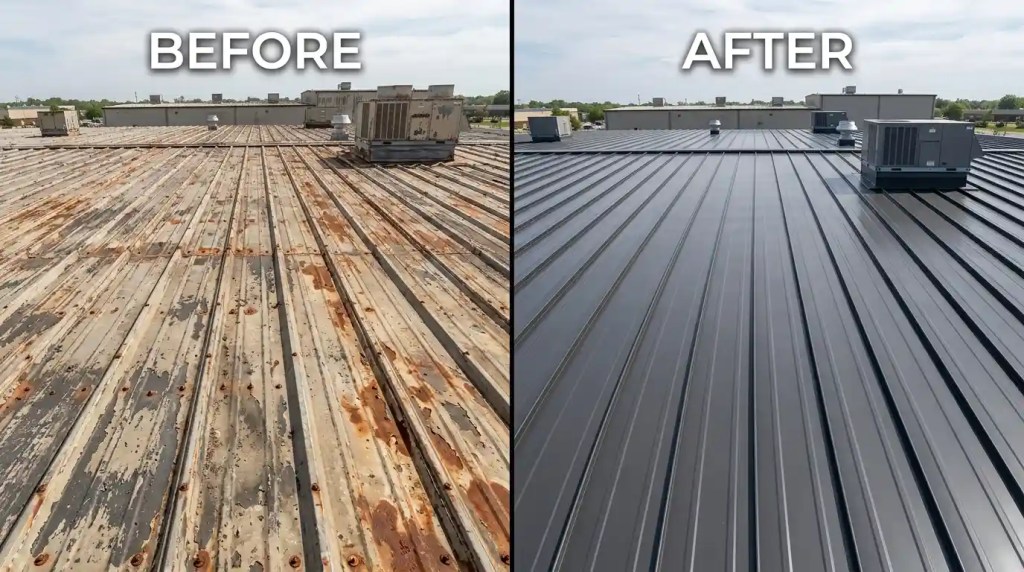
Replace or re-roof when problems are widespread. Rust through the panel substrate in multiple areas, leaks that cannot be traced to one source, or a roof over 40 years old with full-surface coating failure — these point toward a full solution.
Re-roofing is often the best option for commercial buildings. New metal over existing panels eliminates tear-off labor, reduces waste, and delivers the same result at a lower cost.

How to Maximize Your Metal Roof's Lifespan
Inspect the roof every spring after winter weather. Look for loose fasteners, cracked sealants, debris in valleys, and any coating damage. Fix what you find before the next season.
Touch up coating scratches as soon as you notice them. A small scratch becomes a rust spot. A rust spot spreads.
On exposed fastener roofs approaching 20 years, have a contractor check the fasteners and washers. Re-fastening at this stage costs a fraction of what widespread leaks will.
If the coating has failed but the metal is structurally sound, a roof-over system is worth considering. Installing new panels over the existing roof avoids tear-off costs, adds insulation value, and resets the roof’s lifespan by another 30 to 40 years.
Conclusion
A properly installed metal roof lasts 40 to 60 years and often longer. The metal itself rarely fails first. Most early failures come down to installation errors, the wrong panel system, or neglected maintenance.
Choose the right system, work with an experienced contractor, and keep up with basic annual care. Do those things and your metal roof will outlast most other components of the building.
For metal roofing, repair, or re-roofing on commercial and agricultural buildings, Systems West, Inc. has been delivering steel building solutions across the Midwest for over 60 years. Contact their team to discuss your project.
Frequently Asked Questions
Does a metal roof rust?
Modern coated steel panels do not rust under normal conditions. If the coating is scratched and left untreated, surface rust can develop in that spot. Caught early, it is a simple fix.
What is the difference between Galvalume and galvanized steel?
Galvanized steel has a zinc coating that protects against corrosion. Galvalume uses an aluminum-zinc alloy that offers better corrosion resistance and has self-healing properties at cut edges and scratches. Galvalume is the better long-term choice for most commercial roofing applications.
Is a metal roof loud in rain or hail?
On commercial buildings with proper insulation and underlayment, noise is not a significant issue. Open agricultural structures without insulation layers will be louder.
Can you walk on a metal roof?
Yes, but only on the panel ribs. Walking on the flat pan sections dents the metal and cracks the coating. Any roof access should follow proper foot traffic guidelines.
Does a metal roof increase building value?
Yes. Long lifespan, lower maintenance costs, and energy efficiency all contribute to commercial property value. A metal roof is a long-term asset, not a near-term expense.