


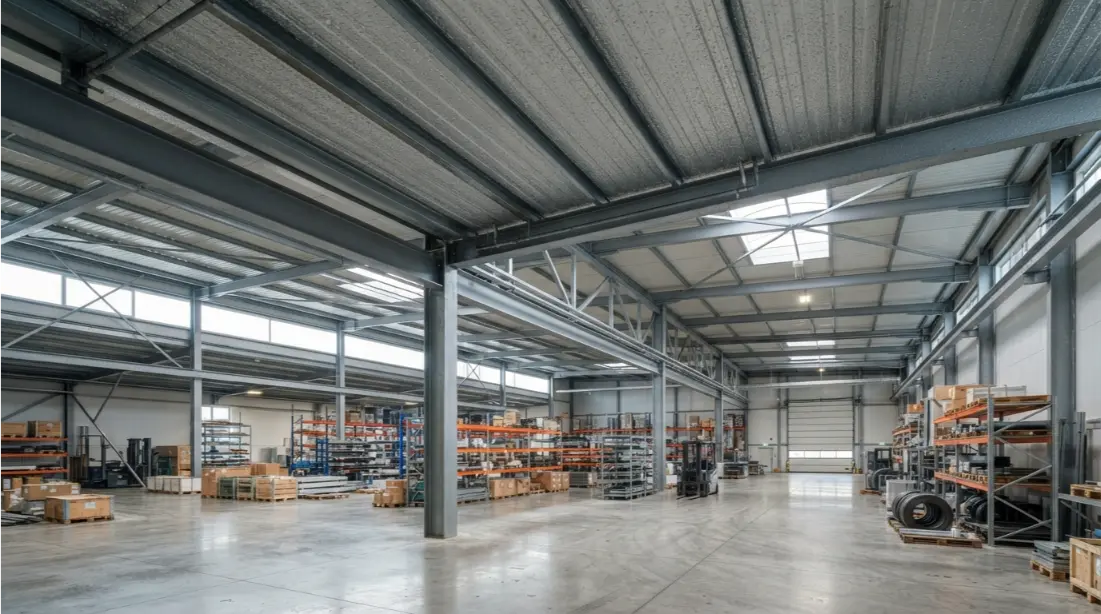
To stop condensation in a metal building, reduce indoor moisture, improve ventilation, add proper insulation, and install a vapor barrier where needed. Sealing air leaks, controlling humidity, and preventing warm, moist air from reaching cold metal surfaces can also help prevent condensation from forming.
At Systems West, we understand that controlling moisture is an important part of protecting metal buildings and the equipment, materials, and products stored inside them. The right combination of insulation, ventilation, moisture control, and building design can help keep the interior dry and reduce the risk of rust, mold, and water damage.
Why Does Condensation Form in a Metal Building?
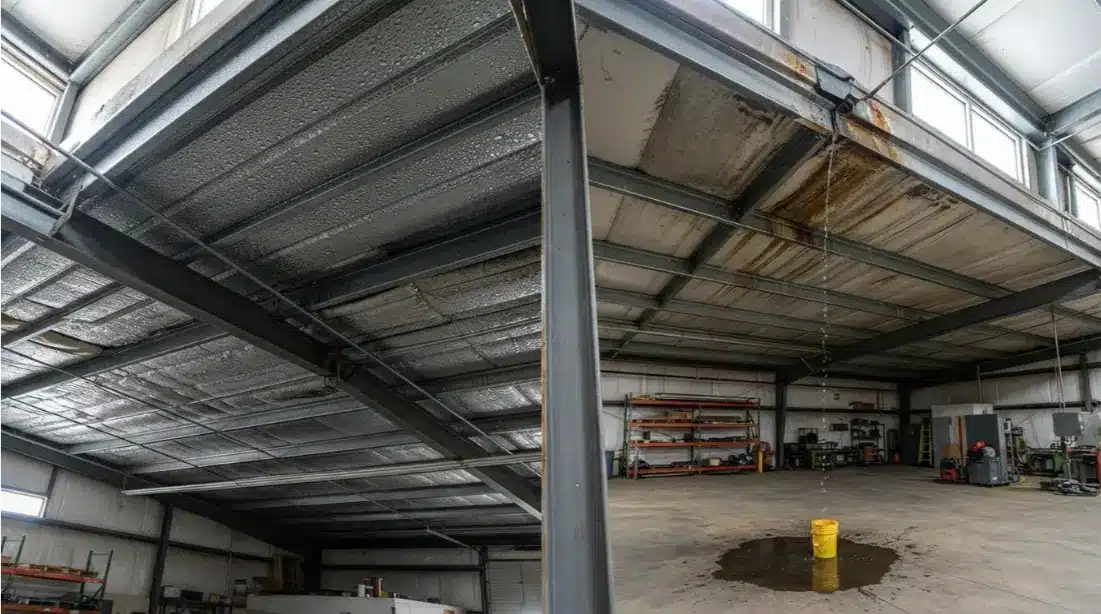
Condensation forms when moisture in the air reaches a surface that is colder than the air’s dew point. In a metal building, the roof, walls, fasteners, and other metal surfaces can become cold enough for moisture to collect as water droplets. Several conditions can make this problem worse, especially high indoor humidity, poor ventilation, and inadequate insulation.
Warm, Moist Air Meets Cold Metal
Warm air can hold more moisture than cold air. When warm, humid air inside a metal building comes into contact with a cold metal roof or wall panel, the air near the surface cools. If it cools enough, the moisture in the air changes from vapor into liquid water, creating visible droplets on the metal.
This can happen after temperature changes between day and night, during cold weather, or when moisture-producing activities increase indoor humidity. The more moisture present in the building and the greater the temperature difference between the air and metal surface, the higher the risk of condensation.
How Dew Point Causes Condensation
The dew point is the temperature at which air becomes saturated with moisture and can no longer hold all of its water vapor. When a metal surface reaches or falls below the dew point, moisture begins to condense on that surface.
For example, if warm indoor air has a high moisture level and the metal roof becomes colder than the air’s dew point, water can form on the underside of the roof. Understanding dew point helps explain why condensation can occur even when there is no roof leak. The water may be coming from moisture in the building’s air rather than from outside.
Why Metal Buildings Are Prone to Condensation
Metal conducts heat quickly, so metal roof and wall panels can change temperature rapidly as outdoor conditions change. On a cold night, for example, the metal roof can become much colder than the air inside the building. If warm, humid indoor air reaches the cold surface, condensation can form.
Metal buildings can also have large open interior spaces where moisture from people, vehicles, livestock, stored materials, or other activities can increase humidity. Without adequate insulation, ventilation, and vapor control, that moisture can reach cold metal surfaces more easily.
Where Does Condensation Occur in a Metal Building?
Condensation can form on any cold surface where warm, moist air comes into contact with metal. However, some areas of a metal building are more likely to collect moisture because they experience greater temperature changes or have gaps where humid air can reach cold surfaces.
Underside of the Metal Roof
The underside of a metal roof is one of the most common places for condensation to form. The roof can cool quickly when outdoor temperatures drop, causing the interior surface to fall below the dew point. Moisture from the indoor air can then collect on the underside and drip onto insulation, equipment, or stored materials.
Metal Wall Panels
Metal wall panels can also develop condensation, especially during cold weather or when indoor humidity is high. Areas with limited insulation or poor air circulation are more likely to have cold interior surfaces where moisture can collect.
Around Framing, Fasteners, and Penetrations
Condensation may form around structural framing, screws, bolts, pipes, vents, and other penetrations through the building envelope. These areas can create thermal bridges or small paths for warm, moist air to reach colder metal surfaces. If moisture repeatedly collects in these locations, it can contribute to corrosion and damage nearby materials.
Roof and Wall Transitions
Connections between the roof and walls can be vulnerable to condensation because they often contain changes in materials, seams, insulation, and air barriers. If these areas are not properly sealed and insulated, moist air can reach cold surfaces and create localized moisture buildup. Proper detailing at roof and wall transitions helps reduce this risk.
Is It Condensation or a Roof Leak?
Water inside a metal building does not always mean the roof is leaking. Condensation can create dripping water that looks similar to a roof leak, but the cause and solution are different. Identifying the source first can help you avoid making unnecessary repairs.
Signs of Condensation
Condensation is more likely when moisture appears across a broad area rather than around one specific roof penetration or damaged section. You may notice water droplets on the underside of the roof, wet insulation, or moisture that appears during cold mornings or after a major temperature change.
Condensation can also vary with indoor humidity and weather conditions. If the moisture appears during certain seasons or when the building is occupied or heated, indoor humidity may be contributing to the problem.
Signs of a Roof Leak
A roof leak usually allows water from outside to enter through a damaged panel, failed seal, loose fastener, flashing problem, or roof penetration. Signs can include localized water stains, wet spots that appear after rain, or water entering near a specific roof seam or opening.
If the same area becomes wet after rainfall but stays dry during similar conditions without rain, a roof leak may be more likely than condensation.
What to Check Before Making Repairs
Start by noting when and where the water appears. Check whether moisture occurs after rainfall, during cold weather, or when indoor humidity is high. Inspect the underside of the roof and walls for widespread droplets as well as localized wet areas.
Also check roof panels, seams, flashing, fasteners, penetrations, insulation, and ventilation. Looking at these areas together can help determine whether the moisture is coming from outside the building or forming because of indoor humidity and cold metal surfaces.
What Causes Excess Condensation in a Metal Building?

Some condensation is possible when indoor air contains moisture and metal surfaces become cold. However, excessive or recurring condensation usually points to conditions that allow too much moisture to reach cold surfaces. Identifying the source can help determine which prevention measures are needed.
High Indoor Humidity
High indoor humidity increases the amount of moisture available to condense. Activities such as washing, cooking, cleaning, heating, or operating equipment can add moisture to the air. If humid air is not removed through ventilation or other moisture-control measures, it can reach cold metal surfaces and form water droplets.
Poor or Missing Insulation
Insulation helps separate the indoor air from cold exterior surfaces and reduces temperature differences across the building envelope. When insulation is missing, damaged, compressed, or improperly installed, metal surfaces can become cold enough to reach the dew point. This increases the risk of condensation, especially on roofs and exterior walls.
Improper Vapor Control
A vapor control layer helps limit the movement of water vapor through the building assembly. If it is missing, damaged, or installed incorrectly, moisture can move into areas where it may condense against cold metal. The correct vapor-control approach depends on the building design, climate, and materials used.
Air Leaks and Building Openings
Gaps around doors, windows, roof penetrations, vents, seams, and other openings can allow warm, moist indoor air to reach colder parts of the building. Even small air leaks can contribute to condensation when the temperature difference is large. Proper sealing can reduce unwanted moisture movement.
Thermal Bridging Through Metal Framing
Metal framing can create thermal bridges because metal conducts heat much more readily than insulation. This can make certain framing members, connections, and fasteners colder than surrounding surfaces. When humid indoor air reaches these cold areas, condensation can form around them.
Moisture From Building Operations
The activities taking place inside a building can have a major effect on condensation. Vehicles, livestock, wet materials, manufacturing processes, washing, and other operations can release moisture into the indoor air. If that moisture is not controlled, indoor humidity can rise and increase condensation on cold metal surfaces.
How to Stop Condensation in a Metal Building
The most effective way to stop condensation is to control moisture before it reaches cold metal surfaces. This usually requires a combination of moisture reduction, insulation, vapor control, air sealing, and ventilation rather than relying on one solution. The right approach depends on the building’s design, climate, use, and existing moisture problems.
1. Reduce Moisture Inside the Building
Start by identifying activities or conditions that introduce unnecessary moisture. Repair plumbing leaks, keep wet materials from sitting inside the building, and use appropriate drainage around areas where water is introduced.
For buildings with moisture-producing operations, consider ways to limit how much water vapor enters the indoor air. Reducing the amount of moisture available is often one of the simplest ways to lower the risk of condensation.
2. Improve Roof and Wall Insulation
Proper insulation helps keep interior metal surfaces closer to the indoor temperature. If existing insulation is missing, damaged, compressed, or poorly fitted, improving the insulation can reduce the chance of surfaces reaching the dew point.
Pay particular attention to the roof, exterior walls, and areas where insulation is interrupted. Insulation should be installed according to the building assembly and manufacturer requirements to avoid gaps or other installation problems.
3. Use Proper Vapor Control
A properly designed vapor control layer can limit moisture movement into parts of the building assembly where condensation may occur. The correct location and type depend on the climate, indoor conditions, insulation system, and construction details.
Vapor control should be considered as part of the entire wall or roof assembly rather than as a standalone fix. Incorrect placement can trap moisture inside the assembly instead of preventing it.
4. Seal Air Leaks and Penetrations
Inspect doors, windows, seams, roof penetrations, vents, fasteners, and other openings for unwanted air movement. Seal appropriate gaps with compatible materials designed for the specific location and building system.
Pay close attention to areas where different building components meet. Reducing uncontrolled air movement can help keep warm, moist indoor air away from cold surfaces.
5. Address Thermal Bridging
Thermal bridges should be addressed during design, construction, or building improvements where practical. This may involve using appropriate thermal breaks, improving insulation around framing, or modifying details that allow heat to move quickly through the building envelope.
Because metal framing and connections can transfer heat efficiently, these areas may require more attention than large insulated sections of the roof or walls.
6. Improve Ventilation When Needed
Ventilation can help remove moisture from the building and replace humid indoor air with drier outdoor air when outdoor conditions allow. Natural ventilation may be sufficient in some buildings, while mechanical ventilation may be needed in others.
Ventilation should be designed around the building’s use and local climate. Simply adding vents without considering airflow patterns, outdoor humidity, and the building envelope may not solve the problem.
7. Control Indoor Humidity
Monitor indoor humidity to determine whether moisture levels are contributing to condensation. Depending on the building and its use, humidity can be controlled through ventilation, air conditioning, dehumidification, or changes to moisture-producing activities.
A humidity control strategy should work together with insulation, air sealing, and vapor control. If humidity remains high despite these measures, a building professional can help identify where moisture is entering and determine whether additional corrective work is needed.
How to Fix Condensation in an Existing Metal Building
Stopping condensation in an existing metal building often requires more than simply adding insulation or ventilation. Start by finding where the moisture is forming and determining whether the problem comes from indoor humidity, air leakage, the building envelope, or a combination of factors. Once the source is identified, the appropriate retrofit can be selected.
Inspect the Roof, Walls, and Interior
Begin with a visual inspection of the building during or soon after a period when condensation is occurring. Look for water droplets, damp areas, staining, corrosion, and moisture around roof panels, wall panels, framing, fasteners, penetrations, and transitions.
Also record when the problem occurs. Condensation that appears during cold mornings or large temperature changes may point to a different issue than moisture that appears only after rainfall.
Check for Wet or Damaged Insulation
Inspect accessible insulation for signs of moisture, compression, gaps, deterioration, or staining. Wet insulation may lose some of its intended performance and can indicate that moisture is reaching areas where it should not.
Do not simply cover wet insulation with new material. The source of the moisture should be identified and corrected first, and damaged materials should be evaluated for repair or replacement.
Identify the Source of Excess Moisture
Look for activities and building conditions that may be adding moisture to the indoor air. Plumbing leaks, wet floors, washing operations, vehicles, livestock, stored wet materials, and manufacturing processes can all contribute to indoor moisture.
A basic humidity check can also help determine whether indoor moisture levels are part of the problem. Comparing humidity and temperature readings with the areas where condensation occurs can provide useful information when troubleshooting.
Improve the Existing Building Envelope
Once problem areas are identified, address gaps or weaknesses in the building envelope. This may include repairing damaged roof or wall panels, improving seals around penetrations, correcting flashing details, or sealing appropriate air leaks.
The goal is to create a better separation between indoor air and exterior conditions while keeping water out of the building assembly. Repairs should be compatible with the existing metal building system.
Consider Insulation or Other Retrofit Options
Existing buildings may be improved with additional insulation, vapor control measures, ventilation, dehumidification, or other retrofit solutions. The appropriate option depends on the building’s construction, climate, interior use, and source of condensation.
For larger or persistent problems, have the building assembly evaluated before starting major retrofit work. A professional can help determine whether the issue requires insulation improvements, moisture control, air sealing, ventilation changes, or a combination of measures.
How to Prevent Condensation in a New Metal Building
Preventing condensation is easier when moisture control is considered during the design and construction of a new metal building. The roof, walls, insulation, air control, vapor control, and mechanical systems should work together based on the building’s climate and intended use.
Plan the Roof and Wall Assemblies
Choose roof and wall assemblies that provide the level of thermal and moisture control required for the building. Consider how the assemblies will perform during seasonal temperature changes and how indoor conditions may affect the surfaces.
Pay attention to joints, seams, penetrations, transitions, and other details where water or humid air could move into the assembly. Proper detailing during construction can reduce problems that are harder and more expensive to correct later.
Coordinate Insulation and Vapor Control
Insulation and vapor control should be planned together rather than treated as separate components. The assembly should limit heat transfer while controlling the movement of water vapor based on the building’s climate and interior conditions.
Installation also matters. Gaps, compression, or poorly sealed connections can reduce the intended performance of the system and create areas where condensation may develop.
Address Thermal Bridging During Design
Identify potential thermal bridges before construction begins, including metal framing, structural connections, fasteners, and other areas where heat can move through the building envelope.
Where appropriate, the design can incorporate thermal breaks, continuous insulation, or other details that reduce temperature differences at these locations. Addressing these conditions during design is generally easier than correcting them after the building is complete.
Plan Ventilation and HVAC Around Building Use
Ventilation and HVAC systems should be sized and designed around how the building will actually be used. Consider occupancy, equipment, seasonal conditions, and expected indoor moisture levels when planning the system.
The goal is to maintain suitable indoor temperature and humidity while providing enough ventilation to remove moisture when needed. A system designed only for temperature control may not adequately address moisture concerns.
Account for Moisture-Producing Operations
Consider potential sources of moisture before construction, including vehicle storage, livestock, washing, manufacturing, wet materials, or other activities that release water vapor.
These operations may require dedicated ventilation, exhaust, drainage, dehumidification, or other moisture-control measures. Planning for them early allows the building envelope and mechanical systems to be designed around actual operating conditions rather than adding solutions after condensation becomes a problem.
What Happens If Metal Building Condensation Is Not Controlled?
Recurring condensation can cause more than temporary water droplets. If moisture continues to collect inside a metal building, it can affect the building materials, stored contents, and overall performance. Addressing the source early can help limit these problems.
Wet or Damaged Insulation
Repeated exposure to moisture can leave insulation damp and reduce its intended thermal performance. Persistent moisture can also contribute to deterioration of surrounding materials.
Corrosion of Metal Components
Ongoing moisture exposure can increase the risk of corrosion on metal panels, fasteners, framing, and other components. Over time, corrosion can damage protective coatings and shorten the service life of affected materials.
Moisture Damage to Stored Materials and Equipment
Dripping or accumulated moisture can damage inventory, machinery, vehicles, tools, packaging, and other materials stored inside the building. Water-sensitive products may be particularly vulnerable to repeated exposure.
Reduced Building Performance
Uncontrolled moisture can affect the performance of the building envelope and make temperature and humidity harder to manage. Addressing insulation, air leakage, ventilation, and moisture sources can help maintain a drier and more stable interior.
Metal Building Condensation Prevention Checklist

Use this checklist to identify the source of condensation and determine what needs to be corrected:
- Determine whether it is condensation or a roof leak: by checking when and where moisture appears.
- Identify indoor moisture sources: such as leaks, wet materials, washing, vehicles, livestock, or other moisture-producing activities.
- Check roof and wall insulation: for gaps, damage, compression, or missing sections.
- Inspect vapor control: to make sure the building assembly has appropriate vapor-control measures for its climate and use.
- Look for air leaks: around doors, windows, seams, penetrations, fasteners, and other openings.
- Check potential thermal bridges: around metal framing, connections, fasteners, and other cold surfaces.
- Evaluate ventilation: to determine whether moisture is being removed effectively.
- Monitor indoor humidity: to determine whether excessive moisture is contributing to condensation.
- Inspect for wet insulation: and identify the source of moisture before repairing or replacing it.
- Address the underlying building-envelope problem: by correcting insulation gaps, air leaks, vapor-control issues, thermal bridges, or damaged roof and wall assemblies that allow moisture to reach cold surfaces.
When Should You Have a Metal Building Inspected?
A metal building should be inspected when condensation keeps returning or when moisture begins affecting the building materials or anything stored inside. Early inspection can help identify whether the problem is related to condensation, a roof leak, insulation, ventilation, or another building-envelope issue.
Consider having the building inspected if you notice:
- Recurring condensation that continues despite basic moisture-control measures.
- Water dripping from the underside of the roof, especially when there has been no recent rainfall.
- Wet or damaged insulation that stays damp or shows signs of repeated moisture exposure.
- Visible rust or corrosion on roof panels, wall panels, framing, fasteners, or other metal components.
- Persistent moisture on walls, ceilings, framing, or other interior surfaces.
- Damage to stored materials or equipment caused by dripping or accumulated moisture.
- Condensation that continues after insulation work, which may indicate unresolved air leakage, vapor-control, ventilation, or thermal-bridging issues.
If the source of moisture is unclear or the problem continues after corrective work, a professional inspection can help determine what is causing the condensation and what building improvements may be needed.
Need Help Preventing Condensation in Your Metal Building?
Recurring condensation can point to issues with insulation, ventilation, air sealing, or the building envelope. Systems West can help with metal building construction, repairs, maintenance, and building improvements designed around your property’s needs.
If you’re dealing with ongoing moisture or planning a new metal building, contact Systems West to discuss your project and find a practical solution for protecting your building, equipment, and stored materials.
Conclusion
Stopping condensation in a metal building starts with controlling indoor moisture and keeping cold metal surfaces from reaching the dew point. Proper insulation, vapor control, air sealing, ventilation, and humidity management can work together to reduce recurring condensation.
If condensation continues, inspect the building to determine whether the problem comes from moisture sources, the roof or wall assembly, insulation, air leaks, or another building-envelope issue. Addressing the underlying cause can help protect the building, equipment, stored materials, and metal components from long-term moisture damage.
Frequently Asked Questions
Why does my metal building sweat?
A metal building sweats when warm, moist indoor air reaches a cold metal surface. If the surface is below the air’s dew point, moisture condenses into water droplets.
How do I stop condensation from dripping from my metal roof?
Reduce indoor moisture, improve roof insulation, seal air leaks, and use appropriate vapor control. Ventilation or dehumidification may also help lower indoor humidity.
Does insulation stop condensation in a metal building?
Proper insulation can reduce condensation by keeping metal surfaces warmer. However, insulation alone may not solve the problem if indoor humidity, air leaks, or vapor movement remain uncontrolled.
Do I need a vapor barrier in a metal building?
It depends on the building’s climate, use, and roof or wall assembly. Proper vapor control should be planned as part of the complete building-envelope system.
Can ventilation prevent metal building condensation?
Ventilation can reduce condensation by removing excess moisture from indoor air. Its effectiveness depends on outdoor conditions and should be combined with other moisture-control measures when needed.
How can I tell condensation from a roof leak?
Condensation often appears as widespread droplets on cold metal surfaces, especially during cold or humid conditions. A roof leak usually causes localized moisture around damaged panels, seams, flashing, or penetrations.