

Steel erection is the stage where fabricated steel becomes the working frame of a commercial, industrial, agricultural, or warehouse building. Columns, beams, girders, trusses, and bracing are lifted into place, aligned, bolted, and welded so the rest of the project can move forward safely.
This process is used in new construction, building additions, facility expansions, structural upgrades, warehouses, aircraft hangars, agricultural buildings, and industrial projects. For project owners, understanding how steel erection works can help with planning, budgeting, scheduling, and choosing the right contractor.
In this guide, we’ll explain what steel erection means, how it works, how it differs from steel fabrication, what affects cost, what safety standards matter, and what to look for in a qualified steel erection contractor.
What Is Steel Erection?
Steel erection is the on-site process of lifting, positioning, aligning, and connecting structural steel members to form a building’s framework. The steel usually arrives at the job site already fabricated, meaning it has been cut, drilled, welded, and prepared according to the approved drawings.
Once the steel arrives, the erection crew uses cranes, lifts, rigging equipment, bolts, welding tools, and alignment devices to assemble the frame. Each column, beam, and connection must be installed in the correct sequence so the structure stays stable as it rises.
Steel erection is one of the most important stages of construction because the frame supports the rest of the building. If the steel is not installed correctly, it can delay other trades, create safety risks, and lead to expensive corrections later in the project.
Steel Erection vs. Steel Fabrication
Steel erection and steel fabrication are closely connected, but they are not the same thing.
Steel fabrication takes place before the steel reaches the job site. It includes cutting, shaping, drilling, welding, and preparing steel components in a shop environment. Fabricators follow engineering drawings to create the beams, columns, plates, and connection details needed for the project.
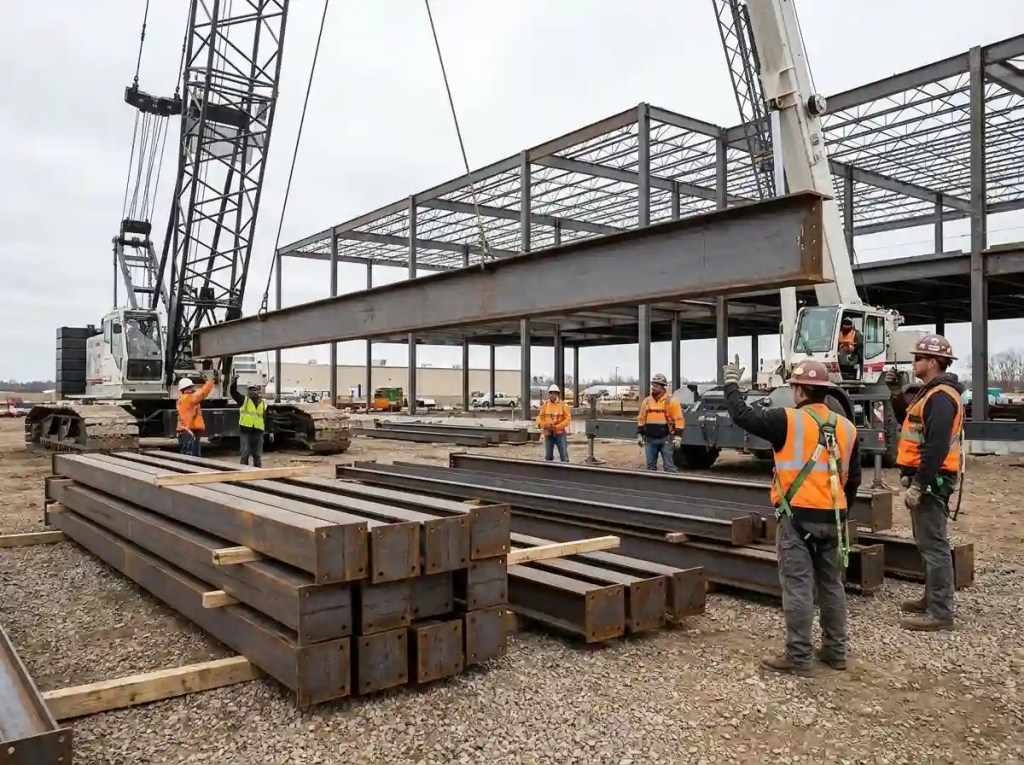
Steel erection is completed on site. Erection crews take those fabricated pieces and install them according to the structural plan. They lift the steel into place, align it, bolt it, weld it when required, and inspect the connections as the structure comes together.
Process | Steel Fabrication | Steel Erection |
Location | Off-site shop | Job site |
Main work | Cutting, drilling, welding & preparing steel | Lifting, aligning, bolting, welding & installing steel |
Goal | Prepare the components | Build the structural frame |
When one contractor handles both fabrication and erection, communication is cleaner and accountability is easier to manage from shop drawings through final installation.
Structural Steel Erection vs. Pre-Engineered Steel Erection
There are two common approaches to steel erection: structural steel erection and pre-engineered steel erection.
Structural steel erection uses custom-fabricated components designed for a specific project. This approach is common for industrial buildings, building additions, mezzanines, overhead crane systems, equipment platforms, and structures that require custom engineering.
Pre-engineered steel erection uses factory-built metal building systems. The components are designed to fit together in a planned sequence, which can make installation faster and more predictable. This approach is often used for warehouses, agricultural buildings, commercial buildings, aircraft hangars, and clear-span structures.
Type | Best For | Main Advantage |
Structural steel erection | Custom projects, upgrades, additions, heavy-load structures | More flexibility |
Pre-engineered steel erection | New buildings with clear layouts | Faster installation & predictable planning |
For a clean new building site, a pre-engineered system can save time and control costs. For an existing facility, expansion, overhead crane system, or structural upgrade, custom structural steel is often the better fit.
Systems West handles both custom structural steel erection and pre-engineered metal building erection, which helps project owners choose the right approach instead of forcing every project into one system
Why Proper Steel Erection Matters
Steel erection affects the schedule, safety, accuracy, and long-term performance of a building. Once the steel frame is up, many other trades depend on it before they can begin their work.
It Keeps the Project Moving
Steel components can be fabricated while site work and foundation work are moving forward. This helps shorten the overall construction timeline. Once the steel is delivered, an experienced crew can work through the erection sequence efficiently.
It Creates the Structural Backbone
The steel frame supports the roof, walls, floors, equipment loads, and other building systems. It must be installed correctly so the rest of the structure has a stable foundation to build from.
It Supports Large Spans and Heavy Loads
Steel is commonly used because it can support large open spaces, heavy equipment, mezzanines, crane systems, and wide roof spans. This makes it a strong choice for commercial, industrial, agricultural, and warehouse projects.
It Helps Prevent Costly Rework
Good planning and accurate erection reduce expensive changes in the field. When anchor bolts, columns, beams, and connections are checked at each stage, problems can be corrected before they affect the rest of the project.
The Steel Erection Process Step by Step
Every steel erection project is different, but most follow the same basic sequence.
Step 1: Planning, Engineering, and Drawings
The process starts with engineering, design, and approved drawings. These drawings show beam sizes, column locations, connection details, bolt requirements, weld requirements, and load-bearing details.
This stage is important because problems are much easier to fix on paper than after steel has already been fabricated or lifted into place.
Step 2: Fabrication, Delivery, and Staging
After the drawings are approved, the steel is fabricated and prepared for the job site. Components are often delivered in the order they will be installed. This is called material sequencing.
Good staging helps reduce delays because the crew can access the right steel members at the right time without moving materials repeatedly around the site.
Step 3: Foundation and Site Verification
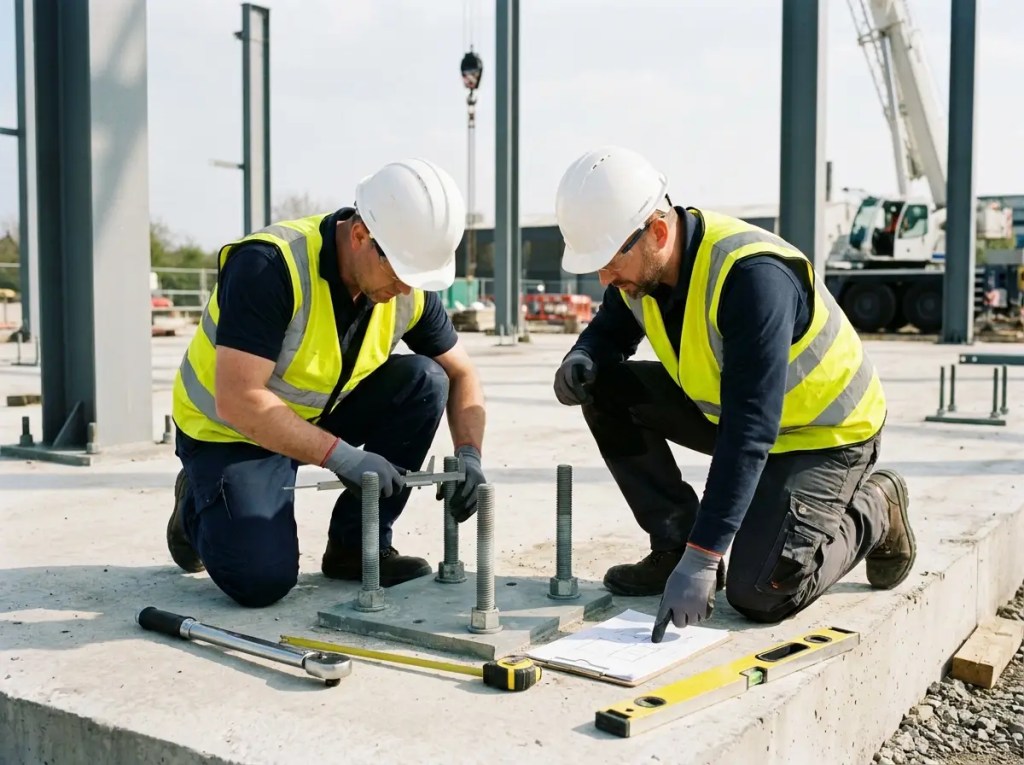
Before erection begins, the foundation must be ready. Anchor bolts, base plates, access routes, crane setup areas, and staging zones need to be checked.
Even a small anchor bolt issue can slow down the project once steel is ready to be installed. That is why site preparation and foundation verification are critical before the first lift.
Step 4: Steel Lifting, Setting, and Connection
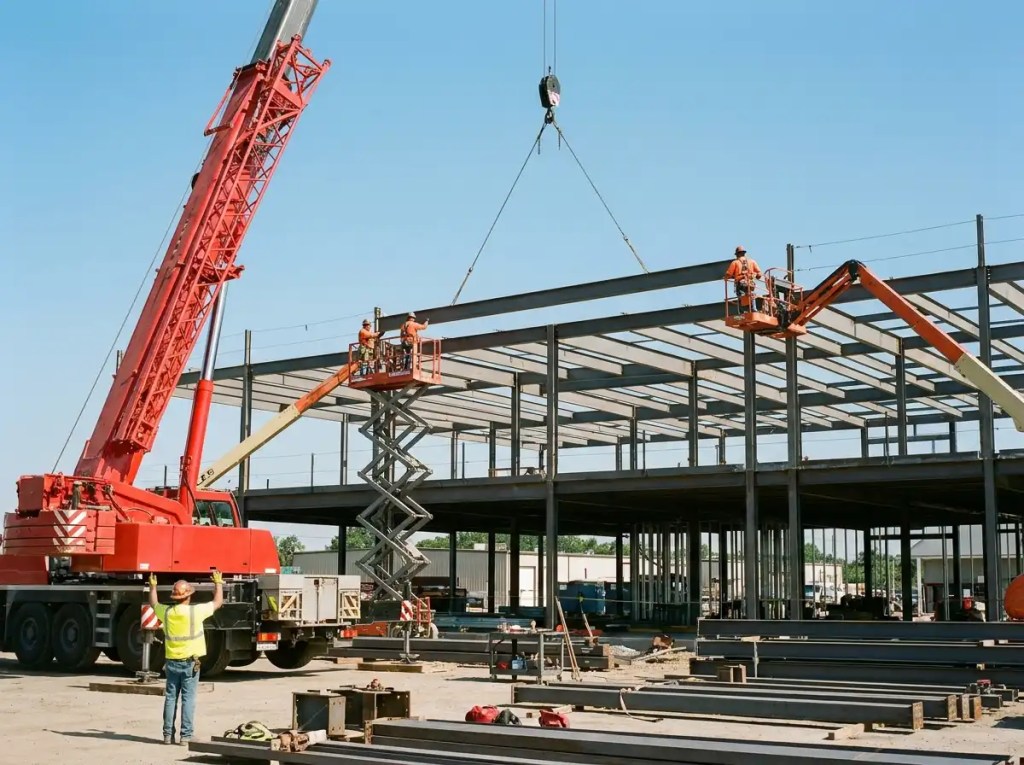
The first major pieces installed are usually the columns. Cranes lift each column into place, and the crew secures it to the foundation using anchor bolts.
After the columns are set, beams, girders, bracing, purlins, joists, and other framing components are lifted and connected. The building frame starts to take shape one section at a time.
Step 5: Final Alignment, Inspection, and Handoff
Connections are completed using high-strength bolts, welding, or both, depending on the design. Crews check that columns are plumb, beams are level, and the frame matches the approved drawings.
After the frame is complete, the structure is inspected. Once the steel frame is approved, other trades can continue with roofing, wall panels, mechanical systems, electrical work, plumbing, and interior construction.
What Should Be Ready Before Steel Erection Begins?
A smooth steel erection project depends on preparation. Before the crew starts work, the project team should confirm:
- Approved structural drawings
- Verified foundation and anchor bolt layout
- Clear crane access and staging areas
- Sequenced steel delivery
- Qualified rigging and signal personnel
- Fall protection plan
- Weather contingency plan
- Inspection schedule
- Clear communication between the contractor, engineer, and owner
This preparation helps prevent delays, safety problems, and costly field corrections.
What Equipment Is Used During Steel Erection?
Steel erection crews commonly use cranes, rigging gear, lifts, welding equipment, bolting tools, and alignment tools. The exact equipment depends on the height of the structure, weight of the steel, site access, and connection requirements.
Cranes are used to lift beams, columns, trusses, and other large steel components. Rigging equipment connects each steel member to the crane hook and must be rated for the load.
Bolting and welding tools are used to complete the connections. Alignment tools such as laser levels, plumb bobs, and surveying equipment help crews confirm that the structure is straight, level, and installed according to the drawings.
Steel Erection Safety and OSHA Requirements
Steel erection is one of the higher-risk phases of construction because crews work at height, move heavy steel members, and make connections while the structure is still being stabilized.
Common hazards include falls, struck-by incidents, dropped materials, unstable loads, crane hazards, weather changes, and connection failures. This is why safety planning must be part of the project before erection begins.
In the United States, steel erection is covered by OSHA Subpart R under 29 CFR 1926. These standards address areas such as fall protection, crane operation, hoisting, rigging, column anchorage, bolting, welding, training, and site-specific erection planning.
Before hiring a steel erection contractor, ask whether they provide a written site-specific erection plan, documented fall protection procedures, qualified riggers, trained signal persons, crane planning, and weather stop-work rules.
If a contractor cannot explain the erection sequence, safety plan, and site-specific requirements before work begins, that is a serious red flag.
Why Steel Erection Costs Vary by Project
There is no single flat rate for steel erection because every project is different. Cost depends on the size of the structure, the amount of steel, site conditions, design complexity, labor needs, crane time, and schedule requirements.
A simple pre-engineered building is usually faster and more predictable to erect than a custom structural steel project. A complex industrial facility, overhead crane runway, mezzanine, or building addition may require more field coordination, welding, inspection, and custom work.
Site access also affects cost. If cranes have limited room, ground conditions are poor, or work must happen around active operations, the project may take longer.
The main cost factors usually include steel tonnage, structural complexity, crane size, labor hours, site access, field welding, inspection requirements, weather, and schedule constraints.
The best way to understand the cost of a specific project is to have a contractor review the drawings, inspect the site, and provide a clear written estimate.
Common Steel Erection Mistakes to Avoid
Most steel erection problems can be prevented with better planning, communication, and site preparation.
Starting Before Drawings Are Final
If drawings, load requirements, or connection details are unclear, those problems can show up later in the field. Steel should not be fabricated or installed until the project details are properly reviewed.
Failing to Verify Anchor Bolts
Anchor bolts must match the approved layout before steel arrives. If they are placed incorrectly, columns may not fit as planned, which can delay the entire project.
Poor Steel Delivery Sequencing
Steel should arrive in the order it will be installed. If materials are delivered out of sequence or staged in the wrong location, crews lose time moving pieces around the site.
Skipping Inspections
Small alignment or connection problems are easier to fix early. If they are discovered later, they can affect multiple trades and increase the cost of correction.
Hiring Separate Teams Without Clear Coordination
Using separate teams for fabrication and erection can create communication gaps. When problems arise, it may not be clear who is responsible. A contractor that can manage both phases can help reduce that risk.
Types of Steel Erection Projects
Steel erection is used across many types of commercial, industrial, and agricultural construction.
Commercial buildings often use steel frames because they allow open layouts, flexible floor plans, and strong long-term performance.
Industrial facilities may require structural steel for equipment platforms, mezzanines, crane systems, building frames, and heavy-load areas.
Agricultural buildings and grain-related facilities often use pre-engineered steel systems because they offer large clear-span spaces for equipment, storage, and grain handling.
Aircraft hangars need wide openings and unobstructed interior space, making steel a strong fit for large-span construction.
Steel erection is also used for building additions, structural upgrades, warehouse expansions, roof systems, overhead crane support, mezzanines, and reinforcement of existing buildings.

How to Choose a Steel Erection Contractor
The right steel erection contractor should have the experience, equipment, safety practices, and project planning ability needed for your type of building.
Look for a contractor with experience in similar projects. A contractor who understands commercial buildings may not always have the same experience with industrial facilities, grain storage buildings, crane systems, or structural upgrades.
You should also ask whether the contractor handles fabrication and erection in-house. When one team manages both phases, the project usually has better communication and fewer handoff problems.
Safety should be a major part of the decision. Ask about OSHA compliance, fall protection, crew training, rigging procedures, lift planning, and site-specific erection plans.
A qualified contractor should also provide a clear written scope. This should explain what is included, what is excluded, how the work will be sequenced, what the schedule looks like, and how changes will be handled.
Ready to Plan Your Steel Erection Project?
Steel erection is the stage that turns drawings and fabricated steel into a working structure. Whether you are planning a new building, expanding an existing facility, adding an overhead crane system, or upgrading structural capacity, the quality of the erection work matters.
Planning a steel erection project in Central Minnesota? Systems West can help with fabrication, pre-engineered metal building erection, structural upgrades, mezzanines, and overhead crane support. Contact our team to review your drawings, site conditions, and project timeline before work begins.
Frequently Asked Questions
Is steel erection the same as metal building erection?
No. Steel erection can refer to custom structural steel installation or pre-engineered metal building installation. Metal building erection usually refers to assembling a pre-engineered building system, while structural steel erection may involve custom beams, columns, bracing, mezzanines, crane supports, or building additions.
How long does steel erection take?
The timeline depends on the size and complexity of the project. A smaller pre-engineered building may take days or a few weeks. A larger industrial or custom structural project can take several weeks or longer.
What safety standards apply to steel erection?
Steel erection in the United States is covered by OSHA Subpart R under 29 CFR 1926. These standards include fall protection, hoisting, rigging, crane safety, column anchorage, training, and site-specific erection planning.
Can steel erection be done on an existing building?
Yes. Steel erection is often used for building additions, structural upgrades, mezzanines, overhead crane systems, and reinforcement work. With proper planning, some projects can be completed while the facility remains in operation.
What affects the cost of steel erection?
Cost depends on the amount of steel, project complexity, crane time, labor, site access, welding requirements, inspection needs, and schedule constraints. A detailed estimate is the best way to understand the cost of a specific project.