


Commercial doors can stick, sag, or fail to close properly when the door, frame, hinges, closer, latch, or other hardware is out of alignment or damaged. Common causes include loose or worn hinges, door sag, frame movement, insufficient clearance, threshold interference, latch and strike misalignment, and problems with the door closer.
At Systems West, understanding where a commercial door rubs, stops, or fails to latch helps identify the likely cause. A door that drags at the threshold may have a sagging or clearance issue, while a door that reaches the frame but will not latch may have a misaligned strike, latch, or insufficient closing force.
Why Is a Commercial Door Sticking, Sagging, or Not Closing Properly?

A commercial door usually sticks, sags, or fails to close properly because something is affecting its alignment, movement, or closing action. The most common causes include:
- Door or frame misalignment: A shifted or out-of-square frame can cause the door to rub or bind.
- Loose or worn hinges or pivots: Worn hardware can allow the door to move out of position and sag.
- Door sag: A sagging door can drag on the floor, threshold, or frame and prevent the latch from lining up.
- Threshold or floor interference: Changes or obstructions around the bottom of the opening can stop the door from closing fully.
- Latch and strike misalignment: The latch may hit the strike instead of entering it correctly.
- Door closer problems: A damaged, poorly adjusted, or improperly installed closer may not provide the right closing or latching action.
- Damaged hardware: Broken or worn locks, latches, hinges, pivots, or closer components can affect door operation.
- Seals, air pressure, or other resistance: Weatherstripping, gaskets, pressure differences, or other resistance can make the door harder to close.
The first step is to identify where and when the door stops moving correctly. That can help narrow the problem to the frame, hinges, threshold, latch, closer, or another part of the door assembly.
What Does the Door's Problem Tell You?
The point where a commercial door starts rubbing, dragging, stopping, or failing to latch can help identify the cause. Instead of treating every door problem as a closer or hinge issue, look at the door’s movement and the location of the resistance first.
The Door Rubs Against the Frame
If a door rubs against the frame, the problem may be related to alignment, hinges, pivots, or movement in the frame. Rubbing at the top corner can indicate that the door has shifted or sagged. Rubbing along the latch side may point to an alignment or clearance problem. Check for uneven gaps between the door and frame. A gap that is noticeably wider on one side can indicate that the door, hinges, or frame is no longer properly aligned.
The Door Drags on the Floor or Threshold
A door that drags at the bottom may be sagging because of worn hinges, loose fasteners, or pivot problems. The threshold or floor may also have shifted or changed enough to reduce the available clearance. If the door previously operated normally and has gradually started dragging, inspect the hinges, pivots, threshold, and surrounding floor rather than assuming the door itself needs replacement.
The Door Stops Before Reaching the Frame
When a door stops before reaching the frame, something may be creating resistance during its swing. Binding around the hinges or frame can prevent the door from moving freely. Other possible causes include a door closer creating too much resistance, damaged or poorly positioned seals, an obstruction at the threshold, air pressure, or interference from other hardware.
The Door Reaches the Frame but Will Not Latch
If the door reaches the frame but the latch does not engage, the problem is often related to alignment. A sagging door can move the latch away from the strike, while a shifted strike can prevent the latch from entering correctly. A worn latch, insufficient closing action from the door closer, tight seals, or pressure differences can also prevent proper latching. The key is to check whether the latch and strike line up when the door is fully closed.
The Door Closes but Bounces Back Open
A door that closes and then pushes back open may have a latch or strike alignment problem. The latch may be contacting the strike instead of entering it correctly.
The door closer can also contribute if its closing or latching action is not working correctly. Seals, air pressure, or electrified hardware can create additional resistance and keep the latch from engaging fully. The symptom does not always identify one exact cause, but it can narrow the inspection to the components most likely to be affecting the door’s movement.
What Causes a Commercial Door to Stick or Bind?
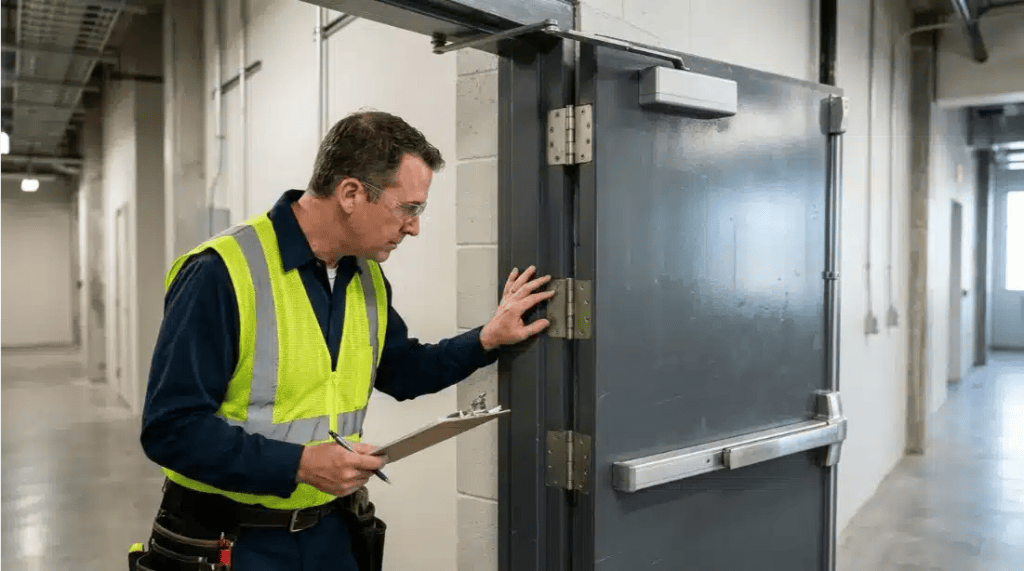
A commercial door can stick or bind when something prevents it from moving freely through its normal swing. Loose or worn hinges can allow the door to shift out of position, while worn pivots can create excessive movement and change the door’s clearance from the frame or floor. Hinge binding can also create resistance when the hinge side does not have enough clearance or the hinge and frame are not aligned correctly.
An out-of-plumb or misaligned frame can cause the door to contact the frame at one or more points. If the door-to-frame clearance is too small, normal movement may cause rubbing or binding. Threshold interference can create similar problems at the bottom of the door, especially if the threshold has shifted or the available clearance has been reduced.
Debris or buildup around the hinges, threshold, frame, or bottom of the door can also prevent smooth movement. Damaged or poorly positioned seals may add resistance when they press too tightly against the frame or have shifted from their proper position. The location of the resistance can help identify whether the problem is related to the door, frame, hardware, threshold, or seals.
What Causes a Commercial Door to Sag?
A commercial door can sag when its hinges, pivots, fasteners, or other supporting hardware no longer hold it in its proper position. Worn hinges or pivots and loose hinge fasteners are common causes, especially on heavy doors that are opened and closed frequently. Improper installation can also place uneven loads on the hardware and cause the door to shift over time.
Movement in the door or frame can create similar problems. Damaged hinges, pivots, or other hardware may allow the door to drop or move out of alignment. As the door sags, it may begin rubbing against the frame, dragging on the threshold, or causing the latch to miss the strike.
Uneven clearances around the door can be a useful sign of sagging. If the gap between the door and frame becomes noticeably wider in one area and tighter in another, the door may no longer be sitting squarely in the opening. These changes in clearance, along with loose or worn hinges, can help identify sagging before it causes more serious operating problems.
Why Does a Commercial Door Close but Not Latch?
A commercial door can close fully but still fail to latch when the latch and strike are not properly aligned. Door sag can move the latch out of position, while a worn or damaged latch may prevent it from engaging the strike correctly. A damaged or poorly adjusted door closer can also leave the door without enough closing or latching action to complete the final movement.
Excessive resistance from seals or weatherstripping can stop the door just before the latch engages. Air pressure between rooms can create similar resistance, while exit devices or electrified hardware may affect latching if they are not operating correctly. Since closing and latching are separate steps, the final movement of the door should be checked when identifying the cause.
How Can a Door Closer Cause Commercial Door Problems?
A door closer can cause problems when it is leaking, damaged, incorrectly sized, or improperly installed. Incorrect closing speed can prevent the door from reaching the latch correctly, while insufficient latching action may leave the door closed against the frame but not fully secured. A damaged closer arm or loose mounting can also affect how the door moves through its closing cycle.
A closer should not be used to compensate for a door that is binding, sagging, or misaligned. Increasing closing force may put extra stress on the hardware without fixing the underlying problem. The door, frame, hinges, and other components should be checked first to determine whether the closer is actually causing the problem.
Research supports the role of door closers in door operating force. In a 2015 study published in the International Journal of Industrial Ergonomics, researchers tested hinged doors with and without door closers and measured the torque required to operate them. The study found that door closers increased the operating torque, with the effect varying according to closer size and door-opening speed. This supports the need to consider the closer when a commercial door becomes difficult to operate, while also checking the door and frame for other sources of resistance.
How Do You Diagnose a Commercial Door That Is Not Closing Properly?
Start by watching the door through its full swing and identify exactly where the problem begins. Check whether it rubs against the frame, drags at the threshold, stops before reaching the frame, or reaches the frame but fails to latch. Then check the gaps around the door for uneven clearances that may indicate sagging or alignment problems.
Next, inspect the hinges or pivots for movement and check whether the door remains properly aligned with the frame. Watch the latch and strike as the door closes to see whether they line up correctly. The door closer and arm should also be checked for damage, unusual movement, or closing action that is too weak or too strong.
Finally, check the threshold, seals, weatherstripping, and other areas that could create resistance. If the door works differently depending on weather, room conditions, or whether nearby doors are open or closed, air pressure or building movement may be contributing to the problem. This step-by-step approach helps narrow the issue to the component affecting the door rather than assuming the closer or hinges are always responsible.
When Is a Commercial Door Problem a Repair Issue vs. a Replacement Issue?
A commercial door problem may only require repair when the door and frame are still in good condition. Loose hardware, worn hinges or pivots, a misaligned strike, or a door closer that needs service can often be addressed without replacing the entire door. Minor problems with the frame or other hardware may also be corrected if the opening can still be brought back to proper operation.
Replacement may be needed when the door or frame is severely damaged, distorted, or no longer suitable for the opening. Hardware that has failed beyond repair may also require replacement. If the same problem continues after repeated repairs or the door can no longer close, latch, or operate as intended, replacing the affected component or entire assembly may be the better option.
When Should a Commercial Door Problem Be Inspected by a Professional?
A commercial door should be inspected by a qualified professional when the problem involves a fire-rated opening, exit or panic hardware, or electrified door hardware. These systems have specific performance and safety requirements, so a problem should not be treated as a simple adjustment.
Professional inspection is also appropriate when the door frame is damaged, the building or frame has moved, or the door continues to fail after adjustments or hardware repairs. A door that cannot close, latch, or provide reliable access can also create a safety or security concern. In these situations, identifying the underlying cause is more important than repeatedly adjusting individual components.
Need Help With a Commercial Door Problem?
If a commercial door is sticking, sagging, failing to latch, or showing signs of damaged hardware, the cause may not always be obvious. Systems West can help identify the problem and determine whether the door, frame, or hardware needs repair or replacement.
Need help with a commercial door? Contact Systems West to discuss your repair or installation needs.
Conclusion
A commercial door that sticks, sags, or does not close properly can have several causes, from worn hinges and misalignment to damaged hardware, threshold interference, or door closer problems. The location where the door rubs, stops, or fails to latch can help narrow down the underlying issue.
If the problem continues after basic adjustments or involves a damaged frame, fire-rated opening, exit hardware, or electrified components, professional inspection may be needed. Identifying the actual cause first helps determine whether the door needs a simple repair, hardware replacement, or a new door or frame.
Frequently Asked Questions
Why does a commercial door stick only sometimes?
A commercial door may stick only at certain times because temperature, humidity, building movement, or changes in air pressure can affect the door, frame, seals, or surrounding opening. If the problem changes throughout the day or with weather conditions, those factors may be contributing to the issue.
Can temperature changes affect commercial door operation?
Yes. Temperature changes can cause small changes in building materials, doors, frames, and seals. These changes may reduce clearance or increase resistance enough to make a door rub, stick, or become harder to close.
How do you know if a commercial door frame is causing the problem?
A frame may be contributing to the problem when the door has uneven gaps, rubs at specific points, or does not align correctly with the latch and strike. A damaged or shifted frame can affect the door even when the door and its hardware are otherwise in good condition.
Why does a commercial door become harder to open and close over time?
Gradual changes in door operation can result from normal hardware wear, loose fasteners, damaged seals, frame movement, or changes in clearance. A door that becomes progressively harder to operate should be inspected rather than repeatedly forced or adjusted.
Can air pressure prevent a commercial door from closing?
Yes. Pressure differences between rooms or areas of a building can resist the door’s movement, particularly during the final part of closing. This can make a door harder to close or prevent the latch from engaging properly.