


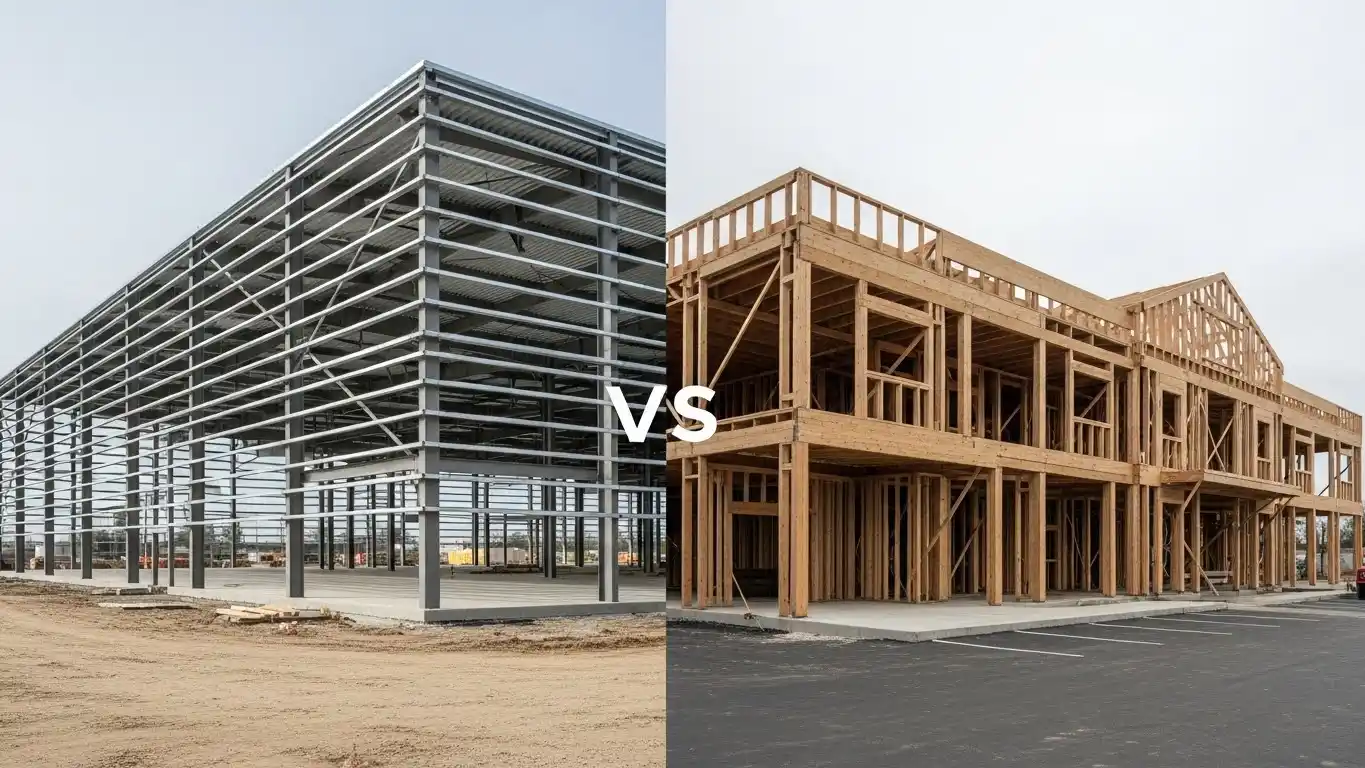
When planning a commercial construction project, one of the most important decisions is selecting the right framing material. Steel frame vs wood frame construction each offers distinct advantages, but understanding the differences is crucial for making the right investment.
Systems West, Inc specializes in commercial steel building construction and provides guidance on selecting the optimal structural material for long-term performance, durability, and cost-effectiveness. In this article, we’ll explore the key differences between steel and wood frames to help you make an informed decision.

Average Lifespan of a Steel Building
Commercial buildings demand strong, reliable, and efficient structural systems. Wood has been used for decades in smaller-scale projects, while steel has become increasingly popular for larger commercial and industrial buildings. Choosing between steel and wood impacts everything from upfront costs and long-term maintenance to structural integrity and environmental impact. This guide explains how these materials compare and provides practical insights for project owners.
Cost Comparison: Steel vs Wood
Following are the cost comparisons between steel and wood building:
Initial Construction Costs
Wood framing often comes with a lower upfront cost, especially for small commercial buildings. Lumber is readily available, and labor costs are usually lower due to the widespread experience of contractors. Steel framing may require a higher initial investment due to material costs and specialized labor. However, these higher costs can be offset by other benefits that steel provides over time.
Long-Term Value and ROI
While wood may save money upfront, steel frames provide significant long-term value. Steel’s durability reduces maintenance expenses, and its resistance to pests, rot, and fire minimizes extra repair costs. For commercial building owners, the long-term return on investment often favors steel, particularly in large-scale projects where maintenance costs can become substantial.
Hidden Costs to Consider
Beyond material costs, commercial projects must account for insurance, fire protection, pest control, and energy efficiency. Steel’s fire resistance and longevity can lower insurance premiums and reduce repair and maintenance costs. Wood buildings may require frequent treatments and inspections to protect against insects, moisture, and decay.
Strength and Durability
Structural Strength
Steel offers superior load-bearing capacity, making it ideal for multi-story commercial buildings, warehouses, and industrial facilities. Wood, while strong for smaller-scale structures, can be more vulnerable under heavy loads or extreme conditions. Structural steel is less likely to warp, split, or weaken over time, ensuring a stable and reliable building.
Resistance to Environmental Factors
Steel frames resist fire, moisture, termites, and other pests, whereas wood can be prone to rot, insect damage, and fire hazards. In areas with severe weather, steel frames offer enhanced protection against hurricanes, earthquakes, and heavy snow loads. This resilience can be critical for protecting both the building and its occupants.
Longevity and Lifespan
Steel-framed commercial buildings often last 50+ years with minimal maintenance, while wood structures may require extensive upkeep or replacement of key components within 20–30 years. For long-term commercial investments, steel provides predictable performance and reduces the risk of structural failure.

Construction Speed and Flexibility
Build Time Comparison
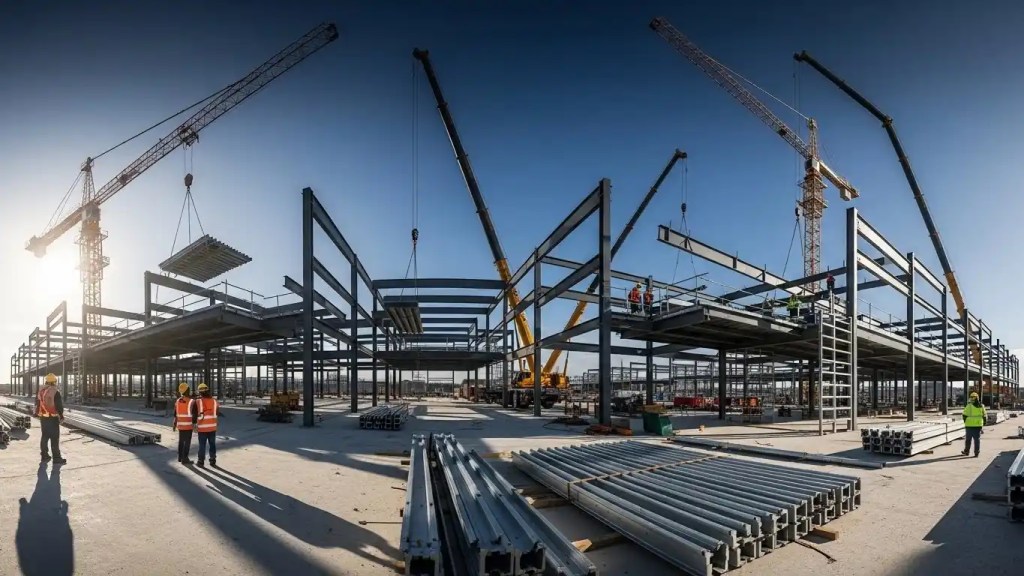
Steel framing allows for faster construction due to prefabricated components and standardized assembly methods. Wood frame projects may take longer because of on-site cutting, adjustments, and weather sensitivity. Faster construction reduces labor costs and allows businesses to occupy their facilities sooner.
Design Flexibility and Expansion
Steel provides greater flexibility in architectural design, accommodating large open spaces and custom layouts without compromising strength. Future expansions or modifications are also easier with steel, as components can be added without extensive demolition. Wood structures may require more complex reinforcements for expansions, limiting design options. This flexibility is best achieved through proper design, planning and upfront budget analysis.
Sustainability and Environmental Considerations
Environmental Impact
Steel: Steel is one of the most recycled materials in the world. Nearly all structural steel from demolished buildings gets recycled and used in new construction. Modern steel contains a substantial percentage of recycled content, and it can be recycled repeatedly without quality loss.
Wood: Wood is a renewable resource, but commercial lumber requires chemical treatments for weather and pest resistance. These preservatives have environmental implications. At end-of-life, treated lumber cannot be safely burned for energy and often ends up in landfills.
Energy Efficiency
Both steel and wood buildings can achieve excellent energy efficiency with proper design and insulation. Steel buildings using modern insulation techniques perform comparably to wood buildings in terms of heating and cooling costs.
The key is proper insulation installation to address steel’s thermal conductivity. Continuous insulation systems and spray foam effectively eliminate any energy disadvantage. When properly designed, steel buildings maintain comfortable interior temperatures year-round without excessive HVAC costs.
Safety and Building Codes
Fire Resistance
Steel frames are non-combustible and provide enhanced safety in case of fire, often reducing insurance costs for commercial building owners. Wood is inherently flammable, requiring additional fireproofing treatments for safety compliance.
Disaster Preparedness
Steel frames offer superior resistance to natural disasters such as earthquakes, hurricanes, and heavy snow. Wood frames can be reinforced, but they are generally more vulnerable under extreme conditions. Meeting building codes for structural safety is often easier with steel due to its predictable performance.
Maintenance Requirements
Which Projects Are Better Suited for Steel or Wood?
Best Use Cases for Steel Frames
- Warehouses and distribution centers
- Multi-story office buildings
- Manufacturing facilities with heavy equipment
- Large retail spaces needing open floor plans
- Buildings in hurricane or earthquake zones
- Projects requiring fast completion timelines
- Structures where low maintenance is priority
Best Use Cases for Wood Frames
- Small professional offices
- Boutique retail spaces emphasizing character
- Restaurants needing extensive custom millwork
- Buildings with very tight initial budgets
- Projects in areas with abundant skilled wood framers
- Structures requiring intricate architectural details
- Buildings under a certain square footage threshold

Conclusion
Choosing between steel frame and wood frame construction depends on project size, budget, longevity, and maintenance considerations. Steel offers superior strength, durability, and low maintenance, making it ideal for large commercial buildings, while wood may be suitable for smaller projects with lower upfront costs. Systems West, Inc provides expertise in commercial building construction, ensuring projects are completed efficiently and built to last. Investing in the right framing material today ensures safer, more cost-effective, and high-performing commercial structures for the future.
Frequently Asked Questions
Which is stronger for commercial buildings, steel or wood?
Steel is stronger and more durable than wood, making it ideal for large-scale commercial projects and structures that require long-term stability.
Are metal buildings cheaper than wood?
While steel buildings may have a higher upfront cost than some wood structures, they often save money long-term due to lower maintenance, longer lifespan, and fewer repairs.
How long does a steel-framed commercial building last?
Steel-framed buildings can last 50+ years with minimal maintenance, whereas wood structures may need significant upkeep or partial replacement within 20–30 years.
Can wood frame buildings be expanded easily in the future?
Wood frames can be modified, but expansions often require more labor and reinforcements compared to steel, which allows easier future modifications.
Is steel construction more environmentally friendly than wood?
Steel is highly recyclable and contributes to sustainable building practices. Wood is renewable but may require chemical treatments that affect environmental impact.