

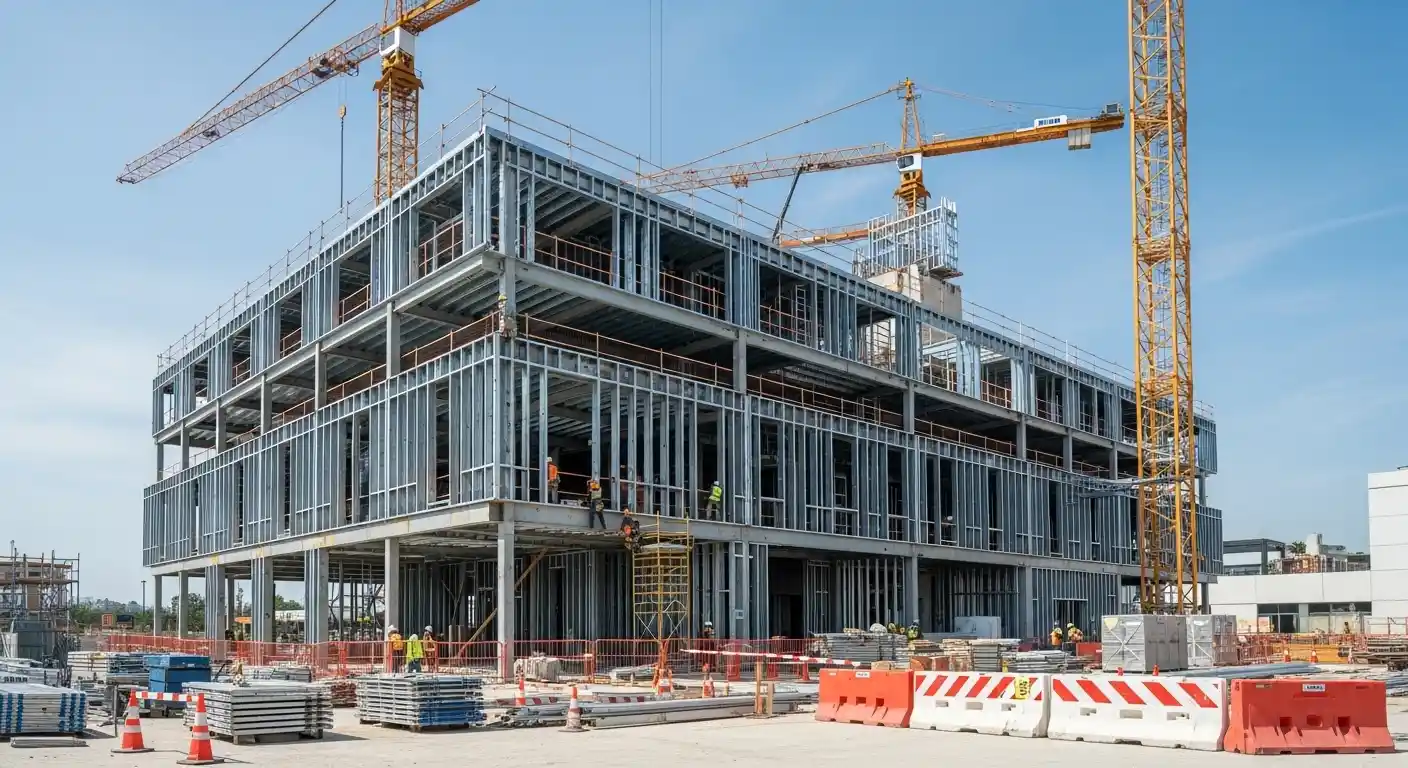
People demand buildings that are fast to build, strong, and easy to maintain. Traditional construction projects face delays, high costs, and maintenance issues. Light-gauge steel construction fixes these problems. It is quick to build, strong, and easy to maintain. It is a smarter, cost-effective solution for modern buildings.
At Systems West, we design light-gauge steel solutions that are both strong and efficient. Our systems accelerate construction, reducing labor and material costs. We help projects in Litchfield move faster, cost less, and meet modern building standards with confidence.
What Is Light Gauge Steel Construction?
Light-gauge steel is thin, strong steel used to build walls, floors, and roofs. It uses cold-formed steel sections to create structural frames for buildings. Unlike heavy steel, light-gauge steel is thin, typically 0.015-0.12 inches thick. It is strong enough for tall buildings but light enough to reduce foundation costs.

Why Choose Light Gauge Steel Construction?
Light gauge steel construction is not only strong and durable, but it’s also one of the most sustainable options. Using steel can help reduce waste, save energy, and support a circular economy. Here are some key reasons why light gauge steel is the preferred choice for modern construction:
Strength with Lightweight Design
Light gauge steel has an excellent strength-to-weight ratio. A single steel stud can support substantial vertical and lateral loads. Light-gauge steel is both strong and lightweight. This means it can support heavy loads without too much pressure on the foundation. That’s why it works well for tall buildings.
Faster Construction Timelines
Components are often fabricated off-site and assembled quickly on location. Builders can frame entire floors in days instead of weeks. Faster framing means earlier occupancy and quicker return on investment.
Precision, Consistency, and Quality Control
Light-gauge steel components are manufactured under controlled factory conditions. Every piece is accurate and fits well. This process minimizes defects and ensures consistent structural performance throughout the structure.
Fire, Pest, and Moisture Resistance
Steel does not burn, warp, rot, or attract termites. It improves safety and durability compared to organic materials. Moisture might cause surface rust over time, but it won’t compromise structural performance.
Sustainable and Recyclable Building Method
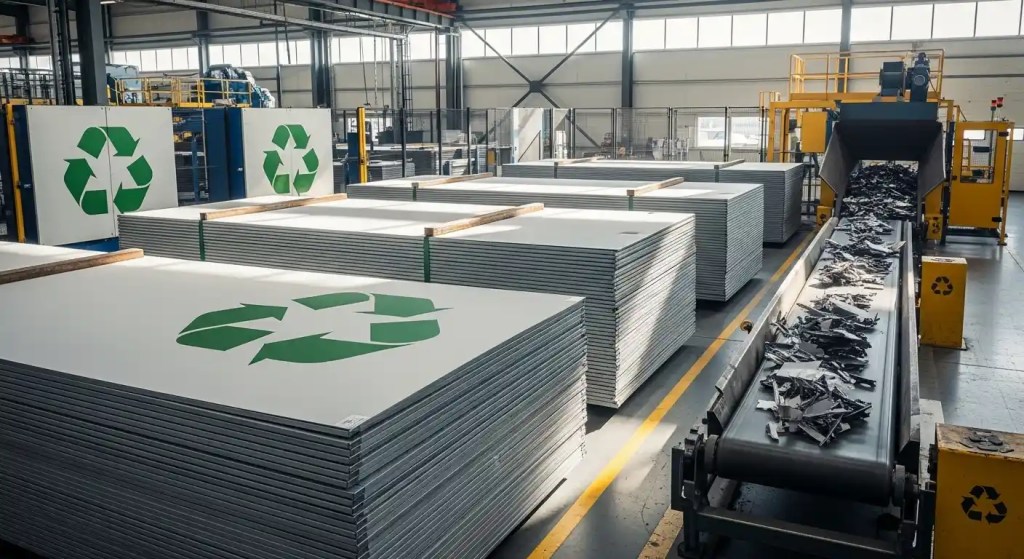
Steel is 100% recyclable. At the end of a building’s life, steel components can be reused without losing strength or quality. It creates a closed-loop system, keeping materials in use rather than sending them to landfills.
Light Gauge Steel vs Traditional Construction Methods
Light gauge steel offers a modern alternative to traditional building materials. Compared to concrete or structural steel, it delivers faster construction and long-term value. Its lightweight design enables faster building, reducing labor time and overall construction schedules.
Light Gauge Steel vs Concrete Structures
Concrete construction is strong but heavy, slow to build, and labor-intensive. Light-gauge steel reduces structural weight, shortens construction time, and enables greater design flexibility.
Light Gauge Steel vs Structural Steel
Structural steel is designed to carry very heavy loads. It’s used in large buildings and wide-span structures. For smaller projects, it often adds extra cost and design complexity.
Light-gauge steel is used when heavy steel is not required. It provides enough strength for walls and floors without excess weight. Its lighter design lowers material costs and simplifies installation.
Light Gauge Steel vs Wood Framing
Wood is vulnerable to fire, moisture, pests, and dimensional changes. It can absorb water, leading to rot, warping, and mold growth. Over time, wood can also shrink or expand, causing cracks and alignment issues. Light-gauge steel does not have these problems. It does not burn, rot, or attract pests, and it remains straight and stable in all conditions. It delivers consistent performance, a longer service life, and reduces maintenance requirements.

Applications of Light Gauge Steel Construction
Light-gauge steel is versatile and can be used in a wide range of building types. It is strong, accurate, and quick to build. These features makes it a good choice for both small and large projects
- Residential Buildings: Used for houses, townhomes, and apartments. It helps buildings go up faster and last longer.
- Commercial & Office Buildings: Ideal for offices and retail spaces. It allows clean designs and quick construction.
- Factories and Warehouses: Used in factories and storage buildings. It supports wide open spaces and heavy use.
- Modular & Prefabricated Projects: Components are built off-site and quickly assembled on-site. It works well for modular homes, temporary buildings, and prefabricated offices.
- Institutional & Specialized Buildings: Used in schools, hospitals, and public buildings. It meets safety rules and stays strong over time
Cost Considerations for Light Gauge Steel Construction
The cost of light gauge steel construction depends on a few key factors. Understanding these helps you plan your project more efficiently.
Factors Affecting Cost
Project size and complexity: Larger or multi-story buildings need more steel and careful coordination. Simple layouts are quicker and cheaper to build.
Design requirements: Custom designs, higher load requirements, or special features such as fire resistance or soundproofing can increase costs.
Fabrication level: Using prefabricated panels or pre-cut components may cost more upfront but saves time, reduces on-site labor, and lowers installation errors.
Local labor and logistics: Labor rates, transport distance, and site access affect overall cost. Off-site fabrication can cut on-site labor and keep expenses under control.
Long-Term Savings vs Upfront Investment
The initial construction cost is often similar to traditional building methods. The real savings come later. Faster construction means lower financing and labor costs. Precise manufacturing reduces material waste. Steel does not rot, warp, or attract pests; it reduces maintenance and repair expenses over time.
Why Systems West for Light Gauge Steel Construction?
Our experienced engineering team creates solutions tailored to your project’s needs. We provide end-to-end design and construction support, managing every step with clarity and precision. All our systems in Litchfield meet local and international codes and standards.
We offer customized solutions designed to fit your goals, budget, and timeline. Don’t wait to start your next project. Contact Systems West today for efficient, durable, and future-ready light-gauge steel construction solutions.
Key Standards and Certifications for Light-Gauge Steel
Conclusion
Light gauge steel construction is a smart choice for projects that need speed, strength, and reliability. Compared to traditional materials, it delivers faster build times, better quality control, and sustainable performance. By choosing Systems West, you gain a partner who provides expert engineering, full project support, and customized solutions.
Frequently Asked Questions
What is the lifespan of light gauge steel buildings?
With proper design and maintenance, light gauge steel structures can last 50 years or more.
Is light gauge steel suitable for large projects?
Yes. It is widely used in multi-story residential, commercial, and industrial developments.
How does it perform in extreme climates?
Steel performs well in high winds, seismic zones, and harsh weather when engineered correctly.
Is light gauge steel construction cost-effective?
Yes. Faster construction, lower maintenance, and long-term durability make it a cost-efficient choice over the building lifecycle.
What are the benefits of light-gauge steel?
It is strong, lightweight, fast to build, durable, fire- and pest-resistant, recyclable, and works well with modern insulation for energy efficiency.