

If your asphalt shingle roof is aging and you’re weighing your options, installing a metal roof over shingles is a legitimate path that experienced contractors take on regularly. It saves time, reduces project cost, and avoids the disruption of a full tear-off. But it is not the right call for every building or every situation.
Whether it makes sense depends on your roof’s current condition, local building codes, and your long-term goals for the building. Getting that answer wrong costs more to fix than the tear-off would have in the first place. This guide covers both sides of that decision so you know exactly where your building stands before work begins.

Advantages of Installing Metal Roof Over Shingles
When the conditions support it, a roof-over is a smart move. Here is where the value shows up on a real project.
Lower Upfront Project Cost
Tear-off labor and shingle disposal add real cost to any re-roofing project. Skipping that step puts the same quality metal panels on the building for less. For building owners on a set budget, that difference is often what makes metal roofing viable.
Cost Comparison
Aspect | Roof Over Shingles | Full Tear-Off | Benefit of Roof-Over |
Labor & Disposal Costs | Much Lower | High | Significant Savings |
Project Timeline | Faster (3-5 days typical) | Longer (5-8+ days) | Saves several days |
Waste & Debris | Minimal | Large dumpster required | Cleaner & Eco-friendly |
Overall Project Cost | 20-35% lower | Higher | Major upfront savings |
Faster Installation Timeline
Without tear-off, the crew goes straight to prep and installation. That saves days on the project. The existing shingles stay in place throughout, so the building stays protected while the new roof goes on.
Less Waste and Disruption
Tear-offs generate significant debris and require haul-away logistics that add time and cost. A roof-over avoids all of that. The site stays cleaner, operations stay less disrupted, and old shingle material stays out of the waste stream.
Risks of Putting a Metal Roof Over Shingles
The advantages are real. So are the risks. A roof-over on the wrong building creates problems far more expensive to fix than a tear-off would have been from the start.
Hidden Deck Damage
When old shingles stay down, the deck underneath stays hidden. Rot, soft spots, and water-damaged sections go unseen. Metal panels installed over a compromised deck will eventually fail through fastener loss, panel movement, and leaks that are nearly impossible to trace.
Moisture Trapped Between Layers
Two roofing layers trap moisture between them. Without adequate ventilation, that moisture builds up and breaks down the deck from underneath. Underlayment and ventilation reduce the risk. They do not eliminate it.
Warranty Complications
Most metal roofing manufacturers are clear on this, installing over existing shingles can void the product warranty. Check the warranty terms for the specific panel system before the project starts. Get it in writing.

When Installing Steel Roof Over Shingles Is the Right Call
Not every building that could have a roof-over should have one. When all of the following conditions are present, it is a viable and defensible option.
One shingle layer only. Most codes allow metal over a single existing layer. Two or more layers take the roof-over option off the table in most jurisdictions from both a code and structural standpoint.
Shingles are flat and firmly attached. They do not need to be new. They need to be stable. Widespread curling, cupping, or buckling creates an uneven surface that affects how the metal panels sit and perform over time.
No signs of deck trouble. An experienced contractor can read the signs of deck problems without pulling shingles — soft spots underfoot, sagging sections, water staining at the eaves, failed flashings around penetrations. If none of those are present and the building has no history of recurring leaks, the deck is likely sound enough to proceed.
Local codes allow it. Roof-over permissions vary by jurisdiction. Some areas permit one layer of metal over one layer of shingles with no conditions. Others require specific ventilation provisions or prohibit it outright. Confirm before the project begins.
There is a real budget or timeline constraint. When cost or schedule is a genuine factor and the roof conditions check out, a roof-over is a defensible decision that delivers a quality result.
When a Full Tear-Off Makes More Sense
Some buildings are simply not candidates for a roof-over. When any of the following are true, a tear-off is where the project needs to start.
Two or more shingle layers are already present. Adding metal on top of multiple existing layers exceeds code in most areas and puts load on the structure beyond what a roof-over is designed to handle. This condition alone rules the option out.
The shingles are badly deteriorated. Widespread cracking, curling, or missing sections mean the existing roof has already failed. Putting metal over a failed roof does not fix the problem. It covers it up and gives it time to get worse underneath a brand new system.
There is a leak history or active moisture problem. This one is straightforward. You do not install a new roof over an unresolved moisture issue. Tear off, find the source, fix it, then install. Skipping that sequence traps the problem under the new roof where it will keep working on the deck until the damage forces a much larger repair.
Manufacturer warranty coverage matters. For building owners planning to hold the property long term, full warranty coverage on the metal panel system is worth having. Most manufacturers require a clean deck to issue it. The tear-off cost pays for that protection.
The deck has not been inspected in years. Older buildings, buildings with a history of ice buildup or standing water, or any building where the deck condition is unknown should have it exposed and evaluated before new roofing goes on. What you find either confirms the roof-over or justifies the tear-off. Either way, you know what you are working with.
Systems West, Inc can assess your existing roof and tell you whether a roof-over is the right move for your building.
How to Install a Metal Roof Over Shingles
When the decision is made to proceed with a roof-over, installation follows a straightforward sequence.
Roof and Deck Inspection
Before anything goes on the roof, the contractor walks the existing surface and checks the shingles and all visible deck components. Loose or raised shingles get renailed.
Problem areas around flashings, valleys, and penetrations get addressed. This inspection either confirms the roof-over proceeds as planned or surfaces conditions that change the recommendation. It is the step that protects the building owner from discovering problems mid-project.
Underlayment and Ventilation
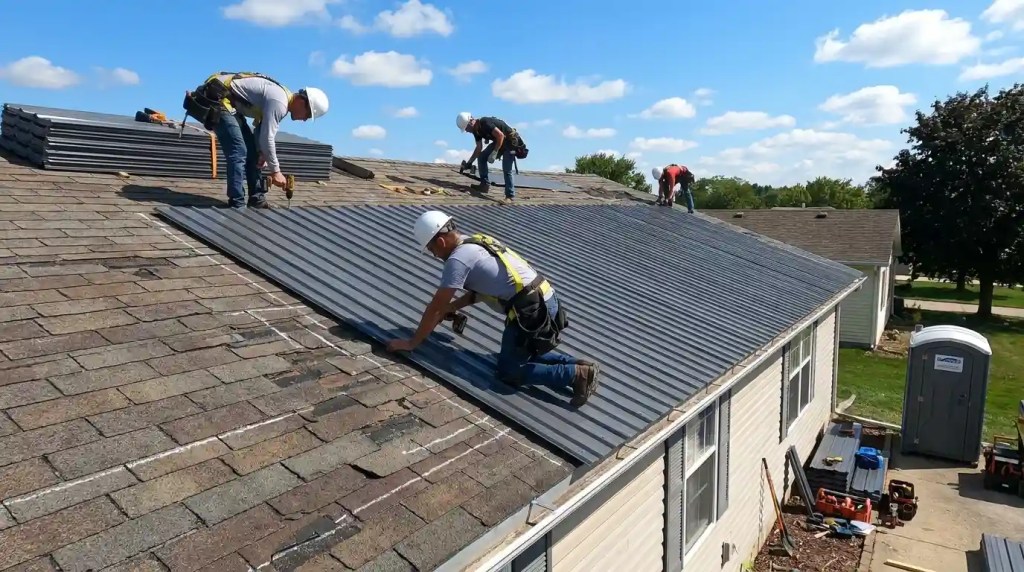
Synthetic underlayment goes down over the existing shingles before panels are installed. It separates the shingle granules from the back of the metal panels — granule contact causes corrosion over time and this step prevents it.
It also creates a cleaner, more consistent surface for installation. On roofs where moisture or ventilation is a concern, furring strips go over the underlayment to create an air gap between the two roof layers. That gap lets moisture move and escape instead of building up between them.
Metal Panel Installation
With underlayment in place, panels go on to manufacturer specifications for the profile being used. Fastener placement, panel overlap, ridge and eave flashing, and sealing around all penetrations follow the same installation standards as any new metal roof.
When the job is done correctly, the finished system is weathertight, properly anchored, and built to perform for the full life of the panel system installed.
Conclusion
A metal roof over shingles is a solid option when the building qualifies for it. When it does not, it is an expensive shortcut. The difference between the two comes down to an honest assessment of what is already on the roof, what the deck looks like, and what the building needs to perform well for the next several decades. That assessment is the most important step in the entire project — everything else follows from it.
Whether your building needs a roof-over or a full replacement, Systems West, Inc handles both. Contact us or call 320-693-8779.
Frequently Asked Questions
How long will a metal roof over shingles last?
Most metal roofs last 40 to 60 years. On a roof-over, deck condition is the variable that matters most. Compromised decking or trapped moisture will shorten that timeline, which is why the pre-installation inspection is not optional.
Does installing metal over shingles void the warranty?
Some manufacturers allow it, some do not. The ones that allow it require a single shingle layer and installation per their specific guidelines. Check before you commit. Do not assume.
Can you put a metal roof over two layers of shingles?
No. Two existing layers rule out a roof-over in most jurisdictions. The structural load exceeds standard roof-over parameters and most local codes prohibit it. When two layers are present, tear off and start clean.
Will metal over shingles cause moisture or condensation problems?
It can if installation is not done correctly. Proper underlayment and ventilation manage the risk significantly. Buildings with poor attic ventilation or a known condensation history are better candidates for a full tear-off.
Is a roof-over cheaper than a full tear-off?
Yes. Eliminating tear-off labor and disposal reduces overall project cost. That savings is real but so is the trade-off. Hidden deck conditions, warranty limitations, and moisture risk are all variables a full tear-off removes. The lower cost only makes sense when the building genuinely qualifies.