


Insulated Composite Concrete Forms (ICCF) are advanced building systems used to construct strong, energy-efficient structures. ICCF combines reinforced concrete with permanent insulation panels. The result is a wall system that delivers strength, durability, and thermal performance in one structure. Modern construction faces new demands. Buildings must reduce energy use. They must resist extreme weather. They must also meet strict environmental standards. ICCF technology addresses all these needs.
Systems West Inc specializes in ICCF engineering and construction solutions in Litchfield. The company provides design support, material guidance, and project execution for residential and commercial buildings. Their focus is on high-performance structures that meet modern building standards.
What Are Insulated Composite Concrete Forms (ICCF)?
Insulated Composite Concrete Forms are formwork systems made of composite panels and reinforced concrete. The forms remain in place after the concrete cures. They provide both structure and insulation. ICCF differs from traditional concrete forming systems. In standard construction, forms are removed after the concrete sets. Separate insulation is installed later. With ICCF, insulation and structure are built together. It reduces steps and improves performance.
Compared to concrete masonry units, ICCF walls are more energy efficient and airtight. Compared to standard Insulated Concrete Forms (ICF), ICCF panels often offer improved durability and structural integration
Structural Design Principles for ICCF
Structural design is critical in ICCF construction. Engineers must consider load-bearing capacity, reinforcement detailing, and thermal performance. The reinforced concrete core carries structural loads. It resists gravity loads from floors and roofs. It also resists lateral loads from wind and seismic forces.
Reinforcement design follows building codes. Engineers calculate bar spacing and concrete strength based on project requirements. ICCF systems are compatible with modern building standards. ICCF offers design flexibility. Architects can design straight, curved, and complex shapes. Openings for windows and doors are integrated during form installation. The system adapts to residential, commercial, and institutional projects.
ICCF vs Traditional Concrete
ICCF and traditional concrete both use reinforced concrete as the main structural material. The difference is in the wall system and performance.
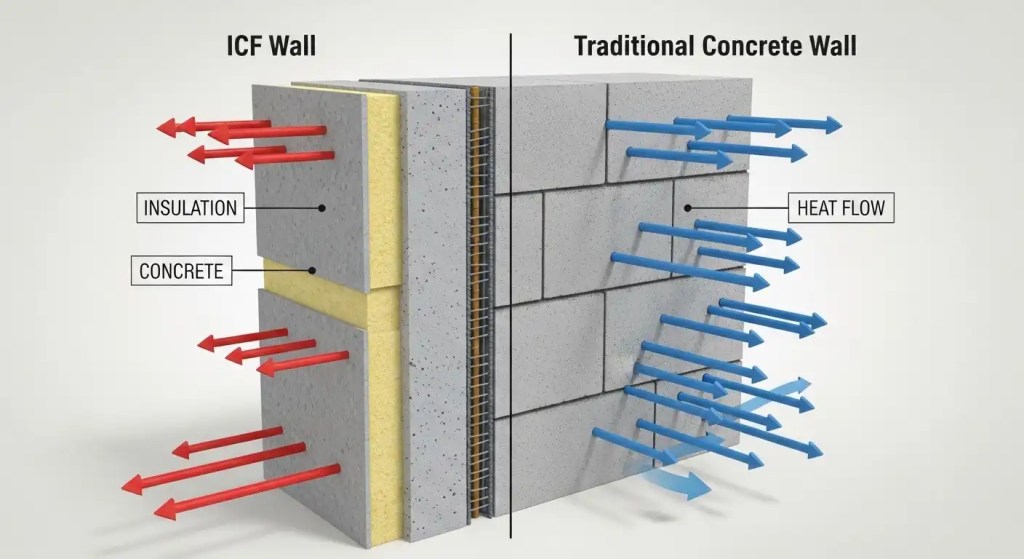
Traditional concrete walls require temporary forms. After pouring and curing, the forms are removed. Insulation is added later as a separate layer. This adds extra steps and labor.ICCF uses permanent composite insulated forms. The insulation stays in place after the concrete cures. Structure and insulation are built simultaneously. This improves efficiency.
In traditional concrete walls, thermal bridging is common. Heat passes through the concrete more easily. Additional insulation is needed to improve energy performance. ICCF provides continuous insulation on both sides of the concrete core. This reduces heat loss and improves indoor comfort.
Construction speed also differs. Traditional systems require forming, stripping, and insulating. ICCF combines these steps. This reduces construction time and the need for coordination between trades. From a long-term perspective, ICCF offers greater energy savings and lower maintenance costs. Traditional concrete can be durable, but it often requires additional materials to meet ICCF performance standards.
ICCF delivers structure, insulation, and efficiency in one system. Traditional concrete requires separate solutions to achieve the same results.
Key Benefits of ICCF Construction
ICCF offers numerous advantages, making it ideal for commercial and industrial projects.
Superior Insulation and Energy Efficiency
ICCF walls provide high thermal resistance. The insulation panels deliver strong R-values. The concrete core adds thermal mass. This combination reduces temperature fluctuations inside the building. Lower heat transfer reduces HVAC demand. Heating and cooling systems work less. Energy bills decrease over time. It makes ICCF ideal for energy-efficient buildings.
Ease of Construction and Labor Efficiency
ICCF systems use modular panels. Installation is simple and systematic. Crews can assemble forms quickly. Construction time is shorter than traditional masonry. Fewer trades are required. Labor costs can be reduced. The integrated system improves scheduling and reduces delays.
Strength and Complete Disaster Resistance
The reinforced concrete core provides exceptional strength. ICCF walls resist high winds and seismic forces. They perform well in hurricane-prone areas. The system also resists impact and flying debris. It improves building safety during storms. Structural integrity remains strong even under extreme conditions.
Fire-Resistant Performance
Concrete is non-combustible. ICCF walls provide passive fire resistance. They can meet strict fire-rating requirements. Fire performance improves occupant safety. It also reduces property damage risk. ICCF systems comply with modern fire codes and safety standards.
Pest and Mold Resistance
Concrete and composite materials do not attract pests. ICCF walls reduce entry points for insects and rodents. The system also limits moisture intrusion. Reduced moisture lowers the risk of mold growth. It improves indoor air quality and building durability.
Sustainability and Green Building Benefits
ICCF reduces construction waste. The forms remain in place and are not discarded. It lowers material waste on-site. Energy efficiency reduces carbon emissions over the building’s life. Durable construction reduces maintenance and replacement needs. These factors support sustainable building goals.
Noise Reduction and Comfort
ICCF walls provide strong sound insulation. The concrete core and insulation panels block external noise. It creates quieter indoor spaces. Improved thermal and acoustic comfort enhances occupant satisfaction. Buildings feel stable and comfortable year-round.
Where ICCF Is Best Used (Applications)
ICCF construction suits many building types.
- Residential buildings benefit from energy savings and safety. Homeowners gain lower utility bills and improved comfort.
- Schools and hospitals require quiet and durable structures. ICCF walls provide noise control and fire resistance.
- Commercial and industrial facilities need strength and efficiency. ICCF systems support large spans and heavy loads.
- High-performance green buildings rely on energy-efficient envelopes. ICCF meets sustainability targets.
- Disaster-resilient infrastructure benefits from reinforced concrete strength. ICCF improves long-term resilience.
Choosing ICCF Systems: What to Look For
Selecting the right ICCF system is important.
- Review technical specifications. Confirm structural capacity and insulation performance.
- Check compliance with building codes. Ensure the system meets local and national standards.
- Look for certified products. Thermal ratings and structural testing data should be available. Manufacturer support is also important for installation guidance.

Cost and ROI Considerations
ICCF construction may have higher initial material costs than traditional block systems. However, installation efficiency offsets part of the expense.
Long-term savings are significant. Energy bills decrease due to high insulation levels. Maintenance costs are lower due to durability.
Over the building life cycle, ICCF delivers financial advantages. Reduced repairs, lower energy use, and improved resilience provide a strong return on investment.
Common ICCF Myths and Misconceptions
Build Smarter with ICCF – Contact Systems West Inc Today
Work with trusted ICCF product suppliers and experienced professionals. Systems West Inc delivers expert ICCF design and construction solutions in Litchfield. Our team understands structural engineering requirements and energy performance standards.
We support your project from concept to completion. Services include engineering analysis, material coordination, and construction oversight. We focus on quality, safety, and performance. Projects are delivered on schedule and built to last. Partner with Systems West Inc for proven ICCF solutions. Contact us today for expert guidance and reliable project execution.
Conclusion
Insulated Composite Concrete Forms provide strength, efficiency, and durability in one system. ICCF combines reinforced concrete and continuous insulation to create high-performance buildings. The system improves energy efficiency, disaster resistance, fire safety, and indoor comfort. It reduces waste and supports sustainable construction goals.
Frequently Asked Questions
What is ICCF construction?
ICCF construction uses insulated composite forms filled with reinforced concrete to create strong and energy-efficient walls.
Is ICCF suitable for all climates?
Yes. ICCF performs well in hot, cold, and humid climates due to continuous insulation and thermal mass.
How does ICCF compare with ICF or CMU?
ICCF integrates insulation and structure like ICF, but often offers enhanced panel durability. It provides better energy efficiency than traditional CMU.
What are typical energy savings with ICCF?
Energy savings vary by climate and design. Many buildings see significant reductions in heating and cooling costs.
What is the difference between ICF and ICCF?
ICF uses foam forms that remain in place after concrete is poured. ICCF uses composite insulated panels with a reinforced concrete core. ICCF panels are often stronger and more durable than traditional foam ICF systems.