

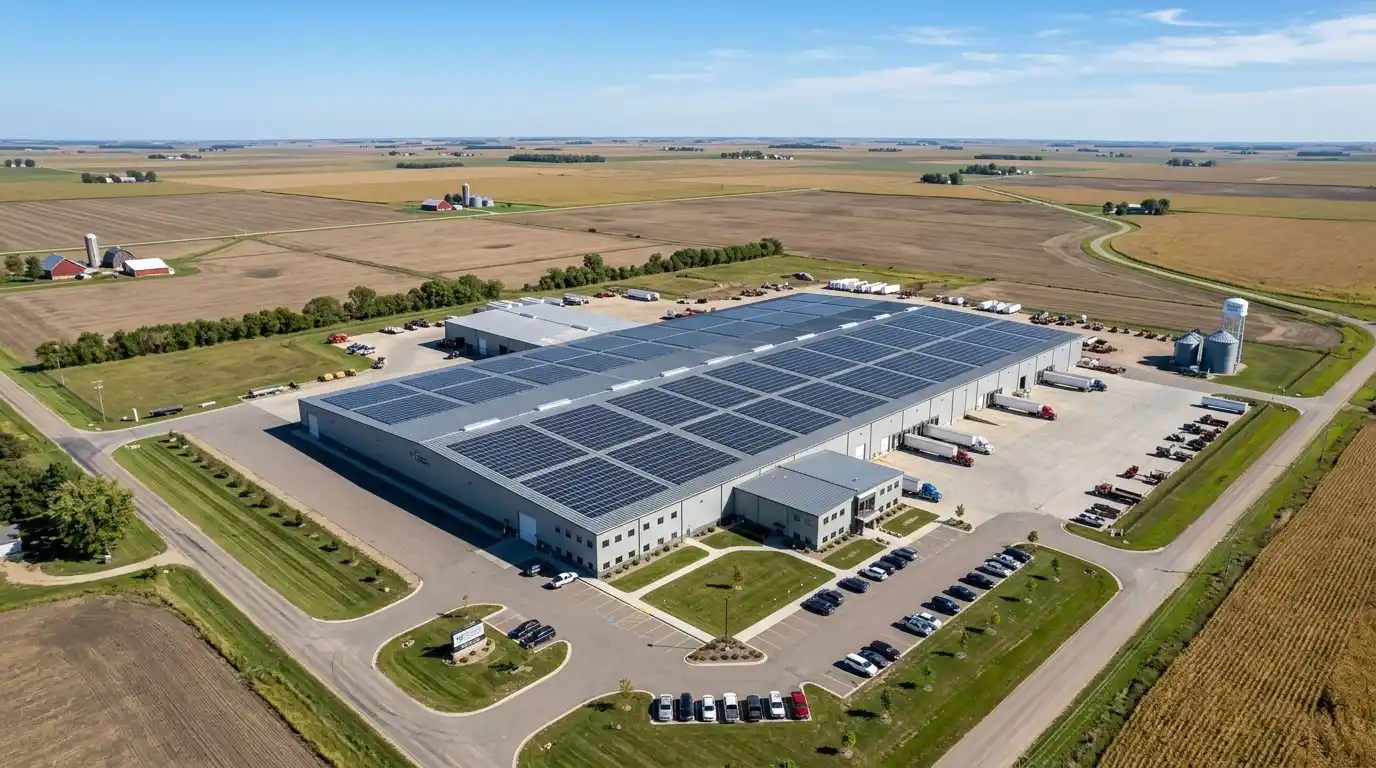
Commercial building owners across Minnesota are investing in solar at a growing rate, and metal roofs are one reason the numbers make sense. A metal roof lasts longer than the solar system sitting on it, handles the structural load without issue in most cases, and depending on the profile type, can be installed without a single penetration.
This guide covers what makes metal roofs a strong fit for solar, how your specific roof profile affects the mounting method, what the structural assessment process involves, and what to check on your building before a solar company arrives.
Why Metal Roofs Are Actually Ideal for Solar
Most commercial steel buildings in the Midwest were built to last. That same quality is what makes them a strong candidate for solar. The lifespan match is the clearest advantage. Metal roofs last 40 to 60 years. Solar panels carry a 25 to 30-year warranty. That means when your solar system reaches end of life, your roof still has decades of service left — you won’t be tearing off panels just to replace a worn-out roof underneath. On asphalt, that’s a real and expensive problem. On metal, it doesn’t come up.
Steel framing handles load well. The added weight of a solar array is typically 2 to 4 pounds per square foot, well within the design capacity of most commercial metal buildings, though a structural assessment will confirm that for your specific structure.
There’s also a thermal benefit worth noting. Metal reflects heat rather than absorbing it. Solar panels produce more efficiently when they run cooler, so a reflective metal surface underneath helps panel performance on hot summer days. For Minnesota buildings that deal with both extreme heat in summer and heavy snow loads in winter, this combination holds up better than most alternatives.
It Depends on Your Metal Roof Type
Your roof profile determines the mounting method, the hardware used, and whether penetrations are required.
Standing Seam Metal Roofs
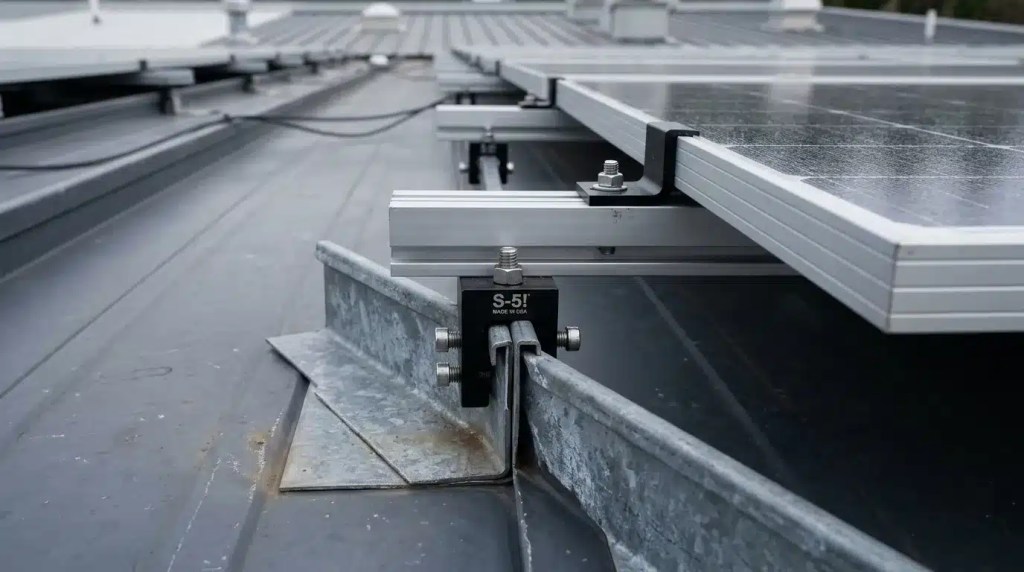
The best-case scenario for solar. Clamp-based mounting systems attach directly to the raised seams with no drilling required. The roof surface stays intact, waterproofing is fully preserved, and installation tends to cost less in labor. Standing seam is common on newer commercial builds and pre-engineered steel buildings — if your building was constructed in the last 15 to 20 years, there’s a good chance this is what you have. A standing seam roof in good condition is essentially solar-ready from a mounting standpoint.
Corrugated and Ribbed Metal Roofs
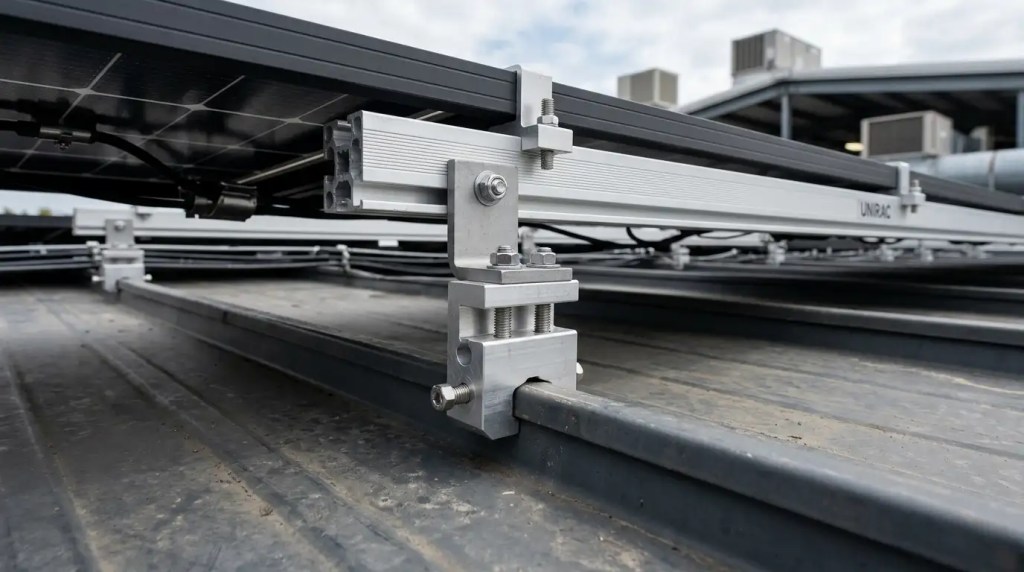
Common on older commercial structures, grain storage facilities, and agricultural buildings across rural Minnesota. Solar can be installed on these roofs, but brackets must be fastened directly to the roof panels using penetrating screws. When done correctly with rubber bushings or EPDM gaskets, the penetrations seal properly and hold up long term. These roofs tend to be older, which is exactly why a condition check before installation matters — a roof that’s been through 20 Minnesota winters needs to be looked at before more penetrations go in.
R-Panel and PBR Roofs
The most common profile on commercial steel buildings throughout central Minnesota, warehouses, equipment storage, light industrial facilities. These are exposed fastener roofs and require direct attachment similar to corrugated. Brackets go over the ribs, not in the flat valleys where water runs. All penetrations need proper sealing. On R-Panel and PBR roofs, a roofing inspection before the solar crew arrives isn’t just a good idea, it’s the step that prevents problems mid-project.

Will Solar Panels Damage or Void Your Metal Roof Warranty?
On standing seam roofs, clamp-on installation leaves the surface untouched. It typically does not affect the roof warranty because no penetrations are made. On corrugated, R-Panel, and PBR roofs, penetrations are required. Whether those void your warranty depends on the manufacturer. Some allow penetrations with the correct fasteners and sealants. Others don’t. Check your warranty documentation before any solar installer puts a screw in your roof.
As for physical damage — panels installed correctly on a roof in good condition don’t damage the metal. They actually protect the sections they cover from hail, UV exposure, and weathering. The risk comes from poor installation practice, not from the panels themselves.
What to Check Before You Call a Solar Installer
A solar company’s site visit focuses on panel placement and energy output — not your roof’s condition. Before they arrive, you should already know where your roof stands.
Roof age is the first thing to look at. If your metal roof is past 20 years, get it inspected before committing to solar. Installing a system on a roof that needs replacement in a few years means paying to remove and reinstall those panels when that day comes — a cost that is entirely avoidable with some planning upfront.
Check for active leaks, surface rust, or failing fasteners. Any of these need to be addressed before mounting hardware goes on. On exposed fastener roofs, look specifically for screws backing out or washers that have deteriorated. Widespread fastener issues need to be corrected before more penetrations go in.
Also look at the structural framing. Purlins and secondary members showing corrosion or deflection should be evaluated before any additional load is added to the building.
What the Structural Load Assessment Involves
Before a commercial solar system can be permitted, a structural engineer needs to sign off on the building. This is standard on commercial projects, not optional.
The engineer looks at your primary framing, purlin spacing, and the overall load capacity of the roof system. For buildings in Minnesota, snow load is the calculation that catches people off guard most often. It’s not just the weight of the panels — it’s the weight of snow sitting on top of those panels through a hard winter, combined with the existing roof load. That number adds up faster than most building owners expect.
Most commercial steel buildings pass this review without needing modifications. When reinforcement is required, the engineer specifies exactly what needs to happen before installation moves forward. If you have your original building specifications on hand, the review goes faster. If not, the engineer will work from a site inspection.
Factor this step into your project timeline from the start. Between the roofing assessment, structural review, permitting, and installation scheduling, a commercial solar project on a metal building runs longer than a residential job. That’s not a problem — it’s just the reality of doing it right on a commercial structure.
Is It Worth Replacing Your Metal Roof Before Going Solar?
If your roof has 15 or more years of service life remaining, proceed with solar on what you have. The lifespan math works in your favor. If the roof has widespread panel deterioration, chronic leaks, or significant rust across large sections, replace it first. Removing and reinstalling a commercial solar array to get a new roof underneath adds thousands to the overall project cost. Doing the roof first eliminates that expense entirely and gives you a clean, warranted surface to mount on.
Whether your roof needs a quick inspection, targeted repairs, or a full replacement before solar goes on, Systems West handles it.
Conclusion
Metal roofs and solar are a strong combination, but the condition and profile of your specific roof determines whether your building is ready now or needs work first. Getting that answer before a solar company arrives saves time, avoids mid-project surprises, and puts you in a better position to negotiate the solar project itself.
Systems West has been building and maintaining commercial metal structures across central Minnesota for decades. If you’re planning solar and want a straight assessment of where your building stands, we’re the right call before the solar process begins.
Frequently Asked Questions
How much do solar panels weigh on a metal roof?
Most commercial solar arrays add 2 to 4 pounds per square foot. A structural engineering assessment confirms whether your specific building can handle it before installation begins.
Can you put solar panels on a metal roof without drilling?
Yes, on standing seam roofs. Clamp-on systems attach to the seams with no penetrations. On corrugated, R-Panel, and PBR roofs, some drilling is required.
How long do solar panels last on a metal roof?
Solar panels carry a 25 to 30-year warranty. A metal roof lasts 40 to 60 years. Your roof will outlast the solar system, so a mid-project roof replacement is unlikely.
Do solar panels affect metal roof insulation?
Not directly. The air gap between the panels and roof surface reduces summer heat transfer into the building, which is a minor but useful benefit for commercial steel buildings in Minnesota.
Who is responsible if solar installation damages my metal roof?
Your solar installer’s workmanship warranty and liability insurance should cover it. Confirm this in writing before signing. If your roof has a manufacturer’s warranty, verify the installation method doesn’t void it.