

Painting a metal building is one of the most effective ways to protect it and extend its life. It helps prevent rust, improves appearance, and reduces long-term maintenance costs. This applies to all types of structures, including commercial steel buildings, warehouses, storage units, and even small metal sheds.
Over time, metal surfaces lose their protective coating due to weather, sunlight, and moisture. When this happens, the surface becomes exposed to rust and damage. Repainting restores this protection and helps keep the structure strong for many years.
This guide explains everything in simple steps, so you can understand the full process from start to finish.
Can You Paint a Metal or Steel Building?
Yes, both metal and steel buildings can be painted. Most metal buildings are designed to accept paint if the surface is prepared properly. The key is surface preparation. Without proper cleaning, rust removal, and priming, paint may not stick well and can peel over time.
Steel buildings can also be painted, but they require more attention to rust protection. Steel is more sensitive to moisture, so using the right primer and coating system is very important. For galvanized steel (common on many metal buildings), you’ll often need a special etching or bonding primer to ensure good adhesion and prevent peeling.
Benefits of Painting Metal and Steel Buildings
Painting does much more than improve appearance. It protects the building and saves money over time.
Protection Against Rust and Corrosion
Paint creates a protective barrier between the metal surface and moisture in the air. This helps stop rust from forming and spreading. Over time, this protection reduces the need for expensive repairs or replacements. It also helps the structure stay strong even in harsh weather conditions like rain, snow, and humidity.
Enhanced Appearance and Curb Appeal
A fresh coat of paint can completely change how a building looks. It makes old or faded metal surfaces look clean, modern, and well-maintained. This is especially important for commercial properties where appearance affects business image. A well-painted building also gives a professional impression to customers and visitors.
Increased Lifespan of the Structure
Painting helps extend the life of a metal building by protecting it from damage. When metal is sealed properly, it is less likely to corrode or weaken over time. This means fewer repairs and a longer-lasting structure that maintains its strength for many years.
Improved Energy Efficiency with Reflective Coatings
Some modern paints are designed to reflect sunlight instead of absorbing it. This helps reduce heat buildup inside the building. As a result, the interior stays cooler, which can reduce energy use and lower cooling costs during hot weather.
Cost-Effective Maintenance Solution
Painting is one of the most affordable ways to maintain a metal building. Instead of replacing panels or repairing rust damage, a new coat of paint can restore protection at a lower cost. Regular painting helps prevent bigger problems in the future, saving both time and money.
When Should You Paint a Metal Building?
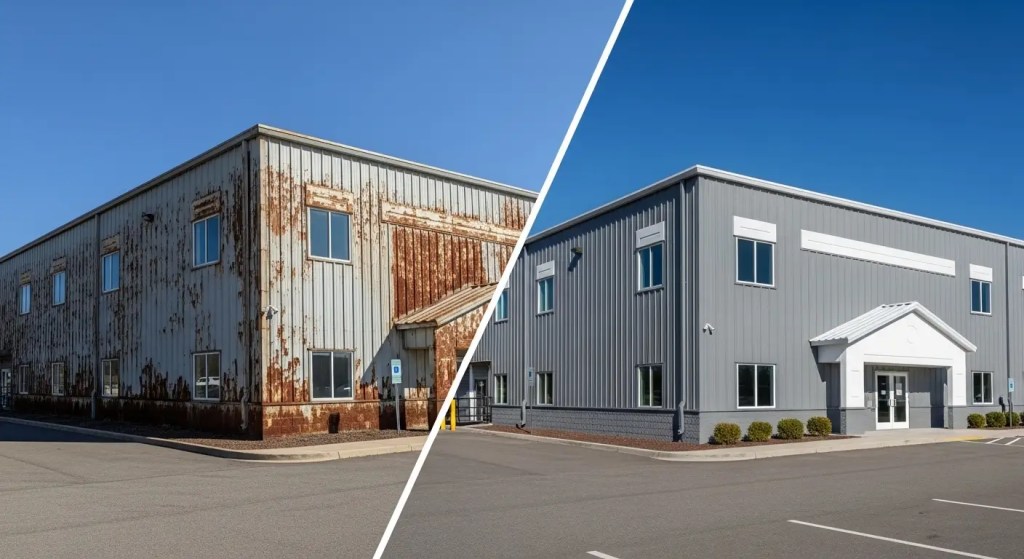
You should consider repainting your metal building when you notice:
- Faded or dull color
- Peeling or cracking paint
- Rust spots on the surface
- Chalk-like residue forming
- Visible wear from weather exposure
Most metal buildings need repainting every 10 to 15 years. However, this can vary depending on climate, location, and exposure to moisture or sunlight. In harsh coastal or industrial areas, you may need to repaint sooner.
How to Paint a Metal Building: Step-by-Step Process
Painting a metal building follows a clear process. Each step is important for long-lasting results.
Step 1: Inspect and Prepare the Surface
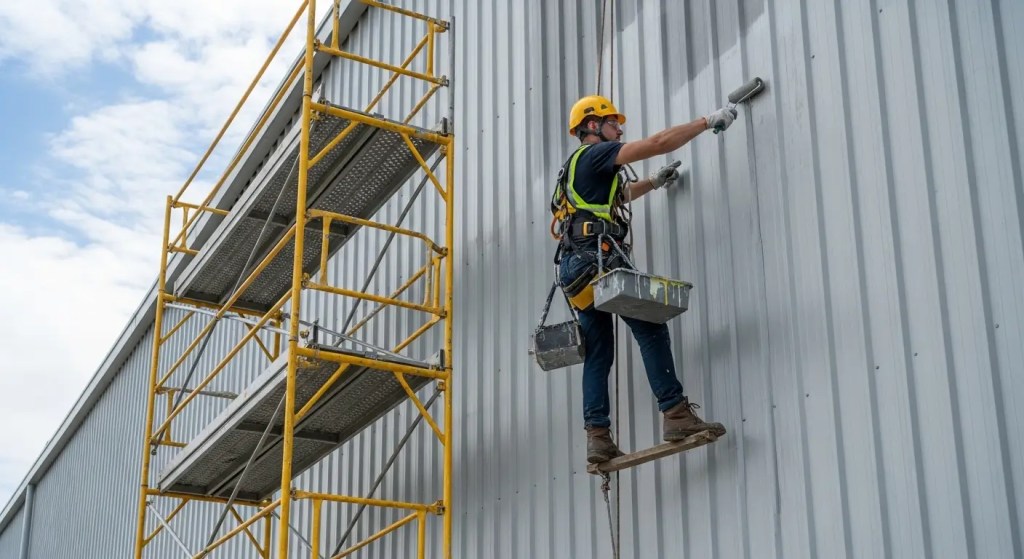
Start by carefully inspecting the entire building. Look for rust, damage, loose paint, or dents. Fixing small issues early helps prevent bigger problems later. Proper preparation ensures the paint will bond correctly to the surface. For safety, especially on tall structures, use proper scaffolding, lifts, and personal protective equipment (PPE) like harnesses, gloves, and eye protection.
Step 2: Clean the Surface and Remove Rust
Wash the surface thoroughly to remove dirt, dust, grease, and mildew. Pressure washing with a mild detergent or specialized metal cleaner works well. After cleaning, remove any rust or loose paint using a wire brush, sandpaper, or grinder. For stubborn rust, consider a rust converter or grinder with a flap disc. Wipe the surface with a degreaser and allow it to dry completely—any remaining moisture can ruin adhesion.
Step 3: Apply a Rust-Inhibiting Primer
Primer is a key step that should never be skipped. It helps the paint stick better and protects the metal from rust. For bare or rusted steel, use a high-quality rust-inhibiting primer. On galvanized steel, choose a specialized etching primer or acrylic bonding primer designed for galvanized surfaces to promote strong adhesion. Apply an even coat and allow it to dry fully (follow the product’s recommended drying time, usually 24 hours) before moving to the next step.
Step 4: Choose the Right Paint
Selecting the correct paint is very important for long-term durability. Common choices include:
- Acrylic latex paint: Easy to apply, flexible, and weather-resistant—great for general use.
- Oil-based or alkyd paint: Provides a hard, durable finish with good rust resistance.
- Direct-to-metal (DTM) paint: Designed specifically for metal surfaces and often combines primer and topcoat properties.
- Elastomeric coatings: Thick, flexible layer that resists cracking and water penetration—ideal for high-moisture areas.
- Advanced options: For maximum durability and UV resistance, consider two-part epoxy primers with polyurethane topcoats or high-performance PVDF (Kynar) finishes. Reflective “cool roof” coatings can also improve energy efficiency.
Choose based on your building type, local climate, and exposure level. Premium systems generally last longer but cost more upfront.
Step 5: Apply the Paint
You can apply paint using a brush, roller, or spray system. Spray painting is usually the most efficient method for large buildings because it provides even coverage quickly. However, it requires proper equipment and technique to avoid overspray. Work in sections to maintain a wet edge, and apply two thin coats instead of one thick layer. This helps avoid drips and ensures a smooth, professional finish. Allow proper drying time between coats.
Step 6: Final Inspection and Touch-Ups
Once the paint has dried completely, inspect the entire surface. Look for missed spots, uneven areas, or thin coverage. Touch up any problem areas to ensure a consistent and professional finish.

How to Paint a Steel Building: Key Differences to Know
Painting a steel building is similar to painting a metal building, but steel requires extra care due to its higher risk of rust. If the steel is galvanized, always use a compatible etching or bonding primer first. In areas with high humidity, heavy rainfall, or coastal salt air, stronger protective coatings—like zinc-rich primers or epoxy systems—are recommended for better durability.
Best Types of Paint for Metal and Steel Buildings
Choosing the right paint affects both durability and appearance. Match the coating system to your environment for the best results.
- Acrylic latex paint: Easy to apply and weather resistant.
- Oil-based paint: Strong and long-lasting finish.
- Direct-to-metal (DTM) paint: Designed specifically for metal surfaces.
- Elastomeric coatings: Thick protective layer that resists water and cracking.
- High-performance options: Epoxy + polyurethane systems or PVDF coatings for superior UV and corrosion resistance.
How Much Does It Cost to Paint a Metal Building?
The cost of painting depends on several factors, including building size, surface condition, amount of rust or damage, type of paint used, height and accessibility, and labor requirements.
Professionally, exterior metal building painting typically costs $2 to $6 per square foot of paintable surface. For example:
- A small to medium building might range from $5,000 to $15,000.
- Larger commercial warehouses can run $12,000 to $40,000 or more, depending on height and preparation needs.
Smaller DIY projects cost less in materials but require significant time and safety considerations. Professional services usually provide better and longer-lasting results, especially for tall or complex structures.
Common Mistakes to Avoid When Painting Metal Buildings
Avoiding mistakes can greatly improve the lifespan of your paint job.
- Skipping thorough surface cleaning
- Painting over rust without proper removal and priming
- Not using the right primer (especially on galvanized steel)
- Choosing the wrong paint type for your climate
- Painting in poor weather conditions
- Applying uneven or very thick coats
These mistakes often lead to peeling, bubbling, or early paint failure.
Maintenance Tips After Painting a Metal Building
After painting, simple maintenance can keep the surface in good condition.
- Wash the building once or twice a year with mild soap and water
- Inspect for early signs of rust or damage
- Repair small chips or scratches quickly
- Recoat damaged areas when needed
Regular care helps prevent major issues and protects your investment.
Conclusion
Painting a metal or steel building requires proper tools, safety measures, and experience. If done incorrectly, it can lead to peeling paint, rust, and wasted money.
At Systems West Inc., we specialize in commercial metal building construction. When planning or building a new steel structure, we ensure the right materials, coatings, and preparation are used from the start for long-term durability and low maintenance.
If you’re planning a new metal building or need guidance on protective coatings during construction, contact Systems West Inc. today to request a quote. Our team will help you build a strong, well-protected steel structure that lasts for years.
Frequently Asked Questions
How Long Does Paint Last on a Metal or Steel Building?
A properly done paint job can last 10 to 20 years, with premium coating systems sometimes exceeding that in milder climates. The exact lifespan depends on weather conditions, paint quality, surface preparation, and regular maintenance.
Can you paint over an existing metal building finish?
Yes, but the surface must be cleaned and properly prepared first for best results.
Do you need to prime metal before painting?
Yes. Primer is important for adhesion and rust protection, especially on bare or galvanized steel.
Is spray painting better than rolling?
Spray painting is faster and gives more even coverage on large surfaces, but it requires experience and equipment. Rolling or brushing works well for smaller areas or touch-ups.
How long does it take to paint a metal building?
Most projects take a few days to one week, depending on size, condition, and weather.