

Introduction
HVAC systems are essential infrastructure, responsible for controlling temperature, ventilation, and indoor air circulation to maintain a safe and functional environment. Yet in the field, 20–30% of systems fail to perform as intended simply because they were installed incorrectly, regardless of how advanced or high-quality the equipment may be. These losses translate directly into higher energy costs, inconsistent indoor temperatures, frequent repairs, and shortened equipment lifespan.
At Systems West, Inc we understand that HVAC performance begins long before a system is switched on. It starts with careful planning, accurate calculations, and disciplined installation practices.
This article breaks down the most common HVAC installation mistakes, why they happen, what they cost long-term, and how a disciplined, commissioning-driven process prevents them.
Why Proper HVAC Installation Matters?
Proper HVAC installation determines how effectively a system operates throughout its service life. An HVAC system is not a single machine. It’s a connected network of equipment all interacting with the building itself.
Improper installation, on the other hand, introduces inefficiencies that cannot be fully corrected through maintenance alone. Poor airflow design, incorrect sizing, and improper venting can cause temperature imbalance, humidity issues, excess noise, and indoor air quality concerns. In more severe cases, installation errors may lead to combustion safety risks or premature system failure.
The Most Common HVAC Installation Mistakes to Avoid
1. Incorrect HVAC System Sizing
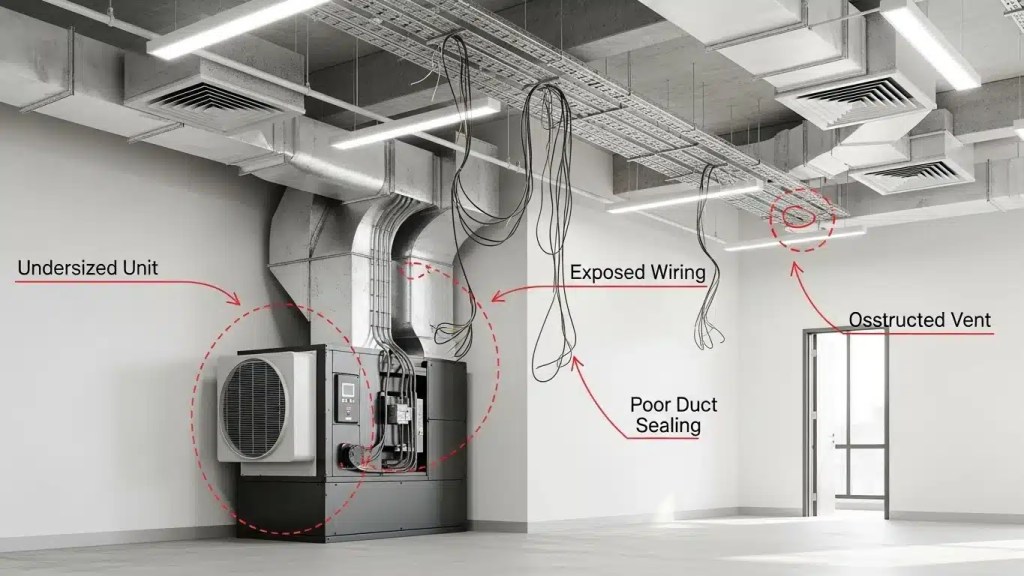
One of the most frequent and costly installation mistakes is improper system sizing. An oversized system cycles on and off too frequently, causing temperature swings, humidity problems, and mechanical stress. An undersized system, by contrast, runs constantly, struggles to meet demand, and wears itself out early.
Accurate system sizing requires detailed load calculations that account for building layout, insulation levels, occupancy patterns, internal heat loads, and climate conditions. Simply replacing existing equipment with the same capacity unit without reassessing the building is a common error.
2. Poor Ductwork Design and Installation
Ductwork is the system of passages that carries heated or cooled air throughout a building. Ductwork plays a critical role in HVAC performance; even the most efficient HVAC unit cannot perform properly if the duct system is poorly designed or installed.
Inadequate duct sizing, excessive turns, air leaks, and insufficient sealing all contribute to energy loss, uneven temperature distribution, higher utility bills and increased dust.
Reusing old ductwork without verifying compatibility with new equipment frequently results in reduced system performance. Poor workmanship, such as improper joint assembly or inadequate sealing methods, causes air to escape before it reaches occupied spaces.
3. Improper Air Distribution and Vent Placement
Air distribution determines how effectively conditioned air reaches each space within a building. If vents are placed poorly, some areas may be too hot or too cold, and air can become stagnant. Every room has different airflow needs depending on its size and use. A common mistake is installing vents in the wrong locations, without considering the size and use of the room, which causes uneven airflow and poor comfort. Proper air distribution design ensures balanced airflow and consistent comfort throughout the building.
4. Ignoring Manufacturer Installation Guidelines
HVAC manufacturers provide specific installation requirements to ensure their equipment operates safely and efficiently. Neglecting these guidelines can compromise system performance, increase the likelihood of component failure, and void manufacturer warranties.
Installation shortcuts to save time or reduce costs lead to long-term reliability problems. Adhering strictly to manufacturer specifications ensures performance, efficiency, and longevity it was designed to provide.
5. Faulty Drainage, Venting, or Exhaust Design
Drainage and venting systems remove water and exhaust gases produced during HVAC operation. If drainage is poorly designed, water can back up, freeze, leak into the building, or cause mold growth, leading to system failure and property damage. Improper exhaust or venting allows combustion gases to flow back into occupied spaces instead of safely exiting the building. It creates serious safety risks, including carbon monoxide exposure.
How Installation Mistakes Affect Long-Term System Performance?
Residential vs Commercial HVAC Installation Challenges
Installation errors rarely result in isolated problems. Instead, they create ongoing inefficiencies that affect system performance year after year. Systems with airflow restrictions, improper sizing, or ventilation deficiencies experience higher energy consumption, more frequent service calls, and reduced equipment lifespan.
These issues also impact occupant satisfaction and operational efficiency. In commercial environments, inconsistent temperatures and poor air quality can affect productivity and operations. In residential settings, they lead to discomfort and avoidable repair expenses. Proper installation protects long-term performance and minimizes the total cost of ownership.
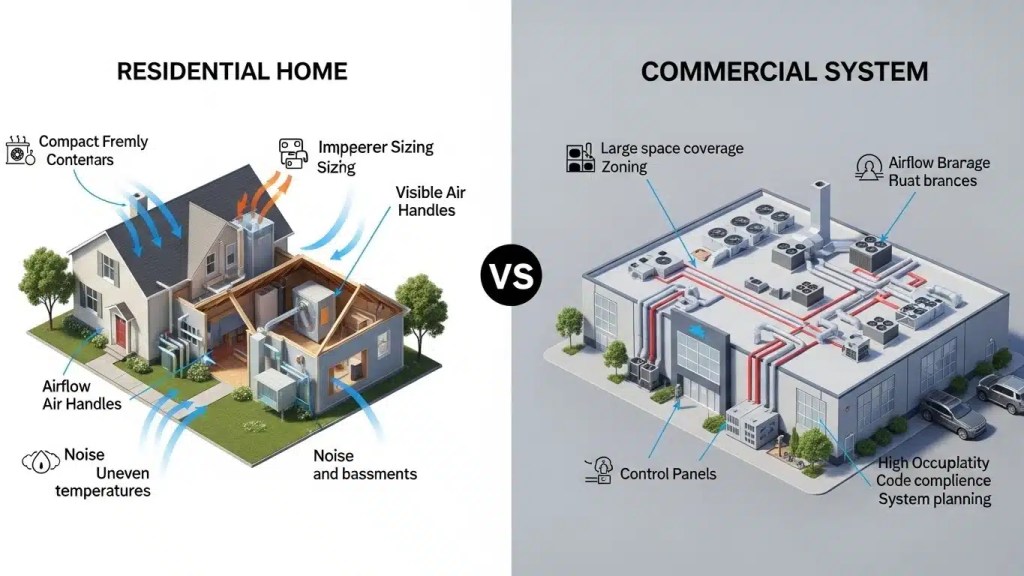
Residential and commercial HVAC systems follow the same basic principles, but the installation challenges are very different. Commercial systems must handle larger spaces, multiple zones, higher occupancy, and strict code requirements, and poor planning can lead to inefficiency, comfort issues, and costly retrofits. Residential systems are smaller but still require accurate sizing and proper airflow design to avoid noise, uneven temperatures, and wasted energy. In both cases, installation quality directly determines whether the system operates reliably or becomes an ongoing source of problems.
Why Choosing the Right HVAC Installer Is Critical
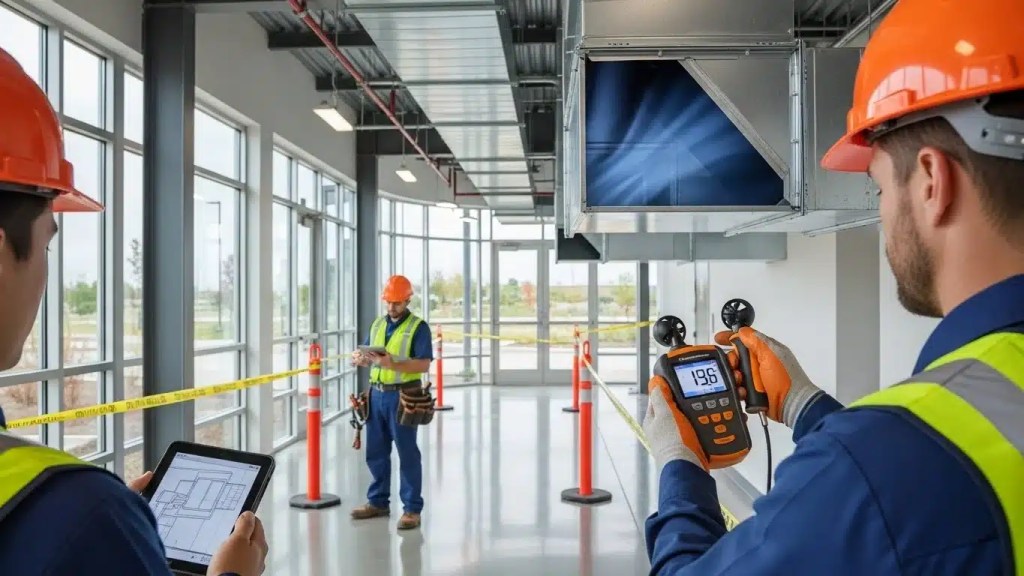
Even the most advanced HVAC equipment cannot compensate for poor installation practices. Selecting an experienced, technically qualified installer ensures accurate load calculations, proper airflow design, and full compliance with safety and performance standards. Professional installers are up to date with evolving codes, technologies, and manufacturer requirements.
Choosing the lowest bidder often leads to compromised planning, substandard materials, and rushed workmanship. These shortcuts may reduce upfront costs but typically result in higher long-term expenses. A qualified HVAC partner protects your investment by delivering systems that perform as intended.
Our Professional HVAC Installation Process
At Systems West, Inc HVAC installation begins with a comprehensive evaluation of the building as a complete system. We analyze structural characteristics, usage patterns, ventilation needs, and future operational requirements before recommending equipment or system configurations. Our approach prioritizes accuracy, compliance, and long-term reliability.
Each installation is executed with disciplined attention to airflow balance, component accessibility, and manufacturer specifications. Final testing and commissioning ensure that the system performs correctly before it is placed into service, providing confidence from day one.
Planning HVAC Systems for Future Maintenance and Growth
Designing an HVAC system without considering maintenance access causes higher service costs and reduced system life. Systems that are difficult to inspect or service are more likely to experience deferred maintenance and avoidable failures.
In commercial environments, flexibility is equally important. Buildings evolve over time, and HVAC systems should be capable of adapting to changes in layout, occupancy, and operational needs. Planning for future maintenance and growth ensures long-term value and efficiency.
Avoid Costly Mistakes Work With Trusted HVAC Experts
Consultation
If you are planning a new HVAC installation or replacing existing equipment, Systems West provides expert guidance and precision installation tailored to your building’s needs. Our team delivers solutions designed for efficiency, reliability, and long-term performance. Contact Systems West today to schedule a professional HVAC installation consultation and ensure your system is built to perform correctly from the start.
Frequently Asked Questions
What percentage of HVAC systems are installed incorrectly?
Industry data shows that 20–30% of HVAC systems are installed incorrectly. Common mistakes include wrong unit sizing, poorly installed ductwork, shortcuts during installation, and missing system commissioning. These errors lead to higher energy costs, uneven temperatures, frequent repairs, and shorter equipment life.
What problems come from uninsulated spiral ductwork?
Uninsulated spiral ducts lose heat or cooling, reduce airflow efficiency, and can cause condensation. It forces the HVAC system to work harder, increases utility bills, and may lead to moisture problems like corrosion or mold.
What are the key steps in building commissioning?
Commissioning ensures an HVAC system works as intended. The process includes reviewing the design, validating equipment selection, checking field installation, testing system performance, and verifying final operation.
What is the $5,000 rule for HVAC?
The $5,000 rule is a simple guideline for deciding whether to repair or replace a unit. Multiply the unit’s age by its projected repair cost. If the total exceeds $5,000, replacing the system is usually more cost-effective than repairing it.
What is the 2-foot rule for HVAC?
The 2-foot rule refers to clearance requirements. Outdoor HVAC equipment, especially condensers, needs at least two feet of open space on all sides to allow proper airflow, easy maintenance, and efficient heat rejection. Restricted clearance reduces performance and shortens equipment life.